Enhancing your home’s energy efficiency starts with evaluating one of the most impactful elements: your windows. Upgrading to modern options can deliver measurable improvements in comfort, temperature regulation, and energy savings. Homeowners looking to maximize property value and livability often turn to residential windows West Chester for specialized guidance and high-performance solutions tailored to local conditions.
Window technology has advanced rapidly in recent years. There is now a wide array of products featuring innovative materials, smart designs, and precise construction to reduce drafts, minimize heat transfer, and let in optimal natural light. As a result, these improvements can help lower utility bills while creating a healthier, more comfortable indoor environment.
Choosing the best modern window solution requires understanding the benefits of each window type and the latest technologies available. Whether you are interested in expansive picture windows for panoramic views or prefer the versatility of casement or double-hung windows, there is an option that aligns with your needs and budget. Alongside reduced energy expenses, these solutions contribute meaningfully to sustainability efforts and elevate your home’s overall appeal.
Understanding Energy-Efficient Windows
Energy-efficient windows are engineered to act as robust barriers against unwanted heat transfer. This means warmth stays indoors during winter, and excessive heat is blocked during summer. Achieving this balance relies on advanced construction techniques, smart materials, and recent developments such as specialized glass coatings and multi-pane assemblies. These windows can make a significant difference in household energy consumption and day-to-day comfort.
Popular Energy-Efficient Window Types
1. Picture Windows
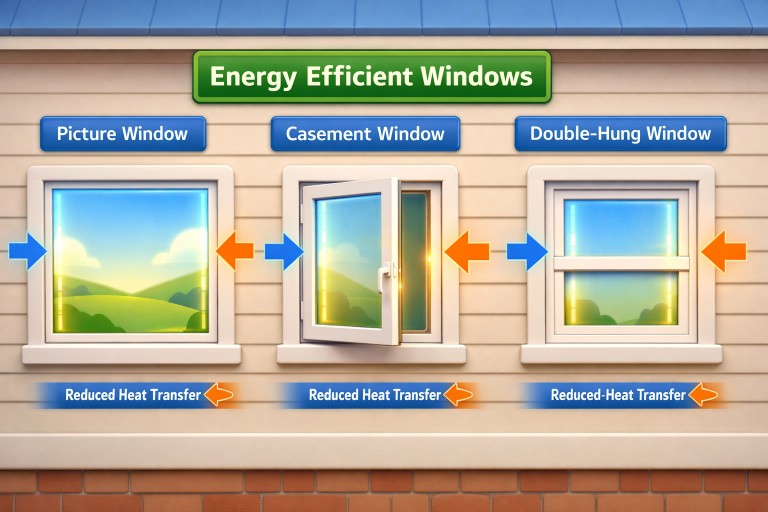
Picture windows, which feature large, fixed panes, are ideal for areas that benefit from maximum sunlight and dramatic exterior views. Since these windows are non-operable, there are fewer seams and moving parts that can cause air leakage, resulting in superior insulation. They are ideal for living rooms or spaces where you want to frame outdoor beauty and do not require regular ventilation.
2. Casement Windows
Casement windows are hinged along the sides and open outward using a crank mechanism. When closed, the sash presses tightly against the frame, forming a weather-resistant seal that minimizes any air infiltration. Not only do they provide excellent insulation, but they also channel breezes into your home, making them popular choices for energy-conscious remodeling projects.
3. Double-Hung Windows
Double-hung windows feature two movable sashes that slide vertically. Their design allows for customizable airflow and simplifies cleaning, especially on upper stories. When built with modern energy-efficient enhancements, such as weatherstripping and insulated glass, double-hung windows provide reliable protection from drafts and thermal loss. Their classic appearance also makes them suitable for a wide variety of home designs.
Innovative Technologies Enhancing Window Efficiency
Low-E Glass Coatings
Low-emissivity, or Low-E, glass coatings involve applying a thin metallic oxide layer to window panes. These coatings effectively bounce infrared radiation away from the window, allowing sunlight in while curbing unwanted heat gain during warm months and reducing heat loss in colder periods. Low-E glass is recognized as a fundamental technology in today’s energy-efficient window market, as highlighted by industry studies and reports from publications such as Architectural Digest.
Multi-Pane Glazing
Modern energy-efficient windows often feature double- or triple-pane glass separated by inert gases such as argon or krypton. This multi-pane construction drastically slows thermal transfer through the window, boosting overall home insulation. The more glass layers and the higher the quality of gas fill, the greater the energy savings and condensation resistance your windows can offer. Whole-home efficiency planning can also identify practical upgrades beyond glazing, and Energy Performance Solutions highlights that with expert “consultancy advice, the landlord only had to top up the loft insulation and change the heating controls to get to the C rating”.
Smart Glass Technology
Smart glass, also called electrochromic glass, can change its tint in response to external light levels or via electronic controls. This adaptability helps optimize daylighting, manage glare, and improve energy efficiency by automatically reducing solar heat gain when the sun is at its strongest.
Factors to Consider When Choosing Energy-Efficient Windows
- Climate: For best results, select windows with U-factor and Solar Heat Gain Coefficient (SHGC) ratings tailored to your local climate zone.
- Frame Material: Vinyl, wood, and fiberglass window frames each offer unique insulation values, durability, and maintenance needs.
- Installation: Even the most advanced windows need professional installation to prevent air leakage and to realize their full energy-saving potential.
Benefits of Installing Energy-Efficient Windows
- Lower Energy Bills: Well-insulated windows reduce heating and cooling costs year-round.
- Better Comfort: Reduced drafts and more stable indoor temperatures make your living space more enjoyable.
- Positive Environmental Impact: Utilizing less energy at home supports eco-friendly goals and reduces your carbon footprint, aligning with broader environmental sustainability initiatives.
Final Thoughts
Choosing and installing modern, energy-efficient windows is a proactive step for homeowners who want to improve their comfort, save money on energy bills, and help the environment. By leveraging current technologies and working with specialized local providers, you ensure your investment delivers both short-term comfort and long-term value.