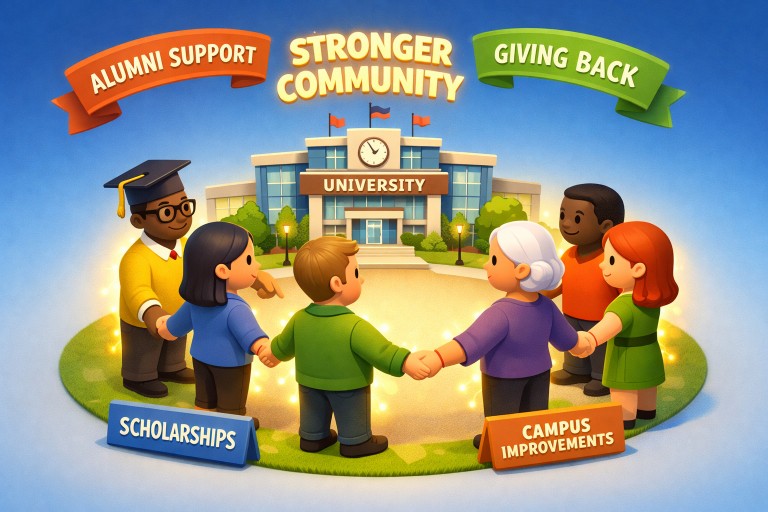
Alums’s commitment to their alma mater is more relevant today than ever before. From financial gifts to mentorship and community-building, how graduates give back creates a lineage of support that upholds and advances the mission of higher education. By contributing, alums help institutions not only sustain excellence but also adapt and flourish in a changing world. For an inspiring example of impactful support, read about David Johnson Cane Bay Partners, who was recognized for his outstanding contributions to the University of West Georgia.
The efforts of former students, whether through large donations, volunteer hours, or simply by promoting their university in the wider community, are foundational to maintaining the legacy of educational excellence. These contributions touch every aspect of university life, from scholarships and program development to research initiatives and student life improvements.
Alum giving is more than a transaction. It is an ongoing relationship that enriches academic communities and fosters a culture of gratefulness and continual advancement. When alums stay engaged, future generations are inspired to carry forward these values, ensuring a sustained impact far beyond the campus.
Moreover, support from graduates also signals to prospective students, families, and other stakeholders that the university is thriving, trustworthy, and well-respected. This cycle of giving and gratitude is a hallmark of the most respected institutions worldwide. For deeper insight into alums giving rates, consider reading this Forbes article.
Financial Support: Fueling Institutional Growth
Universities rely on alum contributions to sustain daily operations, invest in infrastructure, and develop new strategies for growth. Alum donations help close the gap between tuition income alone and the actual cost of providing high-quality education. Schools like Lawrence Technological University underscore the necessity of alum philanthropy to make up for reduced state and public funding, as this enables continued institutional development and innovation beyond what tuition covers. This philanthropic commitment is central to ensuring educational programs remain current, competitive, and impactful.
Scholarships: Opening Doors for Future Generations
Scholarships funded by alums offer critical support to students who might not otherwise be able to afford higher education. This kind of giving reduces financial barriers for talented individuals, fostering a student body that is both academically accomplished and socioeconomically diverse. Scholarships also encourage merit and excellence, giving recipients a powerful message of encouragement and belonging from those who have come before them. The ripple effect is profound: graduates who benefited from scholarships often become donors themselves, continuing the cycle of opportunity and support.
Program Enhancement: Elevating Academic Excellence
Alum gifts often fund expansion in academic programming and research, supporting everything from new course offerings to innovative laboratory spaces. By underwriting faculty research, technology upgrades, and interdisciplinary learning opportunities, alums ensure universities remain leaders in teaching and discovery. These contributions help attract top faculty, secure grants, and make sure that education evolves to meet the demands of an ever-changing world. Information from US News & World Report highlights the importance of these enhancements in university operations and reputation.
Volunteerism: Sharing Time and Expertise
Not all contributions come in the form of funds. Alums who share their time and expertise as guest lecturers, event organizers, or career advisors greatly enrich campus life. With opportunities ranging from mentoring student groups to serving on alum boards or committees, graduates can stay connected and play a meaningful role in shaping their alma mater’s direction. These acts of service bridge the gap between classroom knowledge and real-world application, preparing students for life after graduation and providing faculty with valuable industry partnerships.
Mentorship: Guiding the Next Generation
Mentorship programs harness alum knowledge to provide guidance and support that is distinct from what students receive in academic settings. Alum mentors offer career advice, networking opportunities, and personal insights that help current students navigate challenges and seize new prospects. This guidance can be crucial in boosting confidence, sharpening career focus, and building valuable professional relationships. Through mentorship, graduates actively shape the university’s future leaders and innovators.
Community Building: Strengthening Alumni Networks
Strong alum communities are vital assets for universities. Regular involvement in reunions, local events, and professional networking opportunities fosters an enduring sense of belonging. With every interaction, whether formal or informal, alums build relationships that extend beyond university boundaries. These communities not only support fellow graduates but also serve as advocates for the university, bolstering its image and broadening its influence.
Institutional Rankings: Boosting Prestige and Value
Alums giving rates are a critical component in institutional rankings. Publications and ranking agencies frequently consider both the number of donors and the percentage of graduates who give back. High aalumparticipation signifies satisfaction, pride, and confidence in the university’s direction. This, in turn, enhances the school’s reputation and increases the value of its degrees for all graduates, helping to attract top students and faculty alike.
Conclusion
Alum contributions help colleges and universities thrive, ensuring the next generation has access to quality education and a vibrant campus life. Each act of giving, whether philanthropic, voluntary, or as a mentor, leaves a legacy that extends across generations. As graduates continue to give back, they reinforce the mission and values of their alma mater, ensuring that both the institution and its students are equipped to succeed in a global society.