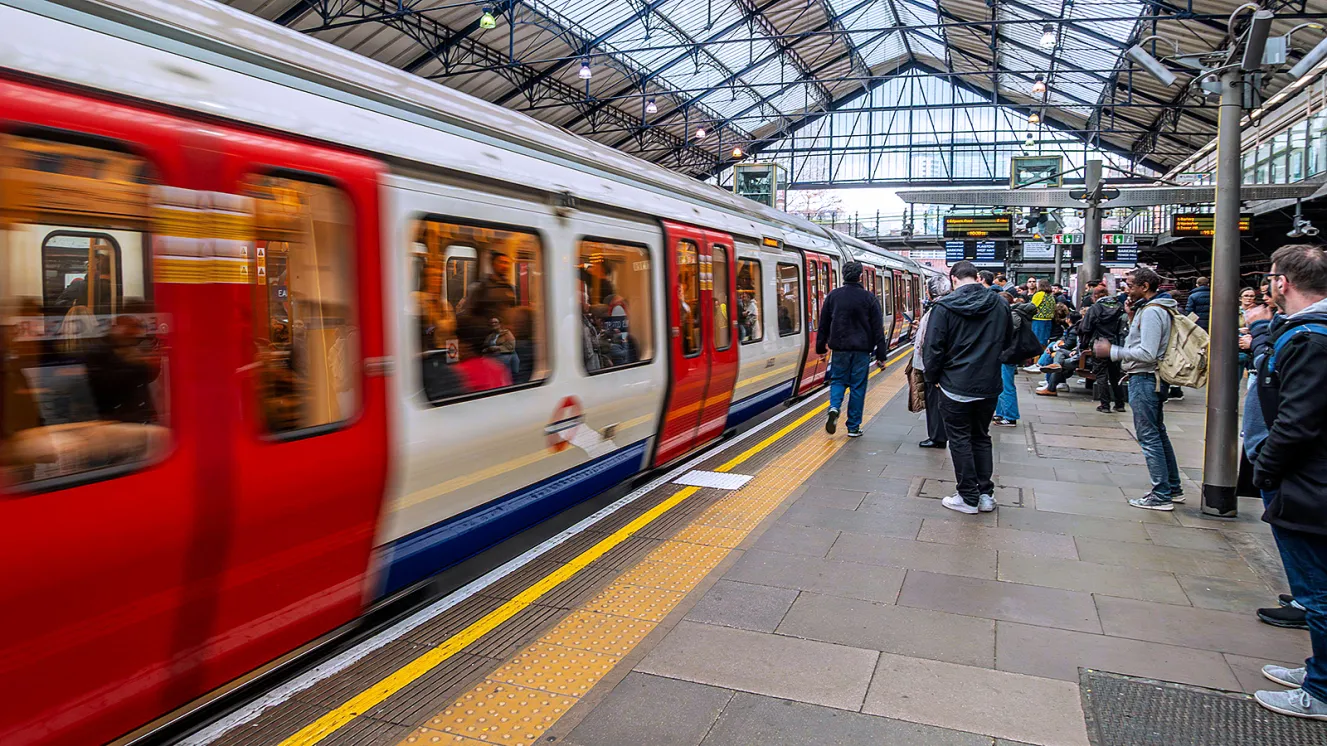
There is a version of progress that does not announce itself loudly. It shows up in the small improvements that compound over time: a schedule that flows a little better, a system that fails a little less often, a network that moves more people with less friction than it did the year before. In the world of rail, this kind of progress has a driving force behind it, and it rarely gets the attention it deserves.
The Intelligence Behind the Infrastructure
Rail systems are among the most complex pieces of infrastructure a society operates. They involve dozens of interdependent variables: track conditions, signal systems, fleet performance, scheduling logic, passenger demand, and regulatory requirements, all of which must work together seamlessly to produce a journey that feels effortless to the person sitting in the carriage.
The people responsible for making those variables cooperate are not always visible to the public. But their influence is felt every time a train arrives on time, every time a new line opens without incident, and every time a decades-old system manages to absorb a surge in demand without breaking down.
Learning From Every Run
What distinguishes the best rail systems in the world is not simply that they are well built. They are continuously improved. Data from every journey, every delay, every mechanical event, and every passenger interaction is captured and analyzed. The question being asked, always, is: what can be done better next time?
Rail consultants play a central role in this cycle of improvement. They bring a cross-system perspective that internal teams, no matter how talented, cannot fully replicate. Having worked across multiple networks, operators, and countries, they carry knowledge of what has worked, what has failed, and why. That accumulated intelligence is what makes every subsequent train run a little smarter than the one before it.
Beyond Fixing What Is Broken
The most valuable consulting work in rail does not happen in crisis mode. It happens quietly, upstream of the problems, in the planning and design phases where decisions are made that will shape how a system performs for the next fifty years. Harvard Business Review’s research into complex systems found that anticipating the secondary effects of decisions in interconnected systems — understanding how changes ripple across interdependent variables — is the most effective way to avoid problems that are far more costly to fix later.
Getting those decisions right requires foresight, technical depth, and an understanding of how rail networks evolve as the cities and populations around them change. This is patient, careful work. It demands the ability to think across time horizons that most industries do not have to consider, balancing immediate operational needs against long-term infrastructure commitments that will outlast any individual team or administration.
The Compounding Value of Expertise
Every improvement made to a rail system creates a new baseline. The next round of improvements starts from a better position. Over time, this compounding effect transforms what a network can deliver to the people who depend on it every day.
That transformation does not happen by accident. It is designed, tested, refined, and implemented by people who have dedicated their careers to understanding rail at a level most travellers never think about. Their work is quiet, technical, and essential. And because of it, the next train really does run smarter than the last.