Education has since gone past academic performance and become an approach that trains students to be a part of a dynamic and interconnected world. Families are also moving towards a more adjacency-focused learning environment that promotes curiosity, autonomous thinking, cooperative group work, and flexibility to the extent that it can ensure excellent academic outcomes. The balanced experience in the private school environment will enable students to develop confidence and communication skills, as well as the global understanding that is necessary to succeed in college and various professional endeavors.
Modern education teaches, in addition to its academic excellence, personal development, leadership, and learning real-life experiences. Students are able to work in challenging classroom setups, with seasoned teachers and in an environment that fosters creativity, research, and solutions. These attributes will enable the learners to grow into self-assured individuals who can easily adapt to the learning and professional environment.
Building Strong Academic Foundations for Future Success
An equal learning atmosphere fosters educational success and self-development. The students also enjoy interactive learning opportunities that help to enhance their fundamental skills and equip them with future learning opportunities.
1. Encouraging Independent Thinking
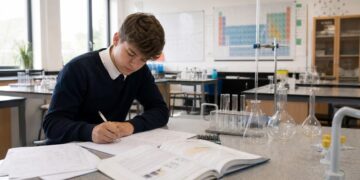
A quality learning environment is one that promotes the exploration of ideas beyond textbooks by encouraging students to ask questions, analyze information, and evaluate various views. Instead of merely memorizing, learners gain responsive skills that help them to make confident decisions. Such skills enhance academic performance and equip students for various university studies, where independence is a key aspect.
2. Developing Strong Communication Skills
Communication is key to both academic and professional success. Presentations, collaborative tasks, discussions, and written work are regularly used to enhance clarity in presenting ideas. Constant practice will enable learners to emerge as confident speakers, attentive listeners, as well as effective collaborators in various learning settings.
3. Promoting Research and Analytical Skills
Research-based learning stimulates students to explore, comprehend information, and draw conclusions. Analytical skills are also acquired through projects and classroom activities, which reinforce problem-solving and logical reasoning. These activities equip learners with higher-order learning skills and instill in them the enthusiasm to tackle complex subjects on their own.
Learning Experiences That Shape Global Perspectives
Contemporary instruction is not limited to classroom knowledge; it links students to various concepts, cultures, and experiences. This exposure fosters flexibility and helps learners to be responsible international citizens.
1. Appreciating Cultural Diversity
Learning with other students of varied backgrounds opens up the mind and brings about an understanding of respecting each other. Everyday communication is one of the ways that allows learners to value cultural diversity and gain empathy, open-mindedness, and enhanced communication abilities. The experiences equip students to succeed in a multicultural academic and professional community.
2. Encouraging Real-World Connections
Relevant education connects classroom ideas to real life, enabling students to recognize the importance of what they learn. Practical projects, discussions, and steps towards gaining experience will facilitate the application of knowledge and enhance the ability to think critically and make decisions.
3. Supporting Creative Problem Solving
The current education industry also makes it the norm to think outside of the box to come up with more than one solution to a problem. This open mind builds up innovation, strength, and self-confidence in reacting to new situations in academics or the real world.
Academic Excellence Through International Learning Pathways
An effective academic system allows students to acquire knowledge of the subjects, research skills, and other crucial life skills. A private school allows many families to enjoy academic excellence, holistic development, and preparation for higher education, while fostering confidence, responsibility, and world-awareness.
1. Personalized Learning Supports Individual Growth
Individual students have unique abilities, interests, and learning styles. Individualized teaching can be used to support teaching and enable teachers to do so at their own time. One-on-one attention lets students deal with difficulties, enhance their skills, and gain confidence that leads to their future academic and personal achievement.
2. Inquiry-Based Learning Encourages Deeper Understanding
When students can make a study concepts and do so at their own pace, they fare better than when memorizing information. Inquiry-based learning involves students asking meaningful questions, probing and questioning ideas, and making connections between subjects. This approach fosters curiosity, critical thinking, and self-directed learning and sets the stage for success when it comes time to graduate.
3. Balanced Development Beyond Academics
Students’ academic performance is improved by their participation in sport, arts, community, leadership and creative activities. The learning experiences develop the skills of resilience, teamwork and communication, as well as emotional wellbeing and self-confidence, that extend beyond the classroom.
Essential Skills That Support Lifelong Student Success
To be future-ready, learners will not be just about academic excellence. Individual competencies are also effective in assisting students to adapt with considerable confidence as they go on to adapt themselves to changes in an education and work environment as well.
- Critical Thinking:Encourages appropriate decision-making and problem-solving in academic and practical situations.
- Creative Communication: Builds confidence in presenting, discussing, working collaboratively, and written communication.
- Collaboration:Develops group learning, group collaboration, and group leadership skills through meaningful collaborative learning experiences.
- Flexibility: Helps students to shift easily from one technology to another, one educational system to another, and from one job to another.
A moderated and well-balanced approach between academics and personal development is the correct one to ensure the education of students with knowledge, confidence, and practical skills for their future success and lifelong learning.
Final Thoughts
Making the right choice of educational environment is a big decision that affects a pupil’s academic and personal development. Families who are looking for a private school typically seek a school that can provide academic excellence and opportunities to become leaders, communicators, creators, and global citizens. The approach used in curricula such as the IBDP is designed around inquiry-based learning, research, collaboration, and critical thinking to ensure that students are confident learners and prepared for future higher education and career opportunities.
For families seeking an internationally focused education that balances academic achievement with holistic development, One World International School (OWIS) Singapore provides a student-centered learning environment. The School’s teachers have high-end qualifications and will help students think independently, research, be international-minded, and acquire high-quality knowledge in subjects, preparing them for university opportunities all over the world.