Introduction
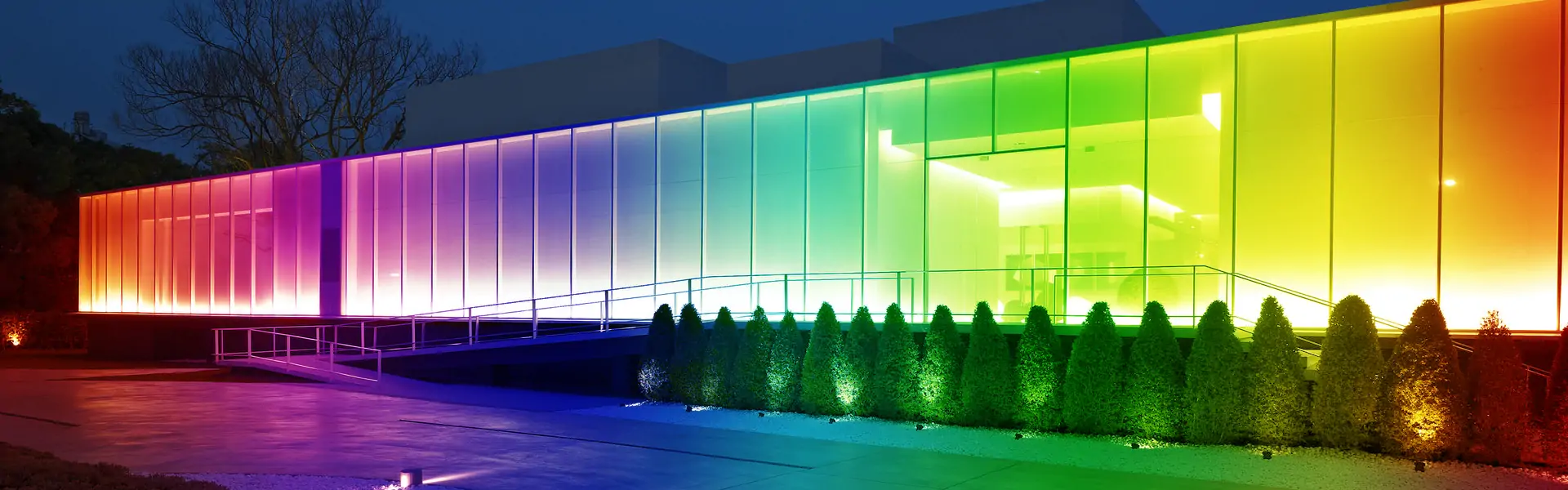
In modern architecture, lighting is one of the most important components. Now it’s more than just visibility. It’s also a matter of the design, the mood, and identity. Technology has been developed for lighting in buildings today that creates a visual impact.
When you consider the proverbial light of architecture, connected to the control of DMX with some lighting technologies, it can revolutionize the lighting industry. It can be used to make the lights supply dynamic, programmable effects.
This article presents the concepts of architectural LED lighting and DMX solutions in an easy-to-understand manner. It also explains their uses, advantages, and important characteristics.
What is architectural LED lighting?
Architectural LED lighting is a lighting system that seeks to improve buildings. Emphasizes function in terms of structure, shapes, and design.
It considers beauty, aside from its utility, unlike usual lighting.
They’re employed in:
- Buildings
- Bridges
- Hotels
- Commercial spaces
- Public landmarks
New architectural LED lighting solutions supply versatility, energy performance, and innovative control.
They are useful to designers to transform common buildings into visual landmarks.
What Are DMX Lighting Solutions?
The term Digital Multiplex (DMX) stands for Digital Multiplex. A control system for controlling lighting effects.
Users can have Effect Dance Management (DMX) collect control operations from a single controller for several lights. Changes brightness, color, and motion. A wide variety of architectures and entertainment lighting rely heavily on this system. DMX turns lights into programmable and synchronized lights!
How LED and DMX play together
A light is used to produce light, such as LED lights. DMX provides control.
These light types, if combined, make for powerful lighting systems.
It works as follows:
- A digital signal is sent to the DMX controller.
- The commands are sent to LED drivers. The LED driver(s) are given instructions.
- Lights control the light that can vary in brightness and color.
- The whole system provides quick reactions.
This will enable scenes to be dynamically linked to lighting.
Benefits of Architectural LED Lighting
There are numerous benefits that architectural LED lighting has to offer.
Energy Efficiency
The use of LED lights is less power-consuming than the traditional lighting system.
Design Flexibility
They can take a variety of forms and can be put to various uses.
Long Lifespan
LED systems are maintenance-free and will last for many years in operation.
Enhanced Aesthetics
They enhance the look of the buildings at night.
It is a reason why they are preferred to be used in today’s building projects.
Advantages of DMX Control Systems
Advanced lighting control is obtained from using DMX systems. The principal benefits of a system controlled by DMX are as follows:
Precise Control
Each light can be customized for the user.
Dynamic Effects
The scenes can be made to change in real-time by lighting.
Centralized Management
There is the ability to control several lights with one controller.
Scalability
Systems can be easily expanded for large projects.
Because of these features, DMX is a must-have for today’s modern lighting design.
Applications of Architectural LED Lighting and DMX
The systems are used in various environments.
Commercial Buildings
They feature corporate identity and branding.
Hotels and Resorts
Luxury and ambiance are enhanced with lighting.
Public Spaces
Lighting is used as an attractant in parks and monuments.
Bridges and Landmarks
Dynamic lighting is used at night for its visual impact.
These applications enhance beauty and functionality.
The key features of modern systems.
Today, lighting fixtures boast some sophisticated options:
- RGB color control
- Wireless DMX support
- Smart automation
- Mobile app control
- Weather resistance
The characteristics listed above make systems more efficient and user-friendly.
Importance of Quality Manufacturers
Good manufacturing is the key to producing high-quality lighting systems. It is easily possible for poor systems to break down very quickly and lose brightness.
Reliable suppliers ensure:
- Better performance
- Safety compliance
- Long lifespan
- Stable control systems
Several experts pick on cost-effective providers, such as SE.Lighting products & lighting reliability.
Design Considerations for Projects
When designing a lighting show, these are some considerations that lighting designers have to take into mind:
- Building structure
- Lighting angles
- Power consumption
- Weather conditions
- Control system compatibility
With proper planning, installation, and operation are smooth.
Future of Architectural Lighting
Smart and automated are the future of lighting! New systems with AI and IoT technology will be used.
Trends include:
- Smart city lighting
- Voice-controlled systems
- Energy optimization
- Complete automatic DMX connect.
- Full automation of the DMX interface.
If creativity and efficiency were being improved, then these innovations would be the ones that are used.
Conclusion
In modern design, architectural LED lighting and DMX solutions have transformed the surroundings. Are beautiful, efficient, and technologically advanced. Completely controllable lighting effects and energy usage are possible with these systems. Organic architectural LED lighting systems enable designers to realize beautiful miracles. Companies like SE. Lighting is leading the way in this area.
Lighting is no longer a necessity. Today, it has become an integral component of the architectural expression.