The weeks around Thanksgiving and Christmas can turn an ordinary delivery route into a long shift that stretches well past sunset. More parcels mean more stops, unfamiliar addresses, crowded driveways, and repeated trips between the vehicle and front doors. Drivers may need to read house numbers from the road, check for steps hidden in shadows, or find a small package among several items in the cargo area. When daylight disappears early, good lighting becomes an everyday work tool rather than something used only in an emergency.
A dependable flashlight can help drivers handle these tasks with better visibility, but carrying a light is only part of the solution. It needs to be easy to reach, simple to operate, and suitable for moving between the vehicle and delivery locations. A practical setup can include a compact clip-on light, a charged phone, reflective clothing where appropriate, and a consistent routine for checking equipment before and after each shift.
Peak Season Means Delivering in the Dark
During the holiday rush, delivery drivers often work through changing weather and reduced daylight while trying to stay on schedule. A house number that is easy to read at noon may be difficult to spot from the street after dark, particularly when it is positioned beside a doorway, hidden by decorations, or poorly lit. Wet pavement can reflect nearby lights, while shrubs, parked cars, and seasonal decorations may obscure steps or narrow paths. Rushing from one stop to the next can make these hazards easier to miss, so drivers need enough time and light to assess each approach.
Planning ahead helps reduce unnecessary delays. Review the route when possible, keep frequently used equipment in a consistent place, and use the vehicle’s built-in lighting safely when loading or unloading. At each stop, check the address before approaching the property and look for a clear path to the delivery location. If a driveway, walkway, or entrance appears unsafe, do not assume that a brighter light makes it safe to proceed. Visibility supports good judgment, but it does not replace caution around ice, uneven ground, traffic, or unfamiliar property.
Why a Handheld Flashlight Slows You Down
A handheld light can be useful when inspecting a dark corner or checking a package label, but it occupies one hand throughout the task. Drivers already need to manage parcels, scan deliveries, open vehicle doors, and operate a phone or handheld delivery device. Switching a light between hands or putting it down each time another task comes up adds small interruptions that become frustrating over a long shift. There is also a greater chance of dropping the light while carrying an awkward parcel or trying to open a gate.
A hands-free option can make routine work more convenient by keeping illumination available without requiring a constant grip. A light clipped to a suitable jacket collar or bag strap can help illuminate the immediate area while leaving both hands free for handling packages. However, placement matters: a beam that points toward the sky or moves too much with every step may be less useful than a carefully positioned light. Keep a separate handheld light available when you need to direct a beam precisely, and never allow lighting equipment to distract you while driving. Set up and adjust your light only when the vehicle is safely parked.
Reading House Numbers and Spotting Steps
Finding the correct address is one of the most important parts of a nighttime delivery. House numbers may be placed beside the garage, on a mailbox, near the front door, or on a wall that is difficult to see from the street. A focused beam can help illuminate a number at a distance, while a broader beam is better for checking the nearby walkway once you have identified the property. If the number is not visible, use the delivery app and available address information rather than assuming that a neighboring property is the right location.
The path from the vehicle to the door needs equal attention. Steps, garden borders, hoses, toys, and uneven paving can be difficult to notice in dim light, especially when carrying a parcel that blocks part of your view. A flood beam helps spread illumination across the ground so you can check where to place each foot. Slow down near stairs, use a handrail when available, and keep the package positioned so it does not prevent you from seeing the path. If a dog is loose in the yard or the entrance feels unsafe, remain at a safe distance and follow your employer’s delivery and incident-reporting procedures.
Clip-On EDC Light vs. Headlamp for Drivers
A headlamp can be useful when both hands are needed, but not every driver wants to wear a headband throughout a shift. It may also be uncomfortable with certain hats or interfere with the way a driver wears other equipment. A compact clip-on light offers another option for illuminating nearby areas while moving parcels. Attached to a stable jacket collar or shoulder strap, it can provide quick access without requiring the driver to hold it. The main consideration is whether the light stays secure and points toward the task instead of swinging or shining into another person’s eyes.
An edc flashlight can be a practical choice for drivers who want a compact light they can carry from one stop to the next. Look for a secure clip, accessible controls, a beam suited to close-up work, and enough battery life for the expected shift. Some tasks call for broad illumination around steps, while others require a more focused beam to read a distant house number. A clip-on design can handle many routine situations, but it should not be treated as a substitute for vehicle lights, reflective safety equipment, or appropriate lighting when working near traffic. Choose the setup that fits the route and the tasks you perform most often.
Lighting the Cargo Area With a Magnetic Mount
Searching for a parcel in the cargo area can waste time when packages are stacked in different sizes or the vehicle’s interior lighting does not reach every corner. A portable light can help illuminate labels, shelves, and gaps between boxes without requiring the driver to hold a phone light while moving items. A magnetic attachment may provide a temporary hands-free solution when placed on a compatible steel surface, such as a suitable part of the truck bed. Before attaching a light, check that the surface is clean, stable, and appropriate for the mount, and make sure the light cannot fall onto packages or into a hazardous area.
Organizing the cargo area reduces the need to search in the first place. Group parcels by route sequence or delivery zone, keep frequently accessed items easy to reach, and avoid placing loose equipment where it can slide during travel. If you use a magnetic light, position it to illuminate the work area rather than the road or other people. Remove it before driving if it is not designed and secured for use in a moving vehicle. Good lighting works best alongside a clear loading system, allowing you to locate the correct parcel quickly without repeatedly moving unrelated packages.
Olight Oclip 2 Pro in Nebula Violet and Mech Green
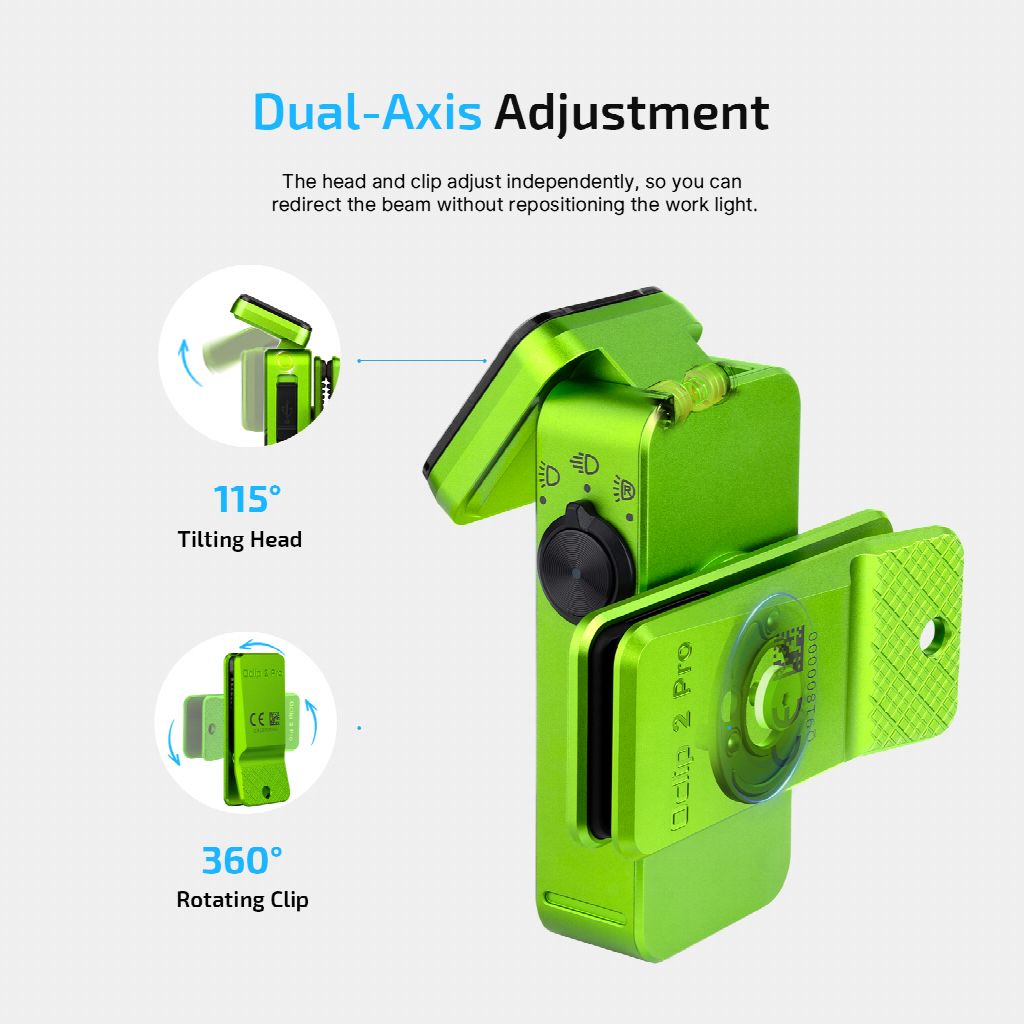
The Olight Oclip 2 Pro is a compact clip-on light designed for situations where drivers need portable illumination without carrying a traditional handheld flashlight. The Nebula Violet and Mech Green finishes provide two color options for people who want a different look for their everyday equipment; the colors themselves do not indicate a discount or change in performance. Its dual-axis adjustment allows the light head to tilt through 115 degrees and the clip to rotate through 360 degrees, helping users direct the beam toward a house number, a walkway, or the cargo area. The clip is designed to attach to collars or shoulder straps up to 14 mm thick, so drivers should check the thickness and stability of the material before relying on it.
The Oclip 2 Pro offers a floodlight rated at up to 530 lumens for broad nearby visibility and a focused spotlight with a stated beam distance of up to 125 meters for checking farther-away details. Actual visibility varies with weather, background lighting, and the size and contrast of the object being illuminated. Its magnetic attachment can be useful for temporarily lighting a compatible steel surface in the cargo area, while its IP66 rating provides dust protection and resistance to powerful water jets under specified test conditions. The supplied specifications also state 2-meter drop resistance, but this should not be taken to mean the light is indestructible. Before using it during a shift, test the clip, controls, beam adjustment, and battery so you know how the equipment behaves in everyday working conditions.
Shift-End Habits: Charging and Checking Your Gear
A short end-of-shift routine can prevent a small equipment problem from becoming a delay during the next day’s route. Check the light’s battery level, recharge it according to the manufacturer’s instructions, and inspect the clip and attachment points for signs of wear. Wipe away dirt or moisture before storing the light, and keep its charging cable in a consistent place. If the light has been dropped or exposed to harsh conditions, check that the controls and housing remain in good condition before relying on it again. Avoid leaving rechargeable equipment in extreme temperatures or charging it near flammable materials.
Drivers should also restock the other essentials that support safe deliveries. Confirm that the phone or scanner is charged, keep reflective clothing and other required safety equipment accessible, and remove loose items that could shift around in the vehicle. If a light has become unreliable or no longer holds a useful charge, replace or service it rather than assuming it will last through another long shift. A predictable routine takes only a few minutes, but it makes it easier to begin the next delivery day with equipment that is ready when the sun goes down.