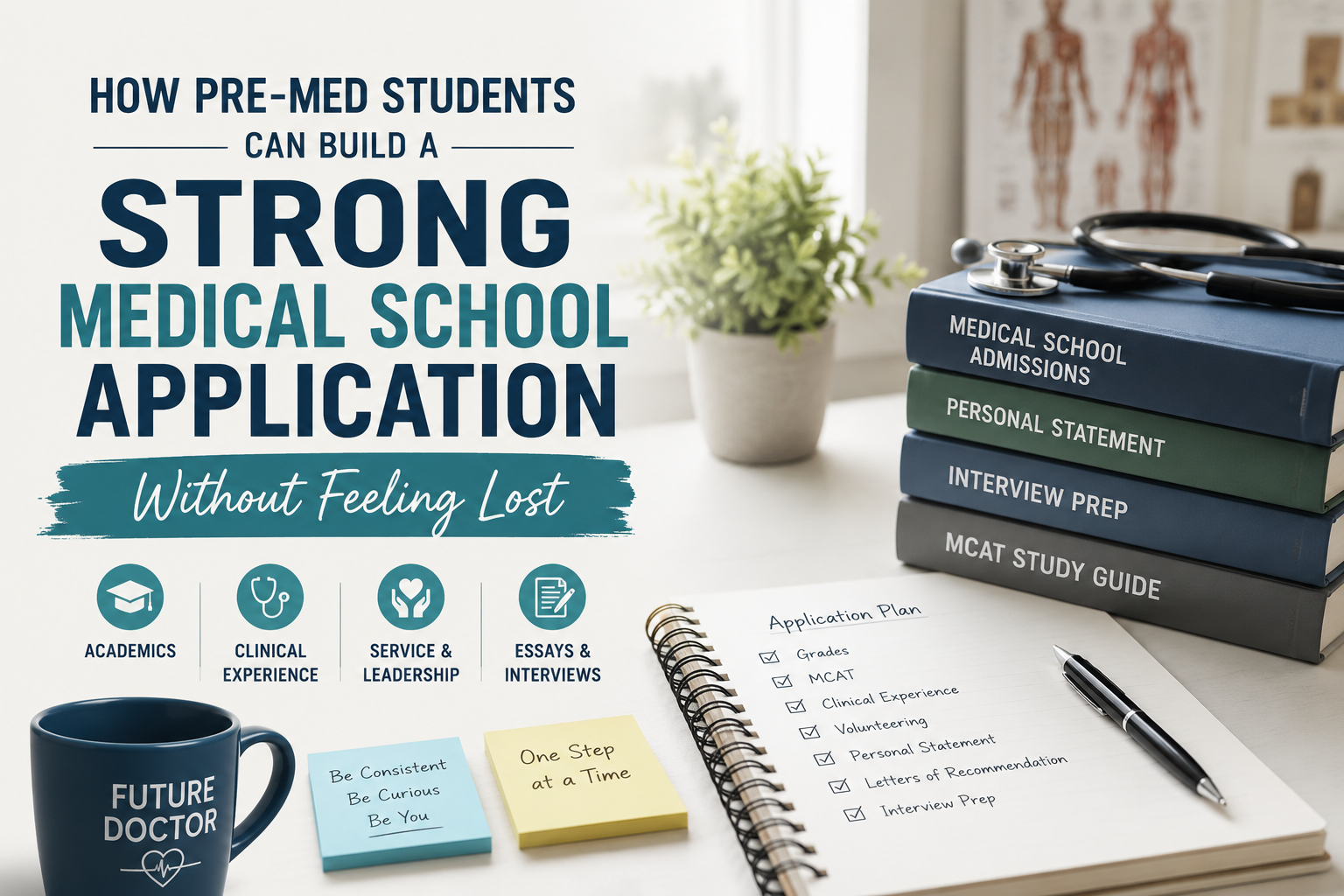
Applying to medical school can feel exciting, but it can also feel like a lot to carry at once. There are grades to think about, exams to prepare for, clinical experiences to build, essays to write, and interviews to face later on. For many pre-med students, the hardest part is not ambition. It is knowing where to begin and how to keep everything moving in the right direction.
A strong medical school application is not built in one weekend. It grows over time through steady planning, honest reflection, and smart choices. The good news is that students do not need to have everything perfect from day one. What matters most is understanding the key areas admissions teams care about and giving each part enough attention before deadlines arrive.
Understand What Medical Schools Are Really Looking For
Medical schools review more than grades. Academic performance matters, of course, because medicine is demanding and schools need to know that applicants can handle a heavy workload. A strong GPA and a competitive test score can help open the door.
However, numbers alone rarely tell the full story. Admissions teams also want to see maturity, communication skills, service, leadership, resilience, and a clear understanding of the medical profession. They want to know why a student is choosing medicine and whether that decision is based on real exposure rather than a vague idea of helping people.
This is why early planning is so useful. Students who take time to understand the full application picture can make better decisions about courses, activities, volunteering, research, and writing. Some applicants also explore med school admissions consulting when they want more structure around school selection, personal statements, timelines, and interview preparation.
Build Clinical Experience With Purpose
Clinical experience is one of the most important parts of a medical school application because it shows that a student has spent time around patient care. This may include hospital volunteering, shadowing doctors, working as a medical assistant, becoming an EMT, helping in a clinic, or supporting patients in another healthcare setting.
The goal is not simply to collect hours. Medical schools want to see what students learned from those experiences. Did they observe the pressure doctors face? Did they understand how healthcare teams work together? Did they notice how communication affects patient trust?
Keeping notes after each experience can help. A few lines about a patient interaction, a challenge, or a moment of learning can become useful later when writing essays or preparing for interviews.
Do Not Treat Volunteering as a Box to Tick
Service is another key part of a strong application. Medicine is a service-focused profession, so schools often look for students who have already shown a willingness to support others.
Good volunteering does not always have to happen in a hospital. Tutoring younger students, helping at food banks, supporting community health programs, or working with underserved groups can all show commitment and compassion. What matters is consistency and meaning.
A student who volunteers regularly for one cause over a long period often has a stronger story than someone who joins many short-term activities without clear involvement. Admissions readers can usually tell when an activity was chosen only to look impressive.
Make the Personal Statement Feel Human
The personal statement is where many students feel the most pressure. It is easy to think it must sound dramatic or perfectly polished. In reality, a strong personal statement should feel honest, focused, and personal.
Students should avoid simply repeating their resume. Instead, they should explain what shaped their interest in medicine and how their experiences helped them grow. A good essay often shows a journey: an early interest, a meaningful experience, a challenge, and a clearer understanding of what being a doctor requires.
The best college resume usually comes from specific moments. A conversation with a patient, a difficult shadowing experience, or a lesson from volunteering can say more than broad statements about passion. Clear examples make the essay easier to believe and easier to remember.
Choose Schools With a Real Strategy
Many students apply to medical schools without thinking carefully about fit. This can lead to wasted time, high application costs, and unnecessary stress.
A smart school list should consider academic profile, mission fit, location, curriculum style, clinical opportunities, and the student’s own goals. Some schools may value research strongly. Others may focus more on primary care, community service, or working with underserved populations.
Applying widely can help, but applying without strategy is not the same as being realistic. Students should look closely at each school and ask whether their background and goals match what the school seems to value.
Prepare for Interviews Before the Invitation Arrives
Medical school interviews can feel intimidating because they test more than knowledge. Students may be asked about ethics, teamwork, failure, healthcare issues, or personal motivation. Interviewers want to see how applicants think, communicate, and respond under pressure.
Preparation should begin before interview invitations arrive. Students can practise explaining their experiences clearly, answering common questions, and reflecting on what they learned from challenges. Reading about current healthcare issues can also help students speak with more awareness.
At this stage, feedback becomes especially useful. A trusted mentor, advisor, or medical school application consultant can help students identify unclear answers, weak examples, or habits that may not come across well in an interview.
Keep the Process Organised
One reason students feel lost is that medical school applications involve many moving parts. Deadlines, recommendation letters, transcripts, essays, school-specific questions, and interview dates can quickly become overwhelming.
A simple tracking system can make a big difference. Students can create a spreadsheet with deadlines, requirements, essay status, letter requests, and submission dates. Breaking the process into smaller weekly tasks also makes it easier to manage.
Instead of thinking, “I need to finish my whole application,” students can focus on one step at a time: update activities, draft one essay, request one letter, review one school, or practise one interview question.
Final Thoughts
Building a strong medical school application is not about doing everything perfectly. It is about showing steady growth, real commitment, and a thoughtful reason for choosing medicine.
Pre-med students should focus on academics, clinical exposure, service, writing, school fit, and interview readiness. When these parts work together, the application becomes more than a list of achievements. It becomes a clear picture of who the student is, what they have learned, and why they are ready to take the next step toward a career in medicine.