Clear and durable identification is important across industrial, commercial and electrical environments. Equipment labels, warning signs, control panel markings and identification plates need to remain readable while withstanding regular handling and environmental exposure. Multi-layer engraved labels, commonly produced from Traffolyte material, provide a practical solution for these applications.
A Traffolyte Label Machine uses controlled engraving to remove the upper layer of a multi-colour plastic sheet, revealing the contrasting layer underneath. This creates sharp, permanent lettering and symbols without requiring printed ink or adhesive lettering.
What Is a Multi-Layer Traffolyte Label?
Traffolyte is a laminated engraving material made from layers of differently coloured plastic. The contrasting layers allow information to become visible when the top surface is engraved.
For example, a sheet may have a dark surface layer over a lighter core. When text or symbols are engraved into the surface, the underlying colour becomes visible, creating strong contrast.
This construction makes Traffolyte suitable for applications where labels need to remain clear and easy to identify. It is commonly used for equipment identification, electrical switchboards, control panels, machinery and industrial signage.
How Does a Traffolyte Label Machine Work?
The label production process begins by securing the Traffolyte sheet to the machine bed. The required text, numbers, symbols or other artwork is then prepared using compatible engraving software.
The machine follows the programmed design and removes a controlled amount of material from the upper layer. Because the engraving depth is carefully controlled, the underlying contrasting layer is exposed without unnecessarily cutting through the entire sheet.
The result is a clean, permanent label with a strong visual contrast between the engraved information and the remaining surface.
Why Is Engraving Depth Important?
Engraving depth is one of the key factors affecting the quality of a multi-layer label. If the engraving is too shallow, the underlying colour may not be exposed consistently. If it is too deep, the label can lose its intended appearance or structural integrity.
Modern engraving systems allow operators to control cutting parameters according to the material being processed. Factors such as cutter selection, machine speed, feed rate and material thickness can all influence the final result.
Consistent settings are particularly important when producing multiple labels with the same design because each label needs to maintain the same text size, depth and appearance.
What Role Do Laser Engraving Machines Play?
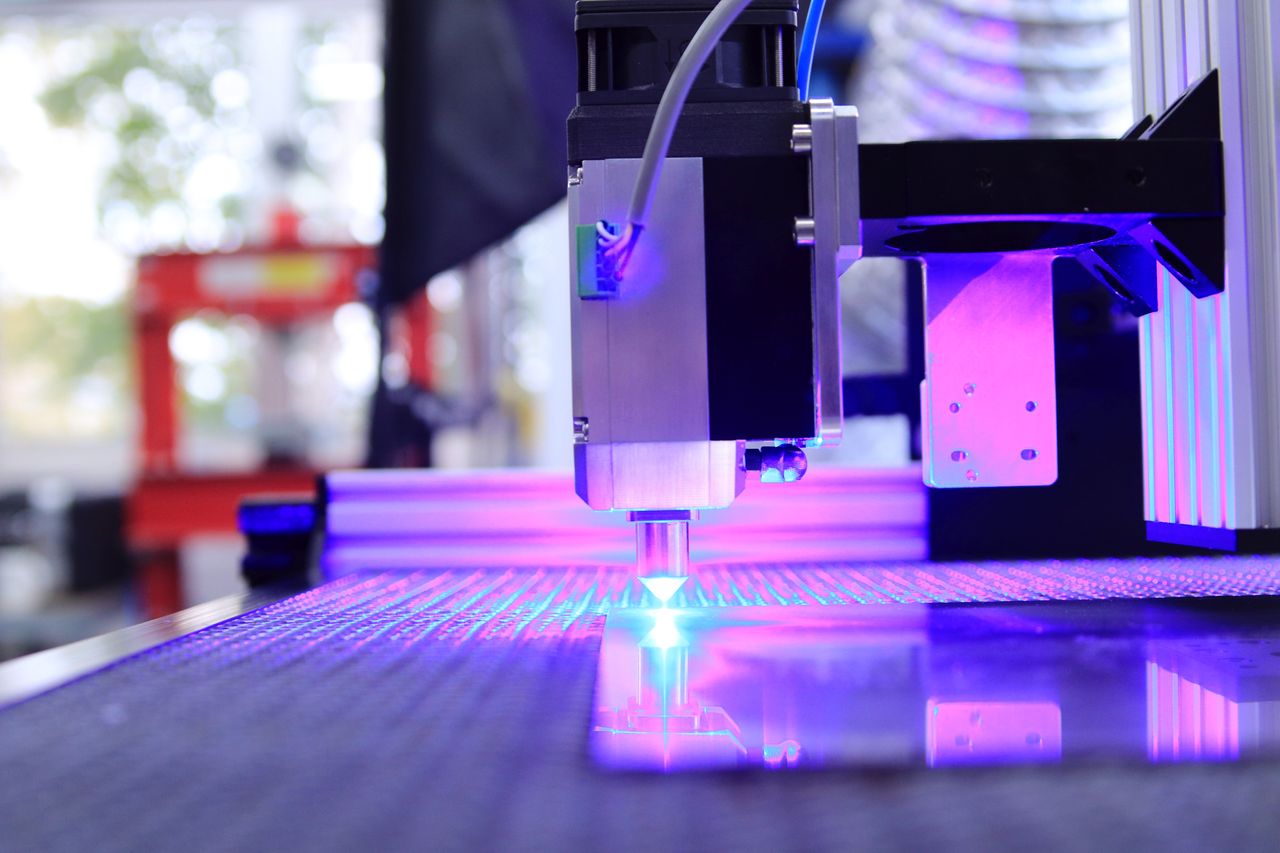
While traditional mechanical engraving can be used to produce Traffolyte labels, laser engraving machines offer another approach for certain engraving applications and compatible materials.
Laser systems use a focused beam to process the surface without requiring a conventional cutting tool to physically contact the material. Depending on the material specification and laser system, this can allow detailed designs, text and symbols to be reproduced with a high level of consistency.
However, not every Traffolyte material is suitable for laser processing. The material manufacturer’s specifications should always be checked before using a laser system, particularly where the material composition could affect processing safety or the finished result.
What Can Be Engraved on Multi-Layer Labels?
Multi-layer engraved labels can accommodate a wide range of identification information. Common examples include equipment numbers, switch labels, warning messages, control panel descriptions, directional information and component identifiers.
Symbols and logos can also be incorporated where required. Digital design software allows the layout, spacing and positioning of individual elements to be prepared before engraving begins.
This flexibility makes engraved labels suitable for both standardised identification and customised labelling requirements.
What Are the Benefits of Multi-Layer Engraved Labels?
One of the main benefits is durability. Unlike printed information that may fade or become damaged over time, engraved identification is physically incorporated into the label surface.
The high contrast between the layers can also make text easier to read, particularly when labels are installed on equipment or panels where quick identification is important.
Another advantage is consistency. Once a design has been prepared digitally, the same layout can be reproduced across multiple labels, helping maintain a uniform appearance throughout an installation.
Where Are Traffolyte Labels Commonly Used?
Traffolyte labels are commonly associated with electrical and industrial identification applications. They can be used on switchboards, control panels, machinery, electrical equipment and other installations where clear identification is required.
The exact material and engraving method should be selected according to the environment, label requirements and expected exposure to heat, moisture, chemicals or physical wear.
Choosing the Right Engraving Equipment
Producing professional multi-layer labels depends on selecting equipment that matches the material and required application. Businesses should consider factors such as label size, production volume, material compatibility, engraving depth, design complexity and required level of detail.
A suitable Traffolyte Label Machine can provide controlled and repeatable engraving for label production, while compatible laser engraving machines may offer additional capabilities for materials and applications that support laser processing.
By understanding how multi-layer materials respond to engraving, businesses can create durable, high-contrast labels that provide reliable identification across a range of industrial and commercial environments.