At a glance, a cheap pair of work pants and a quality trade pant can look almost the same. Both are made from drill, both have pockets and both are sold as “workwear”. But after a few weeks on site, the difference becomes obvious.
Basic workwear is designed to look the part. Trade-ready workwear is designed to do the job, day after day, in tough conditions. From the fabric in your pants to the safety work boots on your feet, here is what separates the two.
1. Fabric That Is Built for Abuse
Basic workwear often uses thin, lightweight cotton that looks fine on day one but wears through quickly at the knees, seat and pockets. Trade-ready gear uses heavier cotton drill, canvas or ripstop fabrics designed to handle kneeling, scraping and constant washing.
Ripstop weaves, for example, help stop small tears turning into big ones. Brands like FXD and Hard Yakka are known for work pants made to take a beating, so you are not replacing them every few months.
2. Reinforcement Where You Need It Most
Every trade has its high-wear zones. For most workers, that means knees, pocket edges, hems and the seat. Basic workwear rarely adds extra strength in these areas.
Trade-ready men’s work pants often include reinforced knees, knee pad pockets, bar-tacked stress points and double or triple stitching. These details stop seams splitting when you squat, climb or carry heavy loads, and they are a big reason quality pants last so much longer.
3. Pockets That Actually Work
A basic work pant usually has the standard four pockets. Trade-ready designs think about what you carry. That can mean cargo pockets for a phone or notepad, tool pockets for a tape measure, pen slots, utility loops and pockets placed so they stay accessible when you are kneeling.
The Bisley FLX&MOVE Stretch Cargo Utility Pants are a good example of storage and comfort working together, giving you useful pockets without restricting movement.
4. Freedom to Move
Stiff fabric might feel tough, but it slows you down. Trade-ready workwear is cut for movement, with features like stretch panels, gusseted crotches and articulated knees.
This matters for anyone climbing ladders, working under benches or getting in and out of vehicles all day. Gear that moves with you is more comfortable and less likely to tear under strain.
5. Safety Work Boots vs Everyday Boots
This is where the gap between basic and trade-ready is biggest. A casual boot might look rugged, but it is not designed to protect you from falling objects, sharp materials or slippery surfaces.
Proper safety work boots are built with protective toe caps, slip-resistant outsoles and supportive construction for long days on your feet. Many workplaces require safety footwear that meets Australian standards, so it pays to check your site requirements before you buy.
At Brookvale Workwear, you can choose from trusted names like Steel Blue, Redback, Oliver and Mongrel. Options include:
- Steel cap boots for traditional heavy-duty protection – see our steel cap range.
- Composite toe boots for a lighter feel – browse composite safety boots.
- Zip-sided boots like the Steel Blue Argyle Zip/Lace for quick on and off – explore zip lace-up safety boots.
- Waterproof boots like the Oliver All Terrain BOA for wet sites – shop waterproof work boots.
6. Visibility That Meets Site Requirements
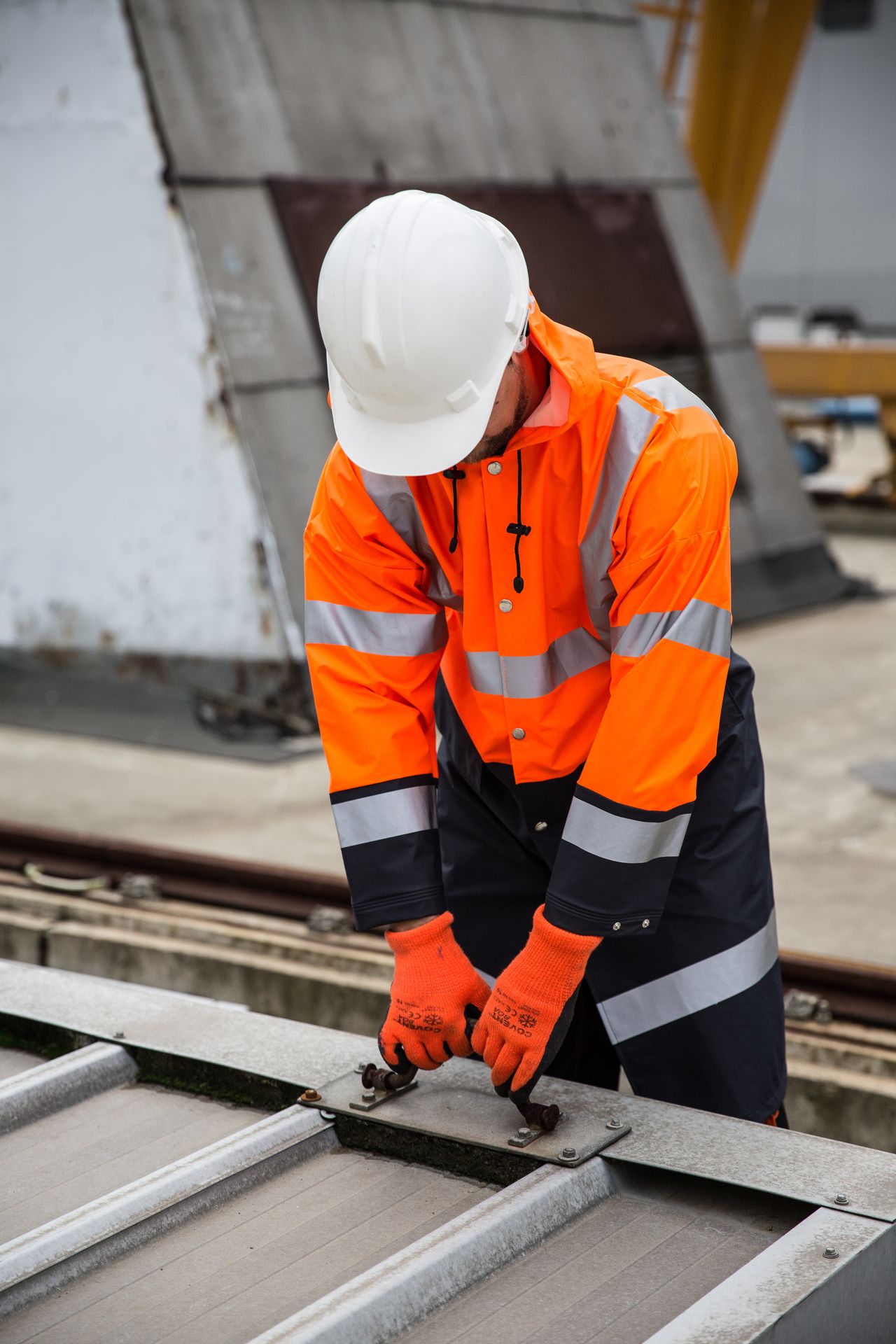
A bright-coloured T-shirt is not the same as compliant hi-vis. Trade-ready hi-vis workwear is made with approved fluorescent colours and, where needed, reflective tape for low-light conditions.
If you work on roads, in warehouses or around moving machinery, proper hi-vis is not optional. Basic coloured clothing may fade quickly or fail to meet your site’s safety rules.
7. Weather Protection That Holds Up
Basic jackets may keep off a light breeze, but they often fail in real rain or cold. Trade-ready outerwear is made to handle long hours outdoors, with sealed seams, durable outer fabrics and practical features like hoods and storm flaps.
Brookvale Workwear’s wet weather and winter wear ranges are designed to keep you dry and warm without slowing you down.
8. Better Value Over Time
Basic workwear is cheaper upfront, which is why it is tempting. But if it wears out in a few months, you end up buying it again and again.
Trade-ready gear usually costs more at the start, yet it lasts much longer and performs better throughout its life. When you look at cost per wear, quality workwear and safety boots are often the smarter investment.
9. Gear That Works With Your PPE
Trade-ready workwear is designed to fit alongside the rest of your safety gear. That includes room for knee pads, belt loops strong enough for tool belts, and clothing that sits comfortably with gloves, glasses and hard hats.
Complete your kit with essentials from our PPE range, including eye, hand, head and hearing protection.
Quick Checklist: Is Your Workwear Trade-Ready?
- Is the fabric heavy-duty enough for your daily tasks?
- Are the knees, seams and pockets reinforced?
- Can you move freely when kneeling, bending or climbing?
- Do your safety work boots meet your site’s requirements?
- Is your hi-vis compliant for where you work?
- Will your outerwear handle rain and cold?
If you answered “no” to any of these, it may be time for an upgrade.
Upgrade to Trade-Ready Workwear at Brookvale Workwear
The difference between basic and trade-ready workwear comes down to one thing: whether your gear is built for the work you actually do. Quality fabrics, smart reinforcements and proper safety work boots protect you, keep you comfortable and save you money in the long run.
Shop our full range of safety work boots and men’s workwear online, or visit our store at 690 Pittwater Road, Brookvale, where our team can help you find the right fit for your trade.