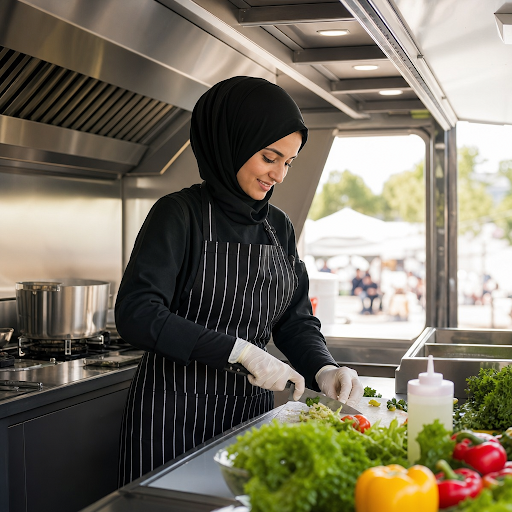
The food service industry has undergone a dramatic transformation over the past decade. What once required a permanent brick-and-mortar location, a long-term lease, and substantial upfront capital can now be achieved with a well-equipped, purpose-built mobile unit. For entrepreneurs, caterers, event organizers, and established restaurant brands looking to expand their reach, the commercial kitchen trailer has emerged as one of the most versatile and financially sound solutions available. Whether you are launching a new concept or scaling an existing operation, understanding the full value of this investment is essential before making any decisions.
The Rise of Mobile Food Operations in a Competitive Market
Consumer behavior has shifted significantly toward convenience, experience, and novelty. Food trucks and mobile kitchens are no longer considered a budget alternative to traditional dining — they are a preferred format for many demographics, particularly at festivals, corporate events, sporting venues, and community gatherings. The demand for high-quality, on-location food service has created a genuine market opportunity for operators who can deploy professional-grade equipment wherever their customers are.
This shift is not limited to small operators. National brands, catering companies, and even healthcare and disaster relief organizations have recognized the operational advantages of mobile kitchen infrastructure. The ability to bring a fully functional commercial kitchen to any location — without sacrificing food quality, safety compliance, or output capacity — represents a competitive edge that fixed locations simply cannot replicate.
Flexibility as a Core Business Advantage
One of the most compelling arguments for investing in a mobile kitchen unit is operational flexibility. Unlike a leased commercial space, a mobile unit allows you to follow demand rather than wait for it. You can serve a corporate lunch crowd on weekdays, anchor a weekend farmers market, and travel to regional festivals throughout the year — all with the same equipment and team. This adaptability dramatically reduces the risk associated with fixed overhead costs and gives operators the freedom to test new markets without committing to permanent infrastructure.
Flexibility also extends to menu development and branding. A well-designed mobile kitchen can be outfitted to support virtually any cuisine type, from high-volume barbecue operations to delicate pastry production. The customization potential means that your unit can evolve alongside your business concept rather than constraining it.
What to Look for in a Quality Commercial Kitchen Trailer
Not all mobile kitchen units are created equal. The difference between a unit that performs reliably for years and one that becomes a maintenance burden often comes down to the quality of fabrication, the materials used, and the expertise of the manufacturer. Before committing to a purchase, operators should evaluate several critical factors.
Construction Quality and Material Standards
The structural integrity of a commercial kitchen trailer directly impacts its longevity, safety, and compliance with health department regulations. Stainless steel interiors, reinforced flooring, and properly sealed surfaces are non-negotiable for food safety. The trailer frame itself must be engineered to handle the weight of commercial appliances, water tanks, and fuel systems while remaining road-worthy across varied terrain and weather conditions. When evaluating fabricators, it is worth reviewing guidance on how to select a custom metal fabricator — the same principles of material quality, welding standards, and engineering expertise apply directly to mobile kitchen construction.
Equipment Configuration and Workflow Design
A commercial kitchen trailer must be designed around the specific workflow of the operation it will support. This means thoughtful placement of cooking equipment, prep surfaces, refrigeration units, ventilation systems, and service windows. Poor layout decisions made at the design stage can create bottlenecks during peak service periods that no amount of staffing can overcome. Working with a manufacturer who takes the time to understand your menu, volume expectations, and service model is essential to getting the configuration right from the start.
Craftsmen Industries: A Leader in Mobile Kitchen Fabrication
When it comes to sourcing a high-performance mobile kitchen unit, the manufacturer’s track record matters enormously. Craftsmen Industries has built a strong reputation in the industrial fabrication space, and their mobile kitchen division reflects the same commitment to engineering precision and build quality that defines their broader portfolio. A commercial kitchen trailer from Craftsmen Industries is designed to meet the rigorous demands of professional food service operations, incorporating commercial-grade appliances, durable construction materials, and customizable layouts that align with each client’s specific operational requirements. Their approach prioritizes both functionality and compliance, ensuring that operators can focus on their food rather than their equipment.
Customization That Serves Real Operational Needs
What distinguishes a purpose-built mobile kitchen from a generic trailer conversion is the depth of customization available. Craftsmen Industries works with clients to develop units that reflect the actual demands of their service environment — whether that means high-BTU cooking capacity for a barbecue operation, specialized refrigeration for a catering company, or a streamlined layout for rapid service at high-traffic events. This level of tailored engineering is what separates a professional-grade asset from a compromise solution.
Marketing and Technology: Driving Growth for Mobile Food Businesses
Owning a well-built mobile kitchen is only part of the equation. Operators who thrive in the mobile food space are increasingly leveraging digital tools and data-driven strategies to build their customer base and optimize their scheduling. Social media presence, location-based marketing, and customer loyalty programs have become standard practice for successful mobile food businesses. For those looking to stay ahead of the curve, understanding how AI-driven marketing strategies are boosting competitiveness for traditional industries offers valuable insight into how technology can be applied to even the most hands-on business models.
The intersection of physical infrastructure and digital strategy is where modern mobile food businesses find their greatest competitive advantage. A high-quality trailer gets you to the event; smart marketing fills the line.
Financial Considerations and Long-Term Value
From a purely financial perspective, a commercial kitchen trailer represents a depreciable asset with significant revenue-generating potential. Unlike a leased commercial kitchen space, a mobile unit builds equity over time and can be resold, repurposed, or upgraded as your business evolves. Operating costs are also more predictable — fuel, maintenance, and licensing fees are generally more manageable than the variable costs associated with a fixed location, including rent escalation, property taxes, and utility overruns.
For entrepreneurs entering the food service industry, the lower barrier to entry compared to a traditional restaurant makes mobile kitchens an attractive starting point. For established operators, adding a mobile unit to an existing business can open entirely new revenue streams without cannibalizing the core operation.
Conclusion: Building a Mobile Food Business on a Solid Foundation
The decision to invest in a commercial kitchen trailer is ultimately a decision about how seriously you take your food service operation. A well-fabricated, thoughtfully designed mobile kitchen is not a shortcut — it is a professional-grade platform that enables consistent, high-quality food production in virtually any environment. By choosing the right manufacturer, understanding your operational requirements, and pairing your physical asset with smart marketing and business strategy, you position yourself for sustainable growth in one of the most dynamic segments of the food industry. The mobile kitchen revolution is well underway, and the operators who invest wisely now will be the ones defining the landscape for years to come.