Africa spans 54 countries, three major time zones, and ecosystems ranging from Saharan dunes to Cape Town vineyards. A trip that works brilliantly for Kenya’s Maasai Mara falls apart if you try to apply the same logic to Morocco or Namibia. Getting the planning right means matching your expectations, budget, and timeline to the specific region you choose — not treating “Africa” as a single destination.
Pick a Region Before You Pick a Country
Start by narrowing down to a region rather than jumping straight to a country name. East Africa (Kenya, Tanzania, Uganda, Rwanda) is built around wildlife safaris and gorilla trekking. Southern Africa (South Africa, Botswana, Namibia, Zimbabwe) offers safaris alongside cities, wine regions, and dramatic landscapes like the Namib Desert. North Africa (Morocco, Egypt, Tunisia) delivers history, architecture, and desert culture with far less wildlife focus.
Trying to combine regions in one trip usually backfires unless you have three weeks or more, since flights between them can take as long as flying from Europe. A Kenya-to-Morocco combination, for instance, often means backtracking through a European hub. Choose one region for a first trip and save the rest for future visits.
Timing Your Trip Around Wildlife and Weather
The best time to visit depends entirely on what you want to see. The Great Migration crosses the Serengeti and Maasai Mara roughly between July and October, when over a million wildebeest and zebra move north in search of grass. Dry season across most of East and Southern Africa (June through October) also means better wildlife viewing overall, since animals cluster around remaining water sources.
Green season, from November to May, brings lush landscapes, newborn animals, and significantly lower prices, though rain can make some roads impassable. Cape Town’s summer runs opposite to the northern hemisphere, peaking December through February, while Morocco is most comfortable in spring and fall when temperatures avoid both winter chill and summer heat above 100°F. Check rainfall patterns for your specific country rather than assuming one calendar applies across the continent.
Building a Realistic Budget
Safari costs vary enormously based on where you stay and how you travel. Budget camping safaris in Kenya or Tanzania can run $150 to $250 per person per day, while mid-range lodges land between $300 and $600. On the higher end, luxury African safari tours in private reserves across Botswana or South Africa often include chartered flights, private guides, and exclusive-use camps, with rates that can exceed $1,000 per person per night but deliver a level of service, comfort, and wildlife access that’s hard to match anywhere else.
Beyond accommodation, factor in international flights (often $900 to $2,000 from North America or Europe), visa fees ($25 to $100 depending on the country), and park entrance fees, which can add $60 to $80 per person per day in popular reserves. Tipping guides and camp staff is expected almost everywhere, typically $10 to $20 per day per traveler. Build a buffer of at least 15% into any budget for unexpected costs like domestic flights between camps.
Health Preparations and Travel Documents
Most East and Southern African countries require proof of yellow fever vaccination if arriving from or transiting through a country with risk of transmission, so check requirements at least six weeks before departure. Malaria is present across much of sub-Saharan Africa, and antimalarial medication is standard practice for safari travelers, alongside insect repellent and long sleeves at dawn and dusk. A travel clinic visit four to six weeks before departure covers vaccines, prescriptions, and country-specific advice.
Visa requirements differ by nationality and country. Kenya, Tanzania, and Rwanda offer e-visas that can be processed online in a few days, while some countries still require in-person applications or visas on arrival. Travel insurance that covers medical evacuation matters more here than in most destinations, since remote safari camps can be hours from the nearest hospital by road.
What to Pack for Varying Climates
Layering is the single most useful packing strategy, since safari mornings can start near 50°F and climb past 85°F by midday. Neutral-colored clothing (khaki, olive, brown) works better than bright colors or white, which show dust and can startle animals. Avoid all-black and dark blue in tsetse fly regions, since those colors attract them.
A good pair of binoculars matters more than an expensive camera for most travelers, since spotting animals often happens before photographing them. Pack a headlamp for camps without full electricity, a reusable water bottle, and a lightweight rain jacket even during dry season, since weather patterns don’t always follow the calendar exactly.
Choosing How You’ll Travel
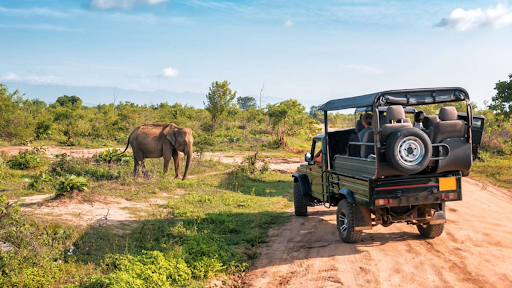
Self-driving works in South Africa and Namibia, where roads are well-maintained and rental infrastructure is reliable. Guided safaris make more sense in Tanzania, Kenya, and Botswana, where local knowledge of animal movement and road conditions adds real value beyond convenience. Group tours reduce costs through shared vehicles and guides, while private guided trips cost more but allow full control over pacing and itinerary changes.
Booking through a specialized operator familiar with your chosen region typically saves money and prevents logistical mistakes, since they know which camps pair well together and how to sequence multi-stop itineraries efficiently.
The single most useful thing you can do before booking anything is settle on the two or three experiences that matter most — whether that’s the migration, gorilla trekking, or a specific landscape — and build the itinerary backward from those priorities instead of trying to see everything at once.