Key Highlights
- The best storage solutions help you use every bit of storage space without making rooms feel crowded.
- Clear bins, drawers, and baskets make it easier to sort pantry goods, toys, and daily essentials.
- Kitchen problem areas, including the kitchen sink and cupboard zones, improve with simple organisers.
- Bedroom systems work better when you use the closet door, hangers, and dividers wisely.
- Small homes benefit from stackable, collapsible, and vertical storage that stays flexible.
- Self-storage can help when your belongings no longer fit comfortably at home.
Introduction
A clutter-free home starts with better storage, not more space. The right storage solutions help you create a more organised home by giving everything a clear place, from clothing and pantry goods to office supplies and decor. If you want simple systems that look clean and work hard every day, start with stackable drawers, baskets, and clear storage bins. These options make it easier to find what you need and keep your routines running smoothly.
Understanding the Importance of Effective Home Storage
Good storage solutions do more than hide clutter. They help you declutter with purpose, so everyday items stay accessible instead of piling up on counters, floors, or shelves. Even a small bin can make a visible difference when used well.
You do not need a lot of storage space to improve your home. The perfect solution is often flexible, stackable, or collapsible, especially in the pantry, bedroom, or living area. The next sections show how a smart organisation supports daily life.
Why Organised Storage Makes Your Home Functional and Clutter-Free
When your home has a place for everything, daily tasks feel lighter. You spend less time searching for accessories, kids’ items, or paperwork, and more time enjoying your space. That is what well-planned storage space really does.
In the living room, organisers such as baskets, drawers, and shelving keep surfaces calmer without removing personality. Decor still matters, but it works best when it does not compete with clutter. Clean lines and visible structure make the room easier to use.
Here is the key: choose pieces that support your routine. Helpful tips include using stackable boxes for flexible storage, soft collapsible cases for items you do not use every day, and shelves with caster options when you need mobility. Function and simplicity can work together.
The Impact of Storage Solutions on Everyday Living
The right storage solutions reduce daily friction, letting you access and return items easily—keeping your home organised.
Focus on areas that quickly collect clutter. Near the front door, use a basket or shelf for grab-and-go essentials. In smaller spaces, vertical storage maximises walls and corners without taking up floor space.
A rolling cart adds flexibility, letting you move supplies between rooms or create temporary storage where fixed furniture won’t fit. Simple changes like these improve flow and make your home easier to live in.
Top Home Storage Solutions for Every Room
Every room needs storage solutions that match how you use it. In a small apartment, flexible products matter most because they can shift with your needs. Stackable drawers, collapsible boxes, baskets, and shelving help you create more storage space without bulky furniture.
You can also organise by category. Store office supplies in file boxes, use baskets for living room decor, and keep extra dining room items in drawers or tubs. If home space runs out, self-storage may be worth considering. First, start with the rooms you use most.
Storage Ideas for Kitchens – Maximising Pantry and Cupboard Space
Kitchen clutter builds up because items are used often. The solution is simple: create zones for pantry goods, cooking tools, and daily supplies near the sink and prep areas.
Group similar items and use clear bins or containers for easy visibility and faster cleanup. Shelf inserts or corner racks can increase cabinet space without remodelling.
- Use clear bins to organise snacks, spices, and baking items.
- Label each category for easy identification.
- Choose stackable containers to save shelf space.
- Store frequently used items on accessible shelves.
- Keep under-sink products in a single, defined area.
Living Room Storage – Stylish and Practical Options
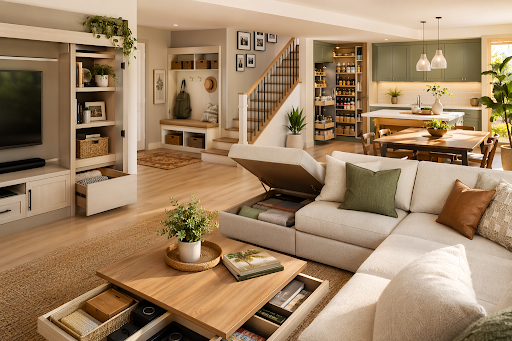
Keep your living room storage stylish and functional. Open surfaces often collect clutter—remotes, books, toys, and décor—especially in small spaces. Aim for a calm look without feeling bare.
Shelving provides vertical storage and display space. Baskets add warmth, while drawers hide clutter. For changing needs, use a rolling cart for flexible storage.
- Use a coffee table with baskets for daily essentials.
- Combine shelves with boxes or bins for a tidy look.
- Store throws or magazines in woven baskets.
- Add a rolling cart for hobbies, work supplies, or family items.
Bedroom Storage – Smart Ways to Declutter and Organise
Bedrooms feel restful when storage is easy to maintain. Use wardrobes, drawers, and organisers that match your routine. Essentials should be simple to access and put away.
In small apartments, hidden storage is key. Under-bed areas, stackable drawers, and closet systems maximise space without crowding. Even closet doors can hold lightweight accessories.
- Sort scarves, belts, and small items into divided organisers.
- Use drawers for basics and wardrobes for daily clothing.
- Stackable boxes are ideal for seasonal or rarely used items.
- Under-bed storage works well for bedding or overflow clothing.
Organising Wardrobes with the Right Storage Products
Wardrobes work best when each category has a defined place. Instead of stuffing everything onto a rail or shelf, use hangers, organisers, and dividers to separate clothing, accessories, and smaller items such as scarves. This keeps your setup easy to maintain.
You can also expand the function beyond the rail itself. The closet door offers extra room for lightweight storage, while a rolling cart can hold overflow pieces or folded basics. Next, look at practical systems for different wardrobe sizes.
Closet Organisers for Small and Large Spaces
A small space needs structure over volume. Use matching hangers for a tidy rail and clear bins for accessories and folded items—visible contents make upkeep easier.
In larger spaces, create zones to prevent clutter. Use a label maker for categories and drawers or stackable boxes to keep shelves organised.
The closet door is often overlooked; add organisers there for frequently used items and reserve deeper storage for bulky pieces. Whether your wardrobe is compact or spacious, aim for clear access, simple categories, and minimal visual clutter.
Tips for Seasonal Clothing Storage
Mixing seasonal clothing with everyday wear can clutter your wardrobe. Rotate clothes by season and store off-season items in labelled bins to free up space and simplify dressing.
Clear storage bins let you see contents quickly. Use dividers for small accessories to keep them organised. A rolling cart works well for transition pieces during changing weather.
- Store off-season scarves, knitwear, and summer accessories in clear bins.
- Use dividers in drawers or boxes to separate categories.
- Add a pegboard or wall rack for lightweight, grab-and-go items.
- Keep only current-season clothes in your main wardrobe area.
Choosing the Right Self Storage Unit in Australia
If your home still feels crowded after organising, self-storage can protect belongings you don’t need daily. When choosing a storage unit in Australia, consider how much you need to store, how often you’ll access your items, and the facility’s security. Choose a unit size that fits your needs—don’t pay for extra space.
For peace of mind, select a secure facility with clear lock policies and convenient access. Before renting, sort your items so only true overflow goes into storage. For home organisation, MUJI offers storage solutions like boxes, tubs, baskets, drawers, shelves, and cases.
| What to consider | Why it matters |
| Storage unit size | Matches space to what you actually need |
| Security | Keeps your belongings safe |
| Access needs | Ensures convenience based on usage |
| Item type | Different packing for bulky items or clothing |
| Home prep | Organise first, so only overflow is stored |
Conclusion
In conclusion, a clutter-free, functional home is achievable with smart storage solutions. By organising each room and using tailored storage ideas, you can enhance your daily life and create a more serene environment. A well-organised home looks better and works better. Ready to transform your space? Contact us for a free consultation and discover how we can help make your home an oasis of order and functionality.
Frequently Asked Questions
What storage solutions are best for organising a cluttered kitchen?
The most effective kitchen setup uses clear bins in the pantry, stackable food storage containers, and a label maker for quick identification. Keep everyday items near the kitchen sink or prep area, and group similar products together so cleanup and restocking feel simple.
How do I select secure self-storage near me in Australia?
Choose self-storage that offers a wide range of unit sizes, a secure environment, and a clear lock process. Start by estimating how much you need to store, then pick the smallest practical option. The right fit gives you peace of mind and avoids wasted space.
Which storage organisers work well for small living spaces?
Small homes benefit most from vertical storage, shelving, and movable pieces such as a rolling cart. A small bin can organise drawers, shelves, or closets without taking over the room. Choose flexible products that stack, collapse, or tuck away neatly when not in use.