As a healthcare professional, you may know that for many years, diabetes care has depended on just periodic snapshots.
It means that it involves just numbers that look completely stable on paper, but often miss what is actually happening day to day. Providers might see a controlled A1c, but in reality, there can still be frequent glucose spikes, drops, and patterns that go completely unnoticed.
Here, the real challenge is not just measurement, but actually visibility. If care relies heavily on occasional readings and manual logs, it can result in incomplete data. Until then, your opportunity to intervene early is already gone.
This gap between visits is where most of the risk lives—and where traditional models fall short.
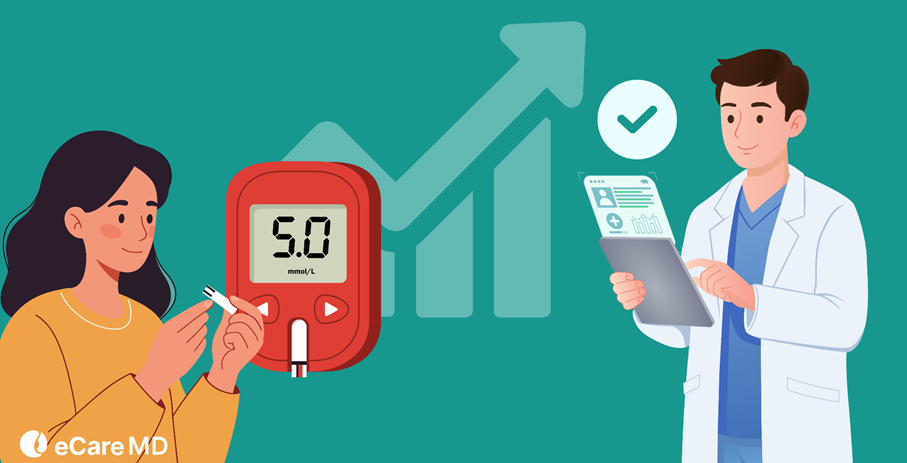
However, Remote Patient Monitoring (RPM) becomes a game-changer to close these gaps. RPM enables your care team to get a real-time picture of your patient’s behavior by providing continuous glucose data.
Additionally, RPM makes it easier for you to identify trends, adjust care plans, and avoid complications earlier. This is the reason why RPM diabetes glucose control is becoming more consistent, proactive, and effective.
This post breaks down how RPM is changing diabetes management and why it’s quickly becoming essential for better outcomes.
The Clinical Impact: Real-Time Data vs Spot Checks
Diabetes management with periodic finger sticks usually leaves you working with incomplete information. At first, a single reading may look more stable, but it does not show you what actually happens after meals, overnight, or during daily routine changes.
And, this gap is where most glucose variability and risk actually exists.
With RPM, that limitation starts to disappear. Continuous or frequent data gives providers a more complete view of how a patient’s glucose levels behave in real time, making it easier to connect patterns with actual triggers.
However, with RPM, these limitations start to disappear. With continuous or frequent data, you can get a more complete view of how your patient’s glucose levels behave in real time.
This approach makes it easier to connect with your patients with actual triggers. Let’s have a look at what often goes unnoticed without RPM:
- Post-meal spikes that would normally go unnoticed.
- Nighttime fluctuations and early-morning glucose rises.
- The real impact of medication, diet, and activity.
This visibility changes how decisions are made. You can identify patterns early and respond with more precision, rather than relying on assumptions. For example, something like the dawn phenomenon becomes easier to distinguish from other causes, leading to more accurate treatment adjustments.
With better data and timely intervention, you can see:
- Improved Time-in-Range (TIR).
- Fewer hypoglycemic and hyperglycemic events.
- More confident and effective medication titration.
Overall, RPM diabetes glucose control is not just about data collection; it’s more about using the right data at the right time to avoid complications and deliver more proactive care.
Driving Patient Adherence Through Continuous Engagement
In diabetes care, adherence is one of the toughest challenges. Patients may start with good intent, but without consistent follow-up, routines slip, especially when symptoms are not immediately visible.
This is exactly where RPM becomes essential by turning passive care into proactive care and ongoing management.
With glucose monitoring RPM, patients are more consistent because they know their data is being reviewed. That visibility creates a sense of accountability and connection with the care team, making adherence feel supported rather than forced.
As with glucose monitoring RPM, your patients know their data is being reviewed constantly, which ultimately results in more consistency. This data visibility creates accountability, sense, and connection with the care team. This makes adherence feel supported instead of forced.
Let’s explore how RPM strengthens adherence:
- Continuous tracking improves RPM diabetes glucose control by reducing missed readings.
- Real-time data helps patients connect habits with outcomes.
- Early feedback encourages better daily decisions.
- Quick outreach improves remote diabetes management.
- Ongoing engagement leads to stronger diabetic remote monitoring outcomes.
This is how RPM helps to enhance glucose control in diabetic patients through data and behavior change. In addition, timely interventions and consistent communication help remote patient monitoring for diabetes management outcomes become more effective, scalable, and patient-centered.
Technology That Enables Scalable Diabetes Care
Scaling beyond a small patient group requires more than just collecting data. You need systems that turn raw readings into actionable workflows to make RPM diabetes glucose control more effective at scale.
Platforms bring patient data into one place with glucose monitoring RPM. This gives your care team both a high-level view and the ability to drill down into individual cases. It makes it easier to identify trends early and act quickly, rather than being too late.
Let’s explore what enables scalable remote diabetes management:
- Centralized dashboards to track patient trends and risk levels
- Smart alerts to flag critical readings and missed checks
- Automated prioritization for high-risk patients
- Easy-to-use devices that improve data consistency
- Built-in tracking that supports diabetic remote monitoring outcomes
Here, the key is automation. Rather than reviewing reading manually, your care team can prioritize high-risk patients. This makes remote patient monitoring for diabetes management outcomes more efficient and practical.
Equally important is device experience. Simple, cellular-enabled devices minimize setup issues, enhance adherence, and ensure steady data flow. All these factors together can directly support how RPM improves glucose control in diabetic patients.
Let’s have a quick breakdown of what makes an RPM setup scalable:
| Component | Why It Matters | Impact on Outcomes |
| Centralized Dashboard
|
Brings all patient data into one view
|
Faster decision-making |
| Automated Alerts
|
Flags critical glucose readings instantly
|
Timely interventions |
| Patient Prioritization
|
Highlights high-risk patients first
|
Reduces missed cases |
| Device Simplicity
|
Removes tech barriers for patients
|
Better adherence & data consistency |
| Workflow Automation
|
Reduces manual effort for staff
|
Scalable operations |
| Billing Integration
|
Tracks time & supports CPT coding
|
Improves revenue & compliance |
Financial and Operational Sustainability of Diabetes RPM
Along with clinical impact, your RPM program also needs to be financially sustainable. This is where diabetes RPM kicks in. When you implement it correctly, it enhances care and creates a steady and predictable revenue stream.
The real potential lies in consistency. With RPM diabetes glucose control, every enrolled patient highlights ongoing engagement, constant monitoring, and monthly billing opportunities. This makes the model not only scalable but also reliable.
Here’s how RPM supports financial sustainability:
- Recurring monthly revenue through RPM and CCM billing.
- Dual eligibility for many patients across monitoring and chronic care programs.
- Structured workflows that turn routine tasks into billable activities.
- Better performance in value-based models through improved outcomes.
Here, remote diabetes management becomes clinical support, as well as a growth driver. With remote diabetes management, you can track and align activities like patient follow-ups or data reviews with reimbursement.
Additionally, stronger diabetic remote monitoring outcomes, including improved glucose control and reduced emergency visits, can directly support quality measures tied to incentives and reimbursements.
What makes this model scalable is efficiency. With glucose monitoring, RPM, and automation in place, smaller care teams can manage larger patient populations without a proportional increase in workload.
That is exactly how remote patient monitoring for diabetes management outcomes delivers value—not just by improving care, but by aligning clinical efforts with financial sustainability.
Conclusion: The Future of Glycemic Management
Diabetes care is moving beyond periodic visits toward continuous, data-driven monitoring—and RPM is making that shift possible. Practices adopting this approach are seeing better adherence, earlier interventions, and more informed clinical decisions based on real patient data.
RPM diabetes glucose control is quickly becoming a core part of modern chronic care. It closes long-standing visibility gaps, strengthens patient engagement, and creates a more sustainable model for both care delivery and revenue.
With technology more accessible and reimbursement pathways clearly defined, the opportunity is already here for providers managing diabetic populations.
The real question is no longer if you should adopt RPM—but how soon you can start.
Click here to get started with RPM for better diabetes management outcomes.
FAQs
- How does RPM diabetes glucose control improve HbA1c levels?
RPM provides continuous glucose data that enables providers to identify patterns, adjust medications in real time, and intervene on concerning trends before they affect long-term averages. This proactive approach—rather than waiting for quarterly A1c results—leads to more consistent glycemic control and improved HbA1c outcomes over time.
- What are the latest diabetic remote monitoring outcomes in clinical practice?
Diabetic remote monitoring outcomes include improved Time-in-Range (TIR), reduced ER visits for hypoglycemic and hyperglycemic episodes, better medication adherence, and more timely medication titration. Practices using RPM for diabetes management also report higher patient engagement and fewer diabetes-related hospitalizations.
- Can glucose monitoring RPM integrate with CGM devices?
Yes. Many RPM platforms support integration with Continuous Glucose Monitors (CGMs) in addition to traditional glucometers. CGMs provide the most granular data, tracking glucose levels continuously throughout the day and night, which is particularly valuable for insulin-dependent patients and those with significant glucose variability.
- How does RPM help detect patterns like the dawn phenomenon?
The dawn phenomenon—an early-morning glucose rise driven by hormonal changes—is difficult to identify with periodic finger-sticks alone. RPM captures overnight and early-morning readings consistently, making the pattern visible over multiple days. This allows providers to distinguish between dawn phenomenon, insufficient basal insulin coverage, and late-night dietary factors, leading to more targeted treatment adjustments.
- What are the benefits of remote patient monitoring for diabetes?
Key benefits include continuous glucose visibility between visits, earlier detection of dangerous trends, improved patient adherence through ongoing engagement, more informed medication decisions, reduced emergency visits, and the ability to scale diabetes care across larger patient panels without proportionally increasing clinical staff.
- How does RPM improve Time-in-Range (TIR) for diabetic patients?
Time-in-Range measures how often a patient’s glucose stays within their target zone. RPM improves TIR by giving providers daily visibility into glucose patterns, enabling real-time medication adjustments, and helping patients recognize which behaviors push their readings out of range—leading to more consistent glucose control throughout the day.
- What billing codes are used for diabetes RPM programs?
Diabetes RPM programs use the standard Medicare RPM CPT codes: 99453 (device setup and patient education), 99454 (device supply with at least 16 days of data transmission per 30-day period), 99457 (first 20 minutes of interactive monitoring time per month), and 99458 (each additional 20-minute block). Many diabetic RPM patients also qualify for CCM billing under CPT 99490.
- How can providers scale diabetes RPM programs efficiently?
Scaling requires a platform with automated triage, alert prioritization, and built-in billing workflows. Cellular-enabled devices reduce patient onboarding friction, and a care team model—where coordinators handle daily monitoring while physicians oversee clinical decisions—allows a small team to manage large patient panels. Dual billing under RPM and CCM codes further improves financial sustainability.
- Evidence: