The Crisis in Dharmapuri District
It was morning and long shadows fell over the cucumber fields of Ravi Kumar in Dharmapuri district, Tamil Nadu, yet his face was heavy. Fifteen years after a three-decade history of successful farming, and thirty years of it, his 15-acre cucumber operation experienced its largest threat ever: root-knot nematodes (Meloidogyne incognita) had infested his beloved crop. What began as an unexplainable yellowing and stunting of some individual plants, had since extended over 70 per cent. of his fields, and was threatening both his present crop, and the future solvency of his farm.
Economic destruction was direct and dramatic. The yield of Kumar fell by a quarter in the 2017-18 season, in line with regional statistics indicating that failure for control efectivo de nematodos en cultivos costs Tamil Nadu cucumber growers an estimated 480 million rupees every year. Conventional chemical nematicides provided a short-term solution, but were accompanied by growing concerns about their environmental impacts and mounting issues with resistance. When Kumar saw the fields of his neighbor being devastated in such a way too, he knew that the whole region required an ecological solution: a bio-nematicide which would stop the vicious circle, but not pollute the soil his family had been farming on all these years.
Understanding the Enemy: Root-Knot Nematode Biology
Root-knot nematodes are among the most long-standing enemies of agriculture and Meloidogyne incognita takes the lead against cucumber crops globally. These microscopic roundworms spend their entire life cycle entirely inside the root of plants and form the galls commonly referred to as their name. Second-stage juveniles (J2), feed on root tissues around the growing tips causing feeding sites that deplete aquatic plants of essential nutrients and water and interfere with the normal functioning of roots.
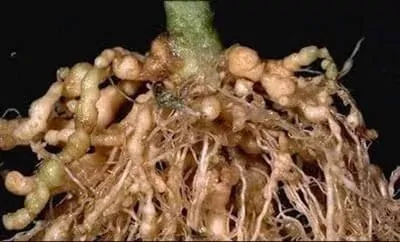
The farmer bought up had taught Kumar to spot the indications of the disease: retarded plant growth, the yellowing of the leaves indicating a deficiency of some nutrient which the swollen root gall is believed to be unable to absorb, and above all the swollen root gall itself which are pea-sized swellings up to as large a nut as a walnut. Underground damages take place far earlier than symptoms are seen, and the sooner they are detected, the better. It has been found that root knot nematodes are more exponentially challenging to control when the number of juveniles per 100cc of soil is above 500.
The reproductive potential of the nematode is why the worm is so devastating. One female is capable of producing 300-500 eggs and the entire cycle only requires 25-30 days under favorable conditions. This explosive growth potential states that small initial infestations can grow into population-threatening levels in a single growing season, which is why Kumar fields got damaged so fast.
The Biological Solution: NEMA PRO and Purpureocillium lilacinum
Kumar made his breakthrough with the help of a progressive agricultural consultant who introduced him to NEMA PRO, a new bionematicide using Purpureocillium lilacinum (which was then called Paecilomyces lilacinus) as the active ingredient. This natural occurring soil fungus was commercialised as a bio nematicida a base de paecilomyces lilacinus after several years of research showing it to be effective against various nematode species.
Purpureocillium lilacinum has an advanced multi-pronged attack mechanism on root-knot nematodes. The fungus specifically infects nematode eggs by piercing their shells and eating the growing juveniles inside. At the same time, it secretes enzymes acting on the cuticles of the nematodes and emits toxic metabolites that destroy free-living juveniles in the soil. It has been shown that best concentrations can obtain 62.8% egg hatching reduction and 61% death rate of juvenile nematodes in 48 hours of exposure.
Kumar used NEMA PRO by drenching at the time of planting at 6 kg per hectare and then again 45 days after planting. The established biological agent developed protective colonies all over the root zone, which had an adverse effect on the nematodes establishment and also helped in the growth of plants by providing better nutritional sources and increasing root growth. Unlike using chemical nematicides which have to be used repeatedly and are harmful to the environment and environment, NEMA PRO is the living organism that can multiply freely under good soil conditions and provides protection throughout a season.
Advanced Protection: NEMA PROMAX Integration
On the basis of NEMA PRO success, Kumar primarily extended his producto biológico contra nematodos programme with NEMA PROMAX, an improved version of the initial formula to be applied in tough infestations and poor soil traits. The new high tech product is a blend of several positive microorganisms with P. lilacinum with some synergy effects that enhance the nematodes suppression while also providing other plant health effects. The multi-organism approach solves the complexity of the soil ecosystem, where biological control is possible at best when a balanced community of microorganisms is established through the application of a biostimulated single-species control.
The superior formulation of NEMA PROMAX contains special carriers and nutrients to promote fast microbial growth and survival in the field. Kumar uses this superior product in high-value cucumber crops in greenhouses as well as in areas with heavy infestations of field roots knot nematodes where maximum control is necessary. The extended release properties of the product permit shielding of 60-90 days minimizing the expenses connected with labor and providing uniform control of nematodes in the essential growth phases.
Implementation and Integrated Management
The best example that Kumar can give of a successful program that he has conducted relating to the use of paecilomyces lilacinus with respect to the needs of the farmers takes into account the overall approach of pesticides in preventing the occurrence of pests within the farms. He also has started every season by conducting a soil sample to determine the population of nematodes in the field and using biological control as preventative in areas where orchards have previously been infested. Cultural operations such as crop rotation with non-host plants, the addition of organic materials, and effective irrigation controls provide desirable environments to beneficial microorganisms and inhibit the survival of nematodes.
It is important that biological applications are timed. Kumar uses NEMA PRO during transplanting of cucumber seedlings when seedlings start to develop their root systems and the roots are successfully colonized by beneficial fungi before the onset of nematodes. The periods of follow-up applications overlap with the root expansion phases where the plants are most susceptible to nematode attack. Monitoring of soil temperature and moisture helps determine when to apply it because P. lilacinum is sensitive in establishment and activity to certain environmental factors.
Kumar combines biological bionematicide use with organic soil supplements such as vermicompost and neem cake, which sustainably feed the beneficial soil microbes and make the soil inhospitable to plant-bred nematodes. This ecological method focuses on soil health as the basis of a practical biological control, and acknowledges that healthy soils endemically suppress nematode populations by way of microbial communities.
Results and Regional Impact
The conversion of Kumar farm shows how the control of biological root knot nematode can work supplemented with the necessary measures and conditions. Results in his 2018-19 harvest were astonishing: 65% less root galling, 52% less soil nematode population, and best of all, a restoration of yield to pre-infestation levels. The success of the bionematicide program did not end with the control of nematodes, as treated plants exhibited greater plant vigor, increased resistance to stress and higher fruit quality, which received high prices in the market.
Economic analysis states that the long-term benefits of the biological approach exist. Although the initial application of paecilomyces lilacinus as nematicides was significantly more expensive than the chemical ones, savings in input costs in later seasons along with higher yield quality yielded positive returns in just two seasons. Kumar did not need any soil fumigation, used 40 percent less fungicides because healthier root systems were more resistant to disease.
The success story travelled quickly across the whole Dharmapuri district, with more than 200 farmers taking up biological nematode management programs following the demonstration by Kumar. Application of bionematicide as a first-line treatment in the management of root-knot nematode in the cucumber production system is now recommended by regional agricultural extension services in lieu of continued reliance on chemicals, which becomes a paradigm shift oriented to sustainable biological solutions.
The farm developed by Kumar has become a training facility in sustainable control of nematodes with field days to demonstrate how the biological control technologies can be implemented in reality. His experience demonstrates that science-based biological management of root knot nematodes can be effective without negatively affecting crop productivity and environmental health, providing hope to cucumber farmers all over the world who are dealing with the same problem of the root knot nematode.