Most teams treat productivity problems like staffing problems. Someone is overloaded, so work gets moved. Someone is slow, so software gets added. Someone leaves, so responsibilities get redistributed. That can help for a week or two. It can even make a manager feel decisive. But if the same delays, miscommunication, and customer complaints keep showing up, the issue usually is not the person holding the task. It is the path the task has to travel.
That is why redefining processes often beats reassigning tasks. When you redesign the flow of work, you stop treating symptoms and start fixing the system that created them. Businesses that are serious about growth, whether they are launching a service company, scaling an operations team, or figuring out how to start an LLC in California, eventually run into the same truth. The real drag on performance is often hidden in approvals, handoffs, duplicated effort, and outdated sequences that nobody questions.
Reassigning tasks has a place. Sometimes a role is mismatched, or one person truly has too much on their plate. But if every improvement effort starts and ends with, “Who should own this now?” the business stays trapped in a narrow way of thinking. A stronger question is, “Should this step exist at all, and if it does, what is the best way for it to move from start to finish?”
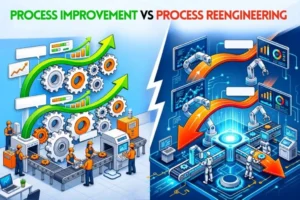
- Why task shuffling feels productive
Reassigning work gives immediate visual change. A task moves from one inbox to another. A manager updates a responsibility chart. A new tool takes over one repetitive step. Everyone can point to something concrete and say progress is happening.
The problem is that this kind of fix often leaves the overall experience untouched. If an approval still takes three days, it does not matter much whether Sarah approves it or James does. If a customer still has to repeat the same information to three departments, the annoyance stays the same. If a team still works in a sequence that creates bottlenecks, moving one piece of work around only changes where the stress lands.
This is why process thinking can feel less dramatic at first, but produce much bigger results later. Instead of focusing on isolated tasks, it focuses on flow, timing, dependencies, and outcomes. That shift matters because customers do not experience your org chart. They experience your process.
The hidden cost of handoffs
One of the biggest reasons process redesign wins is that handoffs are expensive in ways companies rarely measure. Every time work moves from one person or team to another, there is a chance for delay, confusion, or loss of context. The next person may need to ask follow up questions. They may interpret the request differently. They may prioritize it behind something else.
A process with too many handoffs starts to create friction that feels normal simply because it happens every day. Teams begin to build coping habits around that friction. They send extra reminders. They create side spreadsheets. They hold status meetings just to explain where a request is stuck. None of that adds value for the customer. It is all energy spent managing the weakness of the process.
Organizations that study work as a system often find that reducing waste and improving flow leads to better quality, lower effort, and faster delivery. That idea sits at the heart of lean thinking, which starts by asking what the customer actually values and then removing steps that do not support that value.
Better systems create better roles
A less obvious benefit of redefining processes is that it can make jobs better, not just faster. When work is organized around outcomes instead of fragmented assignments, people usually gain more clarity. They understand what success looks like. They can see how their effort connects to the final result. They spend less time chasing updates and more time solving real problems.
This matters because burnout is not caused only by volume. It is also caused by pointless effort. People get tired when they do work that should have been prevented, repeated, or simplified. Reassigning tasks can spread that frustration around. Redefining the process can remove the source of it.
There is also a management advantage here. If a company depends too heavily on reshuffling responsibilities every time something breaks, leaders become traffic controllers instead of builders. They spend all day moving work rather than improving the way work happens. Over time, that creates a reactive culture.
Process redesign is really about sequence
A lot of business waste comes from bad sequence, not bad people. Teams collect information too late, review things too early, or require approval before the work is ready. In service businesses, for example, the wrong sequence can trigger rework that looks like a staffing shortage when it is really a design flaw.
Redefining a process means asking practical questions. What information should be gathered first? Which steps can happen at the same time? Which decisions need a human, and which do not? Where does work stall? Where are customers forced to wait for reasons that make sense internally but not externally?
Quality experts have long emphasized the value of a process based approach because organizations operate through connected activities, not isolated job descriptions. The process approach in quality management reflects that reality by focusing on how work moves across responsibilities to produce consistent results.
When reassigning tasks actually makes things worse
Sometimes reassigning tasks creates a false sense of improvement while making the process harder to manage. A task moved to a more capable employee may get done faster, but now that person becomes the unofficial fix for every broken workflow. Soon the company is relying on a few highly competent people to absorb design flaws that should have been corrected at the process level.
That works until those people burn out, leave, or simply run out of bandwidth.
It can also create role confusion. If responsibilities shift too often without redesigning the workflow around them, accountability gets muddy. People are less sure where to start, when to escalate, or who owns the final outcome. The result is a business that feels busy but not coordinated.
What redefining processes looks like in real life
Process redesign does not have to mean a giant consulting project or a wall covered in sticky notes. Often it begins with observing a common piece of work from beginning to end. Watch how a customer request comes in, who touches it, where it pauses, what gets repeated, and what causes mistakes.
Then look for three things. First, remove steps that do not create value. Second, combine steps that should live together. Third, move decisions closer to the people with the best information.
That is where transformational value shows up. Not in one heroic employee doing more, but in a system that requires less heroism in the first place.
The smarter question for leaders
So, is redefining processes better than reassigning tasks? In most cases, yes, especially when the goal is long term performance instead of short term relief. Reassigning tasks can patch pressure points. Redefining processes can change the whole operating rhythm of a business.
The smartest leaders know the difference between making work movable and making work make sense. One creates temporary relief. The other creates capacity, consistency, and a better customer experience.
If a team keeps hitting the same wall, it is worth resisting the urge to simply move tasks around. The bigger opportunity may be to redesign the path itself. When that happens, productivity stops being a game of redistribution and starts becoming a result of better design.