Limited desk space does not mean businesses and home offices have to sacrifice scanning capabilities. Compact scanning equipment can provide a practical way to digitize important paperwork, photographs, and other materials while keeping a workspace organized. When evaluating options, users should look beyond overall dimensions and consider how the scanner fits into their daily workflow.
Factors to Consider When Choosing a Compact Flatbed Scanner
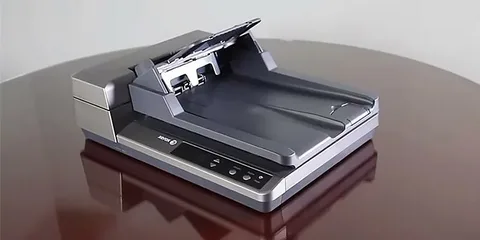
Size is naturally one of the first considerations for a small desk. A flatbed scanner can be particularly useful because its design allows users to scan individual documents, photographs, books, and other materials that may not work well with a traditional sheet fed scanner.
Connectivity is another important factor. A scanner that connects easily to a computer or other workstation can make it simpler to incorporate scanning into an existing setup. Users should also consider scanning speed, image quality, resolution, and the types of documents they expect to digitize regularly.
Software can be just as important as the physical footprint. Intuitive scanning software can help users adjust settings, organize digital files, and complete recurring scanning tasks without unnecessary complexity. For small offices, an efficient workflow can be especially valuable when desk space and working time are both limited.
It is also worth considering how frequently the scanner will be moved. A compact design can make it easier to reposition the device when additional workspace is needed, making versatility another useful consideration for shared desks and multipurpose work areas.
Using Compact Scanners for Business Cards, Photos, and Other Documents
A compact scanner can serve multiple purposes beyond everyday paperwork. Businesses may use business card scanners to digitize contact information and reduce the need to maintain physical collections of cards. Converting these materials into digital records can make information easier to store and access.
Photographs are another area where flatbed scanning can be useful. When preserving family photographs, artwork, or other images, users may want a device capable of capturing detailed digital copies. A best photo scanner can help users digitize photographs while maintaining image quality for future storage, sharing, or printing.
Compact scanners can also accommodate receipts, forms, letters, and other important documents. For professionals working from smaller offices or home workspaces, having one device capable of handling several types of materials can reduce the need for multiple pieces of equipment.
Ultimately, the right compact scanner depends on the materials being digitized, available desk space, and desired workflow. By considering size, functionality, connectivity, image quality, and software features together, users can find a scanning solution that delivers practical performance without overwhelming a small workspace.