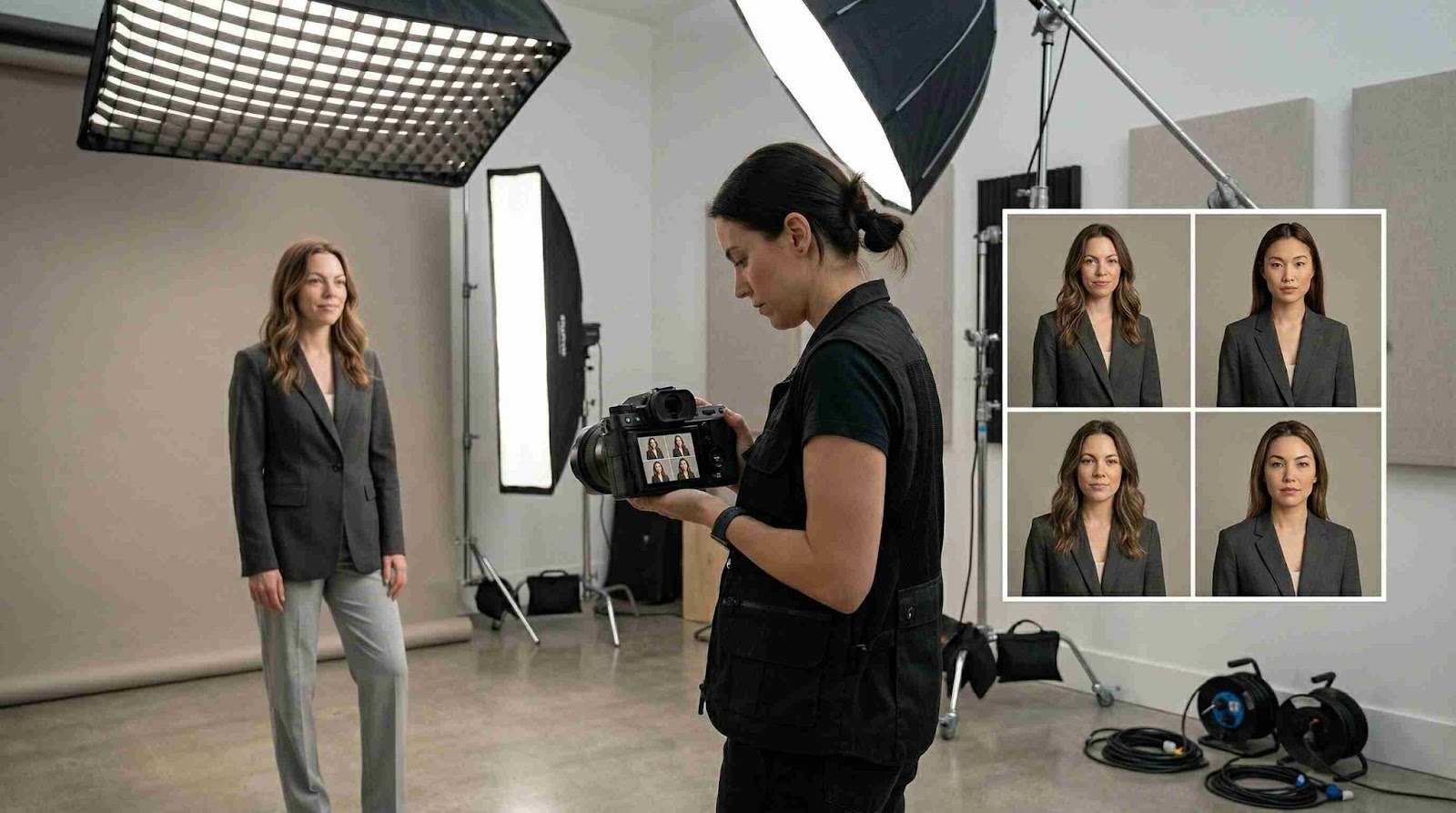
Every brand wants high quality visuals.
Very few want to deal with the cost of producing them.
Model shoots have always been one of the most expensive parts of visual content creation. They require planning, coordination, and multiple layers of execution before a single usable image is produced.
For years, this was unavoidable.
If you wanted professional visuals, you had to invest in production.
That assumption is now being challenged.
The Real Cost Behind a “Simple” Photoshoot
What looks like a single image often involves multiple moving parts.
A typical model shoot includes:
-
Hiring talent
-
Booking a studio or location
-
Managing lighting and equipment
-
Coordinating creative direction
-
Editing and post production
Even a small shoot can quickly become expensive.
The cost increases further when variations are needed.
Different audiences, different campaigns, and different formats all require additional versions. That often means repeating the process or extending production time.
Why Traditional Production Does Not Scale
The problem is not just cost. It is scalability.
Modern content demands:
-
Multiple creatives for ads
-
Frequent updates
-
Platform specific formats
-
Localized variations
Traditional photoshoots are not designed for this level of output.
Each new variation adds time, cost, and complexity.
This creates a gap between what brands need and what production can realistically deliver. Broader shifts in automation and creative workflows are already being discussed in reports like AI changing business models, where efficiency is becoming a core competitive advantage.
A Different Way to Think About Visual Production
Instead of treating every variation as a new production task, some teams are starting to treat visuals as adaptable assets.
The base image remains the same.
Identity becomes flexible.
That shift changes the economics of content creation.
In practical workflows, Face Swap is used to modify identity directly within existing visuals, reducing the need to reshoot content. Within the Higgsfield ecosystem, this approach allows teams to generate variations without rebuilding the entire image.
Replacing Repetition With Adaptation
One of the biggest inefficiencies in model shoots is repetition.
A brand may need:
-
The same product with different models
-
The same scene adapted for different audiences
-
Slight variations for testing
Traditionally, each of these requires additional production.
With Higgsfield Face Swap, the same base visual can be adapted with a new identity while keeping lighting, composition, and product placement completely intact.
This removes the need for repeated shoots.
Cost Reduction Without Sacrificing Quality
Reducing cost often comes with trade offs.
Lower budgets usually mean lower quality.
That is why many brands hesitate to move away from traditional production.
Higgsfield Face Swap changes that balance.
By preserving the original structure of the image, it maintains visual quality while reducing the need for additional production.
Instead of lowering standards, it reduces redundancy.
Faster Turnaround for Campaigns
Time is another major factor.
Photoshoots require:
-
Scheduling
-
Preparation
-
Execution
-
Editing
This process can take days or even weeks.
With face swap workflows, variations can be created much faster.
Higgsfield Face Swap allows teams to:
-
Generate new versions quickly
-
Respond to feedback in real time
-
Adapt campaigns without delays
This speed becomes a competitive advantage.
Supporting Scalable Content Production
Modern marketing relies on volume.
Campaigns require:
-
Multiple creatives
-
Continuous updates
-
Ongoing testing
Scaling this with traditional shoots is expensive and slow.
Face swap workflows support scalability by allowing multiple variations to be generated from a single asset.
Within workflows on the Higgsfield, this makes high volume content production more practical.
Consistency Across Visuals
Consistency plays a major role in how content is perceived.
When visuals are created across different shoots, small differences can appear:
-
Lighting variations
-
Composition shifts
-
Changes in tone
Higgsfield Face Swap maintains consistency by keeping the structure of the image unchanged.
This ensures that all variations feel aligned.
Enabling More Flexible Creative Testing
Marketing today relies heavily on testing.
Brands experiment with:
-
Different models
-
Different messaging
-
Different visual styles
Traditional production limits how quickly these tests can be executed.
Face swap workflows remove that limitation.
By enabling rapid variation, Higgsfield Face Swap supports faster experimentation without increasing production cost.
Redefining the Role of Photoshoots
This does not mean photoshoots disappear completely.
They still play a role in creating high quality base assets.
What changes is how often they are needed.
Instead of being repeated for every variation, they are used strategically.
Higgsfield Face Swap extends the value of each shoot by allowing it to be adapted multiple times.
Why Brands Are Adopting This Quietly
This shift is happening without much noise.
Brands are not replacing entire production pipelines overnight.
They are gradually integrating more efficient workflows.
Higgsfield Face Swap fits into existing processes without requiring major changes.
This makes adoption easier.
From High Cost Production to Efficient Systems
The biggest change is not just cost reduction.
It is how content is produced.
Instead of relying on repeated production, brands are moving toward systems where visuals can be adapted and reused.
Higgsfield Face Swap supports this by turning static images into flexible assets.
Conclusion
Expensive model shoots have long been a standard part of content creation.
But as content demand increases, the limitations of this approach become clear.
Face swap technology offers a more efficient alternative.
By reducing the need for repeated production, maintaining consistency, and enabling faster variation, it changes how visuals are created.
Higgsfield Face Swap reflects this shift toward more scalable and cost effective workflows.
As brands continue to look for ways to produce more content with fewer resources, this approach will become increasingly relevant.