The Hidden Vulnerabilities in Commercial Solar PV Infrastructure
Why Transient Overvoltages Are the #1 Threat
In large-scale solar arrays, the photovoltaic (PV) inverter is both the most expensive component and the most vulnerable to transient overvoltages. Extreme weather patterns and rapid grid switching events frequently create massive electrical spikes that bypass standard fuses.
Without adequate protection, indirect lightning strikes or localized grid anomalies can cause immediate, catastrophic equipment failure. This leads to profound revenue loss through extended system downtime and expensive hardware replacement.
To mitigate these critical risks, engineers typically integrate a specialized LSP Surge Protective Device (SPD) into the PV combiner box. These high-capacity devices are engineered to instantly clamp excess voltage and safely route the surge current to the ground in microseconds, ensuring continuous operation even during severe weather anomalies.
Thermal Degradation and Component Lifespan
Beyond sudden voltage spikes, continuous thermal stress silently degrades the efficiency of commercial solar arrays. Solar panels and internal wiring operate in harsh, unshaded environments, subjecting them to intense daily temperature fluctuations.
Over time, this constant expansion and contraction stresses the solder joints and micro-connections within the modules. Furthermore, minor electrical fluctuations exacerbate this wear, leading to Potential Induced Degradation (PID).
To maximize component lifespan, engineers must account for both environmental heat dissipation and electrical stability during the initial facility design phase.
Designing a Resilient Electrical Protection Strategy
Best Practices for Grounding and Equipotential Bonding
A comprehensive defense against electrical surges requires industrial-grade grounding systems. Proper grounding ensures that fault currents have a low-impedance path safely into the earth, away from sensitive electronics.
- Equipotential Bonding: All metallic components must be bonded to prevent dangerous potential differences.
- Ground Loop Prevention: Strategic layout design prevents circulating currents that can interfere with data transmission.
- Soil Resistivity Testing: Conduct thorough site testing to determine the necessary depth and spacing of grounding rods.
Strategic Placement of Protection Devices
Effective overvoltage protection relies on the concept of cascading protection. Placing a single surge protector is insufficient for sprawling commercial solar installations.
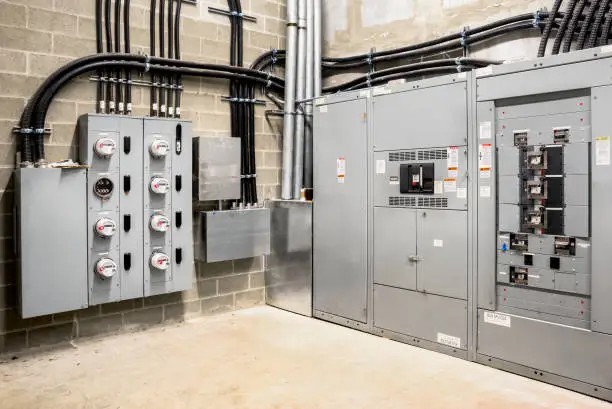
Instead, electrical engineers must deploy coordinated SPDs across multiple strategic nodes. Primary protection is installed at the Main Distribution Board (MDB) to handle massive external surges from the utility grid.
Secondary devices are placed at the PV combiner boxes and directly at the inverter inputs to clamp residual voltages and internal switching surges, creating a multi-layered defense.
Leveraging Predictive Maintenance for Long-Term ROI
Thermal Imaging and Automated Monitoring
Waiting for a component to fail before replacing it is no longer economically viable in modern energy management. Predictive maintenance relies on real-time data to identify anomalies long before they trigger an outage.
Facility managers increasingly integrate SCADA (Supervisory Control and Data Acquisition) systems to monitor voltage, current, and temperature at a granular level.
- Infrared Inspections: Drones equipped with thermal cameras quickly identify “hot spots” on solar panels.
- Inverter Analytics: Software detects micro-deviations in conversion efficiency, signaling internal wear.
- Automated Alerts: Systems immediately notify maintenance crews when parameters breach safe operating thresholds.
Compliance with International Electrical Standards
Adhering to IEC and IEEE Guidelines
Designing a robust safety architecture is not just about asset protection; it is also a strict regulatory requirement. Industry frameworks continually evolve to address modern electrical threats and ensure operational consistency across the globe.
By strictly following the guidelines on power system reliability and smart grid interoperability, facility managers can ensure their installations meet the rigorous safety metrics required for commercial operation and insurance compliance.
Adherence to benchmark standards like IEC 61643 (for surge protection) and IEEE 1547 (for distributed energy resources) is non-negotiable. These frameworks provide the definitive engineering blueprint for building renewable infrastructure that is both highly profitable and fundamentally safe.