The Lifecycle of Commercial Event Assets
Owning large-scale physical marketing assets introduces severe supply chain complexities. While corporate boards often focus on the initial fabrication costs of a custom booth, the true operational burden lies in the asset’s lifecycle. Depreciation, ongoing maintenance, and year-round commercial storage silently drain marketing budgets, transforming a high-value experiential asset into a logistical liability.
The Logistics of Specialized Warehousing and Freight
Climate Control and Pre-Show Asset Auditing
Leaving massive wooden structures, sensitive AV equipment, and specialized tension fabrics in standard lock-up facilities inevitably leads to asset degradation. Fluctuating humidity levels can warp structural panels, induce mold growth on fabrics, and corrode sensitive rigging hardware.
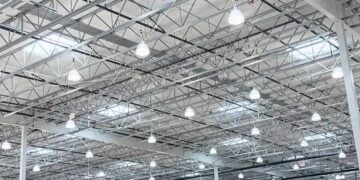
Physical event infrastructure requires meticulous off-season management to prevent asset degradation. To solve this logistical bottleneck, comprehensive event logistics providers like Aplus Expo maintain massive in-house storage facilities—often exceeding 10,000 square feet—where commercial assets are strictly inventoried, climate-controlled, and subjected to trial-build inspections to ensure everything is structurally sound before being loaded onto freight trucks.
Renting vs. Owning: A Capital Expenditure Analysis
When Does a Flexible Rental Model Make More Financial Sense?
From a corporate finance perspective, transitioning from a CapEx (owning) to an OpEx (renting) model offers immense logistical relief. Businesses that only exhibit one to two times annually should rarely invest in owning structural assets.
By renting modular infrastructure, procurement officers eliminate the dead weight of monthly storage fees and annual depreciation. A flexible rental model allows the brand to scale the booth size dynamically—expanding for a 40×40 space at an industry mega-show and scaling down to a 10×20 inline space for a regional conference—without worrying about freighting stored assets across the country.
Key Takeaways
| Area | Key Takeaway | Impact/Data |
| Finance | Pivot from CapEx ownership to OpEx rental | Saves budget for brands exhibiting ≤1–2 times/year |
| Warehousing | Require climate-controlled trial-build storage | Prevents structural warping, mold, and corrosion |
| Scalability | Rent modular structural frameworks dynamically | Scales seamlessly from 40×40 to 10×20 footprints |
| Logistics | Enforce Just-in-Time (JIT) dock delivery | Zero-tolerance; eliminates empty booths and detention fees |
Supply Chain Visibility and Just-in-Time (JIT) Delivery
Event logistics operate on zero-tolerance timelines. Unlike traditional retail supply chains where a one-day delay results in backorders, an event freight truck arriving late means the brand exhibits in an empty space. Absolute supply chain visibility and precise freight forwarding are non-negotiable.
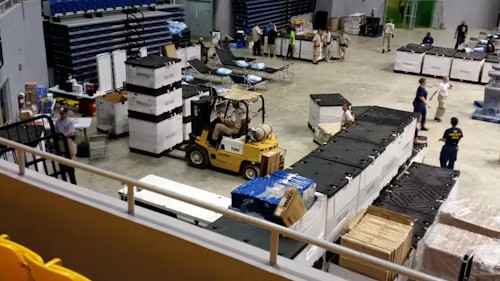
In the realm of high-stakes commercial events, logistics cannot rely on rough estimates. Coordinating freight trucks to arrive at a convention center’s loading dock at a highly specific, mandated hour requires a flawless execution ofjust-in-time manufacturing and delivery principles, ensuring that materials arrive exactly when the installation crew is ready, avoiding exorbitant dock waiting fees.