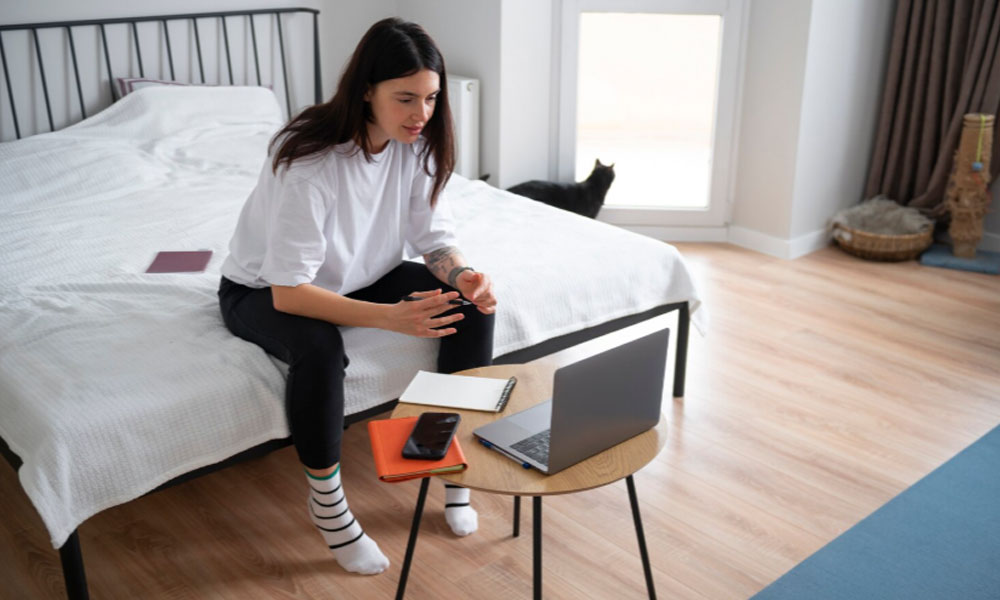
Using the space you already have more efficiently is the idea behind creating a flexible guest room. Spare bedrooms, offices, dens, or places inside a living room – any area you can Call Your Own should be made ready to function as a place that helps you carry out your daily activities while also being comfortable for incoming guests.
Discovering the correct sleep configuration may frequently serve as the foundation of the space. Find the right sofa bed at Poly & Bark whenever you seek sitting options for your everyday life while at the same time obtaining a bed that opens for overnight visitors without devoting an entire room to the rest itself.
Why Using Flexibility
Having several functions within the room means saving budget and efforts on extensive exterior renovation. Guest rooms can be equally used as offices, reading, working-out, and sewing areas in the house. Only a careful approach is needed to put guest rooms to work.
Flexible rooms do not mean turning the furniture arrangement upside down. What you need to do is select appropriate furniture, storage, and lighting to help the room perform its daily functions and also cater to the needs of your guests.
Focus On The Room’s Primary Function
It’s a good idea to establish how the room will be utilized during a typical seven days before selecting furniture. Will the room be used for work on weekdays? Do guests stay overnight or over the weekend? Will the room be used for exercise, craftwork, pet supplies, or seasonal storage?
Opt for a primary use functionality with no more than two auxiliary use functionalities. The main function must be the most favorable area, the most accessible stocking place, as well as the room with the biggest proportion of floor covering. This approach prevents the room from becoming cluttered with seldom-used belongings.
As you judge the room users. Young children, older people and visitors who suffer from mobility difficulties will need adequate passage routes, stable furniture pieces, easily accessible lamps and beds that are easy to reach.
Finding the correct sleeping solution
When selecting various beds, different types imply different compromises regarding comfortability, covered floor area, time for placement in use and storage.
- Convertible sofa beds: The most useful type when the room in question serves as a living room or as an office where an ordinary seat is needed.
- Daybeds: Their appearance resembles a sofa during day time.
- Murphy beds: They consist of beds that fold up against a wall to save space. However, there are several limitations, e.g., suitable shapes of the wall and proper installation.
- Foldaway guest beds: These beds can be put on the shelf; however, they still require storage.
- Standard beds with storage: These beds are the best solution when the room has to serve as a bedroom often.
When measuring the furniture, one should check its dimensions when completely unfolded not when closed. It is crucial to measure the opening routes as well. Additionally, one should be aware of the mattress thickness, as well as the power of the frame, weight limits and the conversion.
Plan A Clear And Comfortable Layout
- Take measurements of the entire room, including door movement, windows and vents and power outlets.
- Take some painter’s tape and trace the fully opened outline of the bed furniture.
- Ensure that there is a clear path from the entrance of the room to the bed and seating.
- Store commonly used objects/ things within reach.
- Put working spaces in a spot where maximum daylight is accessible, and that minimizes any glare on monitors.
Having sufficient open space in a room creates an ambiance of calmness and makes it more usable. Larger objects can be moved into the walls, and light furniture should be selected to be used when having visitors over. The use of rugs, lamps, shelves, and paints can help to separate spaces visually without making any physical barriers.
Add Storage That Works Every Day
Storage is essential to make sure things do not get cluttered in space. Different types of storage can be used like seats with storage in them, shelves, ottomans, wall hooks, small cabinets, and various baskets depending on the needs of the room.
Living and visitor supplies need to be sorted separately. Have closets, bins, or any containers for keeping the clean linens, towels, and toiletries in a separate place. It is also important to have things hidden when children are not in the room.
Create A Welcoming Guest Atmosphere
Softening the space with soft drapery, a washable throw blanket, a rug, and some cozy cushions can create a relaxing and comfortable ambiance while ensuring easy maintenance. Keep a tiny surface clear for a mobile device, glasses of water, a book, or your reading glasses.
To meet the basic needs of your guests without taking up too much space, you may add a mirror, trash bin, coat hanger and easily accessible charging area to your facility. Make your decor distinct yet not overwhelming, leaving enough space to unpack and feel relaxed.
Enhancing lighting, privacy, and noise protection
Change the lighting scheme to include overhead lighting, a working lamp, and a soft light fixture or bedside lamp for more relaxation in the evening. Install window coverings that can provide privacy while letting sunlight inside when necessary. Locate the reading lamp in close proximity to the sleeping area for maximum convenience.
Use carpets, drapes, upholstery, and seals for doors in good shape respectively to minimize noise. Be careful with cords and plugs to make them easily reachable without creating any obstacles on the floor. Effectively using flexible guest space is simple if one makes sure that all items are placed in their assigned locations. The key is to have a process that enables the room to switch from daily use to guest living.
Questions Frequently Asked Regarding the Flexible Guest Space Room
What kind of furniture is best to use for a multipurpose guest room?
The answer greatly depends on the size of the room as well as the frequency of guests and their expectations regarding comfort. Sofabeds (or daybeds) are good for rooms where seating during the day is required, while Murphy beds or ordinary beds with storage may work better when sleeping comfort is of the most importance.
How much space to leave around the pull-out sofa?
It is necessary to follow your producer instructions and measure the piece fully opened. While leaving space, make sure that there is enough room for guests to access doors, windows, vents, as well as important storage locations.
Can guest room be also used as a home office?
Definitely, a guest room can do the same job as a home office. One needs all necessary amenities for work, including a compact desk, good lighting, concealed wires, and foldable sleeping options.
How to make a small room appear bigger?
- Use multifunctional furniture
- Keep floor space visible
- Utilize vertical storage
- Apply light colors and layered lighting
- Avoid large furniture pieces and clutter
To summarize, a versatile guest room must first serve everyday needs and only then allow for visitors with little effort. With the help of an effective sleeping option, a defined layout, functional storage, and an easy-to-follow resetting process, it is possible to make a small space comfortable and guest-ready all year round. Here, the notion of multifunctional furniture will probably come in handy: one single item can be enough to fulfill multiple purposes in a room.