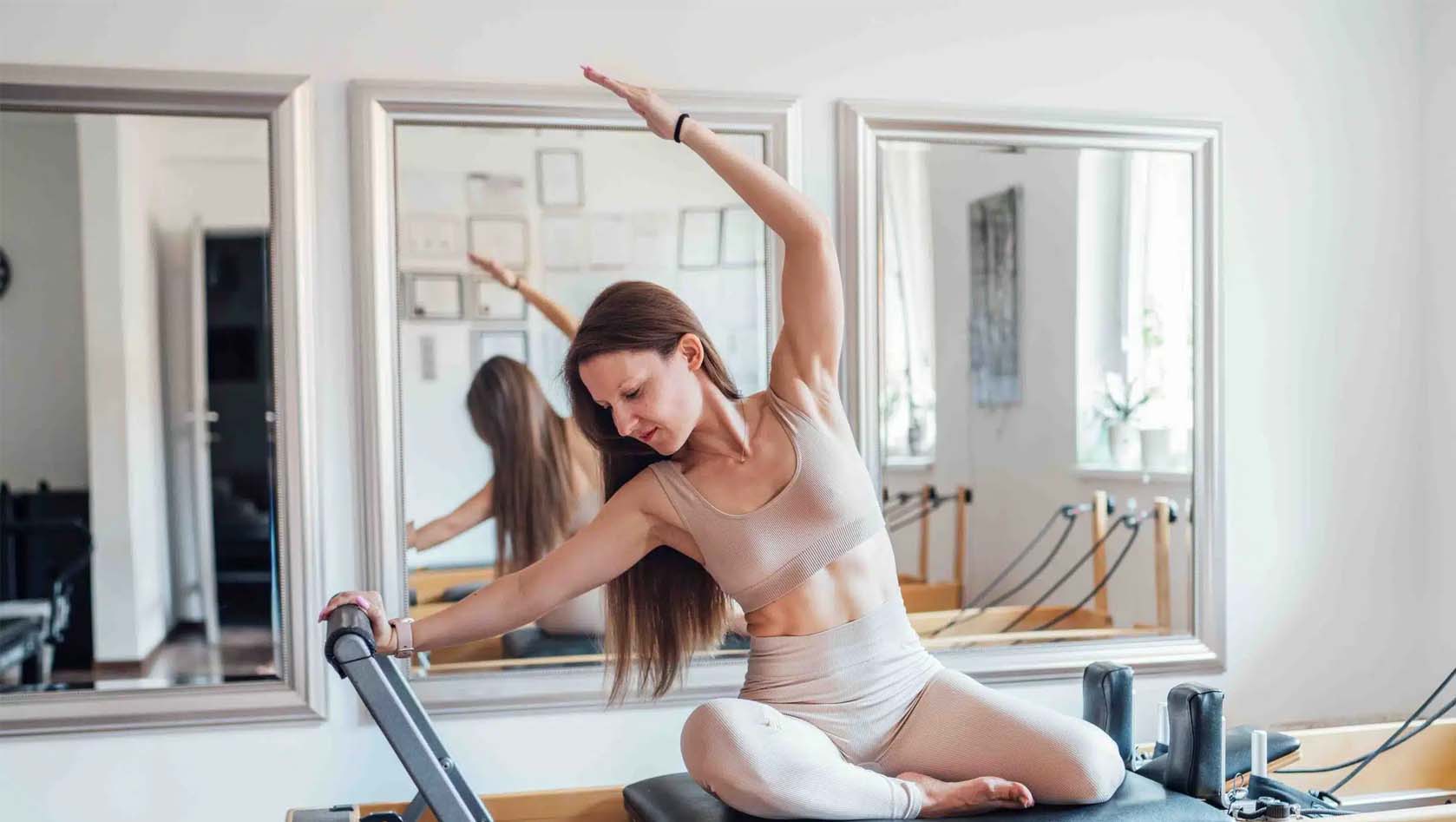
Reformer Pilates has a way of revealing the smallest gaps in how you move. You can finish a full session, feel the burn, and still not see real progress, not because you aren’t working hard enough, but because a few common reformer Pilates mistakes are quietly affecting your form.
Most of these mistakes don’t look obvious. In fact, they often feel completely normal while you’re doing them. That’s why so many people in Pilates studios across the USA repeat them without realizing it, until someone points them out and everything suddenly feels different.
Why Proper Form Matters in Reformer Pilates
Proper form is what makes the workout work. On the reformer, small adjustments change everything: which muscles engage, how your body feels, and whether you’re building strength or just getting through the movement.
When form slips, the body compensates. When it’s right, everything feels more controlled, more connected, and far more effective, even with fewer reps.
5 Common Reformer Pilates Mistakes
These are the five common reformer pilates mistakes:
1. Letting Momentum Replace Control
This tends to show up early, but it doesn’t always go away with experience. At some point, the carriage starts moving more than you do. You press out, and instead of controlling the return, you let the springs pull you back in.
It feels smooth, even satisfying, but it disconnects you from the very muscles you’re trying to train. The difference is subtle but important: Momentum moves the carriage. Control challenges the body.
When you slow the return phase and actively resist it, the entire exercise changes. Your core switches on, your stabilizers engage, and suddenly the movement feels more deliberate, sometimes even harder, but in a way that makes sense.
2. Confusing Core Engagement with Tension
“Engage your core” is one of the most repeated cues, and one of the most misunderstood.
What many people end up doing is bracing: tightening everything, holding the breath, and locking the torso in place. It creates the illusion of strength, but it actually limits movement and shifts effort into the wrong areas, especially the hip flexors and lower back.
True core engagement is quieter than that. It’s responsive, not rigid. The difference looks like this:
- Tension feels forced, heavy, and restrictive
- Engagement feels supportive, steady, and adaptable
When it’s working properly, your core doesn’t overpower the movement; it supports it. You can still breathe, still move fluidly, and still adjust as needed. If you have to choose a checkpoint, make it this: If your breathing stops, your core probably isn’t working the way you think it is.
3. Losing Alignment to “Get Through” the Exercise
There’s a moment in almost every session where form starts to slip, not dramatically, but just enough. The knees drift inward. The pelvis shifts. The shoulders creep up. And usually, it happens for one reason: you’re trying to finish the movement.
This is where alignment becomes a choice. You can either complete the rep as planned, or you can stay aligned and adjust to a smaller range, lighter resistance, and slower pace. One prioritizes completion. The other prioritizes quality. Over time, that choice adds up. Aligned movement distributes effort across the right muscles.
4. Using Resistance as a Shortcut Instead of a Tool
It’s tempting to think that more resistance equals a better workout. More springs, more effort, more results. But the reformer doesn’t work that way.
Heavier resistance can actually make certain exercises easier, especially when it starts doing part of the work for you. On the flip side, lighter resistance often demands more control, more stability, and more awareness.
The question isn’t how heavy it feels. It’s what it allows you to do.
- If the resistance pulls you out of alignment, it’s too much
- If it removes the need for control, it’s also too much
- If it challenges you without compromising form, it’s just right
5. Treating the Upper Body as Secondary
A lot of focus naturally goes to the legs and core, especially during footwork or lower-body sequences. Meanwhile, the upper body quietly slips into passive patterns, shoulders lifting, arms overworking, neck tightening.
The issue isn’t effort. It’s awareness. Your upper body isn’t just along for the ride. It stabilizes, supports, and connects movement from one end of the body to the other. When it’s not engaged properly, tension tends to collect in all the wrong places.
The difference becomes clear when you shift your attention:
- Shoulders stay heavy and relaxed instead of creeping upward
- Arms assist the movement without dominating it
- The neck stays free instead of bracing
It’s less about doing more with the upper body and more about letting it participate correctly.
Pro Tips to Improve Your Form Faster
If you want to level up quickly, keep it simple:
- Watch yourself in a mirror when possible
- Record short clips to check alignment
- Start with lighter resistance and build gradually
- Focus on how the movement feels, not just how it looks
And most importantly, slow down enough to notice what’s actually happening in your body during each phase of the movement. That awareness is where actual progress starts.
Takeaway: Visible improvement in Reformer Pilates comes from control and awareness, not speed or resistance. When you learn to move with supervision from experts in the Pilates Reformer studio, then every exercise becomes more effective, more stable, and more connected over time.
Conclusion
Fixing the above reformer Pilates mistakes is less about intensity and more about awareness. Most of these mistakes don’t come from doing something “wrong” in an obvious way. They come from doing something almost right, just without enough awareness, control, or intention.
That’s why quick fixes rarely stick. Real improvement happens when you start recognizing these patterns as they happen, not after. When you adjust mid-movement. When you choose control over completion and awareness over habit.
Many people only realize the difference when they experience a more focused, hands-on environment, like a dedicated Reformer studio in places such as Pilates Nosara, Costa Rica, where instruction emphasizes alignment, breath, and precision over rushing through routines.