A clean home can make everyday life feel calmer, more organized, and far more comfortable, but maintaining it does not have to become a second full-time job. Whether you follow your own routine or turn to a service found through http://thewhiteglove.biz/, the best results usually come from cleaning with a clear plan instead of moving randomly from room to room. A few practical habits can prevent mess from piling up and make each cleaning session feel much more manageable.
Start With the Spaces That Affect You Most
Every home has certain areas that seem to attract clutter faster than others. The kitchen counter becomes a drop-off point for mail, shoes collect near the entrance, and the living room slowly fills with cups, blankets, and chargers.
Instead of trying to clean the entire house at once, begin with the rooms that have the biggest effect on how your home feels. Clearing the entryway creates a better first impression when you walk through the door. Tidying the kitchen makes meals easier to prepare. Refreshing the living room gives you a comfortable place to relax at the end of the day.
This approach provides an immediate sense of progress. Once the most visible areas look better, the rest of the work often feels less overwhelming.
Give Every Cleaning Session a Clear Purpose
Cleaning becomes frustrating when you try to do everything at the same time. You may begin wiping a counter, notice a drawer that needs organizing, carry an item into another room, and suddenly find yourself sorting through a closet.
A more effective approach is to decide what type of cleaning session you are starting. One day might be devoted to surfaces and dusting. Another could focus on floors, laundry, or kitchen appliances. Separating tasks helps you stay focused and prevents a quick cleanup from turning into an exhausting project.
It also makes it easier to fit cleaning into a busy schedule. A focused 20-minute session can produce noticeable results when you know exactly what you are trying to accomplish.
Work From High to Low
There is a simple reason professional cleaners often begin near the top of a room. Dust and crumbs naturally fall downward as you work.
Start with ceiling fans, light fixtures, shelves, and the tops of cabinets. Continue with tables, counters, windowsills, and other surfaces before finishing with the floors. If you vacuum first and dust afterward, you may end up cleaning the same area twice.
Working from high to low creates a natural order. It also helps you move through each room without wondering what to tackle next. Begin at the highest practical point, move steadily downward, and finish by vacuuming or mopping.
Let Cleaning Products Do the Hard Work
Many people spray a surface and immediately begin scrubbing. While that may work for light dirt, stubborn buildup usually needs more time.
Apply the appropriate product and allow it to sit for a few minutes before wiping. This gives the formula time to loosen grease, soap residue, and dried spills. While one product is working, you can complete another small task nearby.
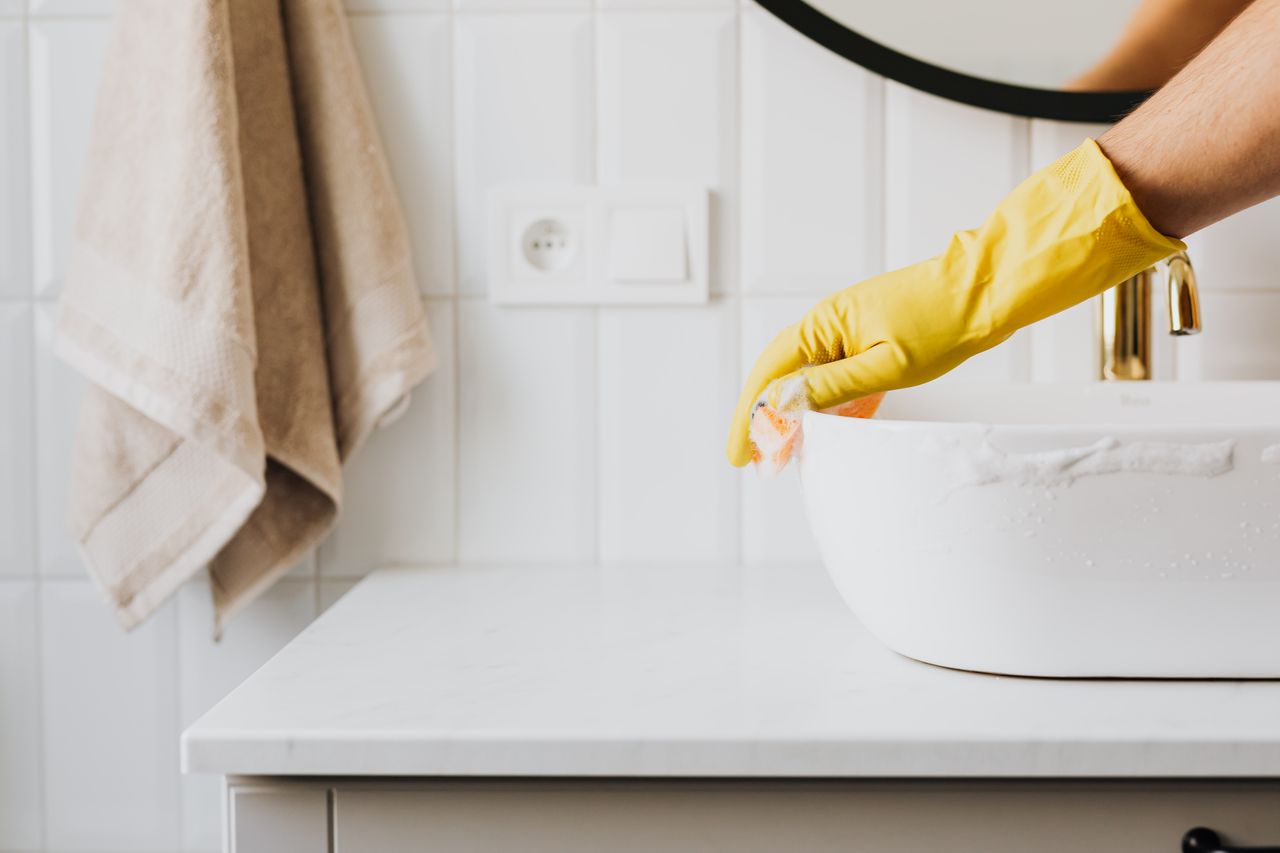
This technique is especially useful when cleaning sinks, stovetops, showers, and other frequently used areas. It can reduce the amount of scrubbing required while helping you achieve a more even finish.
Always follow the instructions on the label, ventilate the room when necessary, and avoid combining cleaning products. Mixing certain formulas can create dangerous fumes.
Make Small Details Shine
Once the main surfaces are clean, a few finishing touches can completely change the appearance of a room. These details may only take a few minutes, but they often create the polished look people associate with a professionally maintained home.
In the kitchen, wipe fingerprints from appliance doors and straighten the items left on the counters. In sleeping areas, smooth the bedding, clear the nightstands, and place loose clothing where it belongs. In washrooms, polishing mirrors and bathroom fixtures can brighten the entire space by removing water spots, fingerprints, and dull residue.
Door handles, light switches, cabinet pulls, and remote controls also deserve regular attention. These frequently touched areas are easy to overlook, even though they quickly collect grime.
Stop Clutter Before It Becomes a Project
Cleaning and decluttering are closely connected, but they are not exactly the same. It is difficult to wipe a table, vacuum a floor, or clean a counter when every surface is covered with belongings.
The easiest way to control clutter is to give frequently used items a permanent place. Keys can go in a tray near the entrance. Chargers can be stored in a small basket. Mail can be sorted as soon as it enters the house rather than being left in a growing stack.
Try to reset shared spaces at the end of each day. Return items to their proper rooms, throw away rubbish, and straighten the surfaces you use most. This does not need to take long. Even five or ten minutes can prevent a minor mess from becoming a weekend-long organizing project.
Build Habits Around Your Existing Routine
A cleaning schedule is only useful when it fits comfortably into your life. An ambitious plan may look impressive on paper, but it will not help if it is too difficult to maintain.
Attach small tasks to habits you already have. Wipe the kitchen counter while waiting for the kettle. Straighten the living room before turning off the lights at night. Clean the sink after brushing your teeth. Start a load of laundry before preparing breakfast.
These small actions reduce the amount of work waiting for you later. They also make cleanliness feel like part of the normal rhythm of the day instead of a separate chore that requires hours of motivation.
Do Not Ignore Hidden Trouble Spots
Some areas remain out of sight until dirt, dust, or unpleasant odors become noticeable. The space beneath furniture, the tops of doors, the area behind appliances, and the corners of closets may not need daily attention, but they should not be forgotten completely.
Set aside occasional sessions for these overlooked areas. Move lightweight furniture when vacuuming, wash rubbish bins, wipe baseboards, and check beneath beds for dust. Kitchen appliances may also need periodic cleaning around seals, handles, filters, and ventilation areas.
Rotating these deeper tasks is more realistic than trying to complete all of them in one day. Choose one or two each week, and your home will gradually receive a more thorough level of care without requiring an exhausting seasonal cleanup.
Keep Your Supplies Simple and Accessible
You do not need a cupboard packed with dozens of products to maintain a clean home. A few dependable supplies can handle most everyday jobs.
Keep microfiber cloths, gloves, rubbish bags, a vacuum, a mop, and suitable surface cleaners within easy reach. A portable cleaning caddy can save time because you can carry the essentials from one room to another instead of repeatedly returning to a storage cupboard.
Store products safely, especially in homes with children or pets. Labels should remain visible, lids should be tightly closed, and formulas should stay in their original containers. Good organization makes cleaning faster while reducing the chance of spills or misuse.
Create a Home That Feels Easier to Maintain
The goal of home cleaning is not perfection. A home is meant to be lived in, and signs of daily life will always return. The real objective is to create an environment that feels comfortable, functional, and easy to reset.
Focus on consistency rather than trying to make every room flawless. Clean the areas that matter most, deal with spills before they harden, put belongings away regularly, and divide larger jobs into smaller sessions.
When these habits become part of your routine, maintaining your space requires less effort. Instead of sacrificing an entire weekend to cleaning, you can enjoy a home that feels fresh, welcoming, and under control throughout the week.