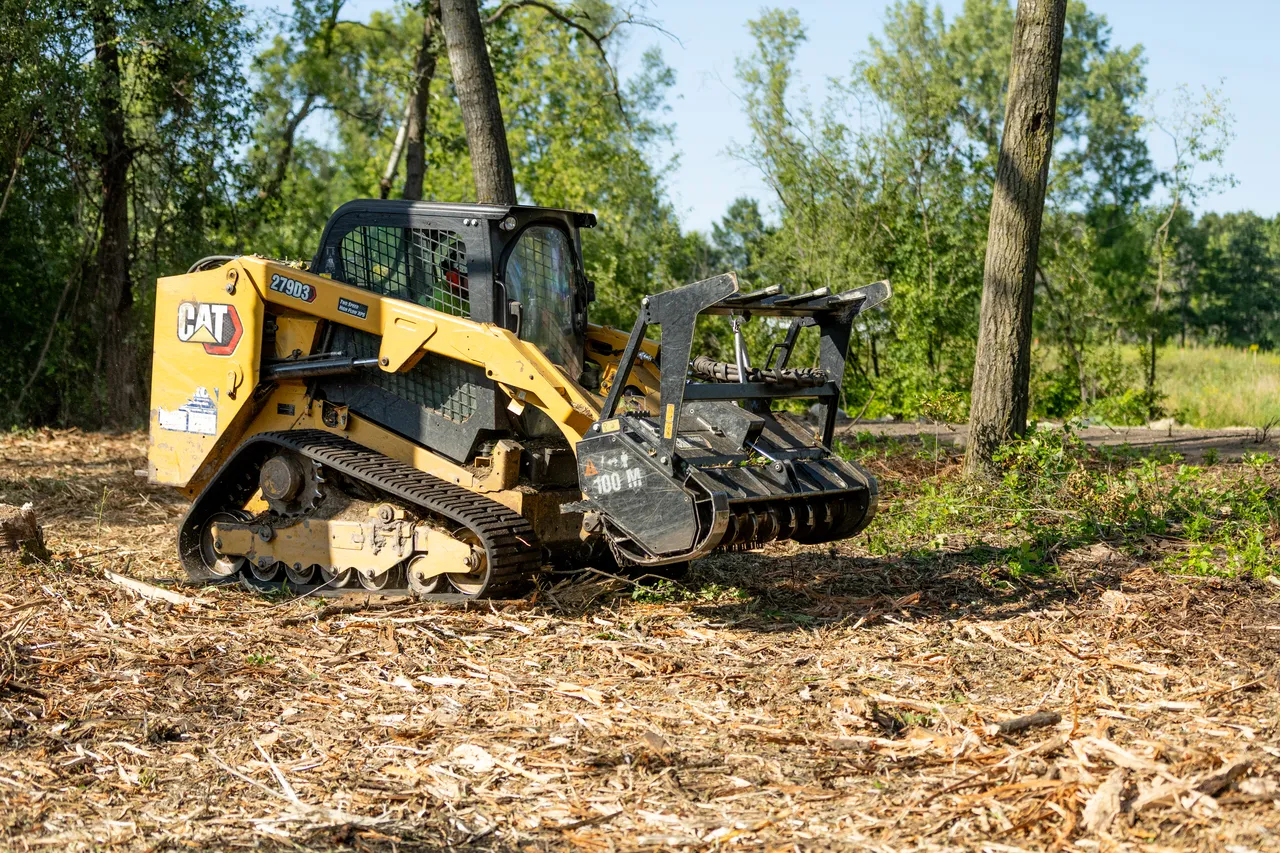
Forestry mulching is a modern, environmentally conscious approach to land clearing and vegetation management that has gained popularity among landowners, developers, and conservationists. Unlike traditional methods such as bulldozing, burning, or chemical clearing, forestry mulching uses specialized machinery to shred trees, brush, and vegetation into mulch directly on-site. This method is not only efficient but also minimizes environmental disruption while promoting soil health. By converting unwanted vegetation into nutrient-rich mulch, forestry mulching supports sustainable land management, prevents soil erosion, and reduces the overall labor and costs associated with land clearing. Its versatility allows it to be used for a variety of applications, from residential and commercial land development to ecological restoration and wildfire mitigation.
The process of forestry mulching begins with specialized equipment, typically a mulching machine or an attachment for skid steers or tractors, which grinds trees, shrubs, and underbrush into small chips. These chips remain on the ground, creating a natural mulch layer that conserves soil moisture, suppresses weeds, and gradually decomposes, enriching the soil with organic matter. This technique allows for selective clearing, preserving desired vegetation while eliminating unwanted or invasive species. In addition to improving soil fertility, forestry mulching reduces the need for multiple steps in land clearing, such as hauling debris or applying chemical treatments. By combining efficiency with ecological benefits, forestry mulching has become a preferred choice for responsible land management.
The Importance of Forestry Mulching
Forestry mulching is essential for efficient land management and environmental protection. Traditional land clearing techniques such as bulldozing can lead to soil compaction, erosion, and destruction of the natural ecosystem. Burning, while effective at removing vegetation, releases carbon and pollutants into the atmosphere, while chemical herbicides may contaminate the soil and surrounding water sources. Forestry mulching addresses these concerns by preserving soil structure, minimizing environmental impact, and providing a sustainable alternative that enhances land quality.
From a practical standpoint, forestry mulching saves time, labor, and costs. Instead of clearing land in multiple steps, mulching combines tree and brush removal, grinding, and mulching into a single operation. This efficiency reduces the need for transporting debris off-site and allows landowners to proceed with development, landscaping, or agricultural projects more quickly. Furthermore, the process creates a natural protective layer on the ground, preventing erosion, retaining moisture, and encouraging the growth of native vegetation. By investing in forestry mulching, landowners can achieve both short-term project goals and long-term ecological benefits.
Applications of Forestry Mulching
Forestry mulching is highly versatile and can be applied in a variety of contexts. One of the primary uses is land clearing for development projects. Before constructing roads, homes, commercial buildings, or utility infrastructure, overgrown land must be cleared of trees, brush, and undergrowth. Forestry mulching accomplishes this efficiently while minimizing environmental disturbance and maintaining soil health.
Another significant application is wildfire mitigation. Dense vegetation and overgrown brush are primary fuel sources for wildfires. By selectively removing excess growth and leaving mulch to suppress regrowth, forestry mulching reduces fire hazards while preserving valuable soil and ecosystems. The method is also commonly used for habitat restoration, roadside maintenance, agricultural land preparation, and management of invasive plant species. Its ability to manage overgrowth without harming surrounding vegetation makes forestry mulching an environmentally responsible choice for both public and private projects.
Techniques and Equipment in Forestry Mulching
Forestry mulching relies on specialized machinery designed to grind and shred vegetation efficiently. Mulching machines, often mounted on skid steers, tractors, or excavators, are equipped with rotating drums or blades that process trees and brush into small, manageable pieces. The size of the resulting mulch can be controlled to suit specific project needs, whether for soil protection, erosion control, or aesthetic purposes.
Operators use precision techniques to selectively clear areas, preserving desirable plants and protecting soil integrity. For larger or challenging terrains, mulching can be combined with grading, contouring, or drainage improvements to prepare the land for construction or agricultural use. Safety is a critical consideration in forestry mulching, as operators must navigate uneven ground, dense vegetation, and debris. Trained professionals adhere to strict safety protocols and utilize advanced equipment to ensure efficient, safe, and environmentally conscious operations.
Environmental Benefits of Forestry Mulching
One of the most significant advantages of forestry mulching is its positive impact on the environment. Unlike burning or chemical clearing, mulching preserves the soil’s natural structure and nutrients, preventing erosion and maintaining moisture levels. The shredded vegetation decomposes over time, enriching the soil with organic matter that promotes healthy regrowth and supports biodiversity. This natural nutrient cycle improves the resilience of ecosystems and encourages the growth of native plants while controlling invasive species.
Forestry mulching also reduces greenhouse gas emissions by eliminating the need for multiple passes with heavy machinery and avoiding burning. The carbon-rich organic material left on-site remains part of the ecosystem rather than being released into the atmosphere. By minimizing chemical use, preserving soil health, and supporting ecological balance, forestry mulching is a sustainable land management practice with long-term environmental benefits.
Forestry Mulching vs. Traditional Land Clearing
When compared to traditional land clearing techniques, forestry mulching offers numerous advantages. Bulldozing or heavy machinery often destroys soil structure, damages surrounding vegetation, and requires significant labor for debris removal. Burning releases pollutants into the air and poses fire risks, while chemical clearing introduces toxins that can harm soil and water.
Forestry mulching consolidates multiple clearing steps into one process, removing unwanted vegetation, creating mulch, and preserving topsoil and ecosystems. This reduces labor costs, eliminates debris transport, and supports long-term soil fertility. It is also safer for operators and the environment, making it a superior alternative for responsible land management.
Safety Considerations in Forestry Mulching
Safety is a critical aspect of forestry mulching due to the use of heavy machinery and the potential hazards of uneven terrain, dense brush, and debris. Operators must wear proper personal protective equipment, including helmets, gloves, eye protection, and hearing protection. Thorough planning, site assessment, and equipment inspection are essential to ensure safe operations.
On larger projects, clear communication and hazard identification help prevent accidents and maintain efficiency. Professional forestry mulching companies prioritize safety by training operators in equipment use, debris handling, and emergency protocols. These measures ensure that land clearing is conducted effectively without compromising human safety or environmental integrity.
Long-Term Benefits of Forestry Mulching
The long-term benefits of forestry mulching extend to environmental sustainability, economic efficiency, and land productivity. By preserving soil integrity, enhancing nutrient content, and controlling vegetation growth, mulching supports sustainable ecosystems and reduces maintenance requirements over time. Landowners experience lower long-term costs for erosion control, replanting, and vegetation management.
For developers and property managers, forestry mulching improves land access, accelerates project timelines, and reduces labor expenses. It also contributes to wildfire mitigation, ecological restoration, and landscape aesthetics, making it a multifaceted investment in property value and environmental health. Consistent use of forestry mulching ensures that land remains productive, safe, and visually appealing while minimizing negative ecological impacts.
Conclusion
Forestry mulching is a modern, efficient, and environmentally responsible method of land clearing and vegetation management. By using specialized machinery to grind trees, brush, and undergrowth into nutrient-rich mulch, forestry mulching preserves soil health, reduces erosion, supports native plant growth, and minimizes labor and disposal costs. Its applications range from land development and wildfire mitigation to habitat restoration and invasive species control. Compared to traditional clearing methods, forestry mulching is safer, faster, and more sustainable, providing long-term benefits for landowners, developers, and the environment. By investing in forestry mulching, property owners can achieve efficient land management while promoting ecological balance, sustainability, and the long-term health of their property.