810nm is one of the anchor wavelengths in the near-infrared range studied in photobiomodulation research. It penetrates roughly 1 to 3 cm through tissue, reaches muscle and periarticular structures, and shows up repeatedly in trials for chronic pain, tissue repair, and, in more recent work, transcranial applications for cognitive support and mood. This guide covers what the 810nm evidence actually looks like, what to check on a panel that claims to deliver it, and our top pick for a home panel that carries 810nm at meaningful density.
Our Top Pick
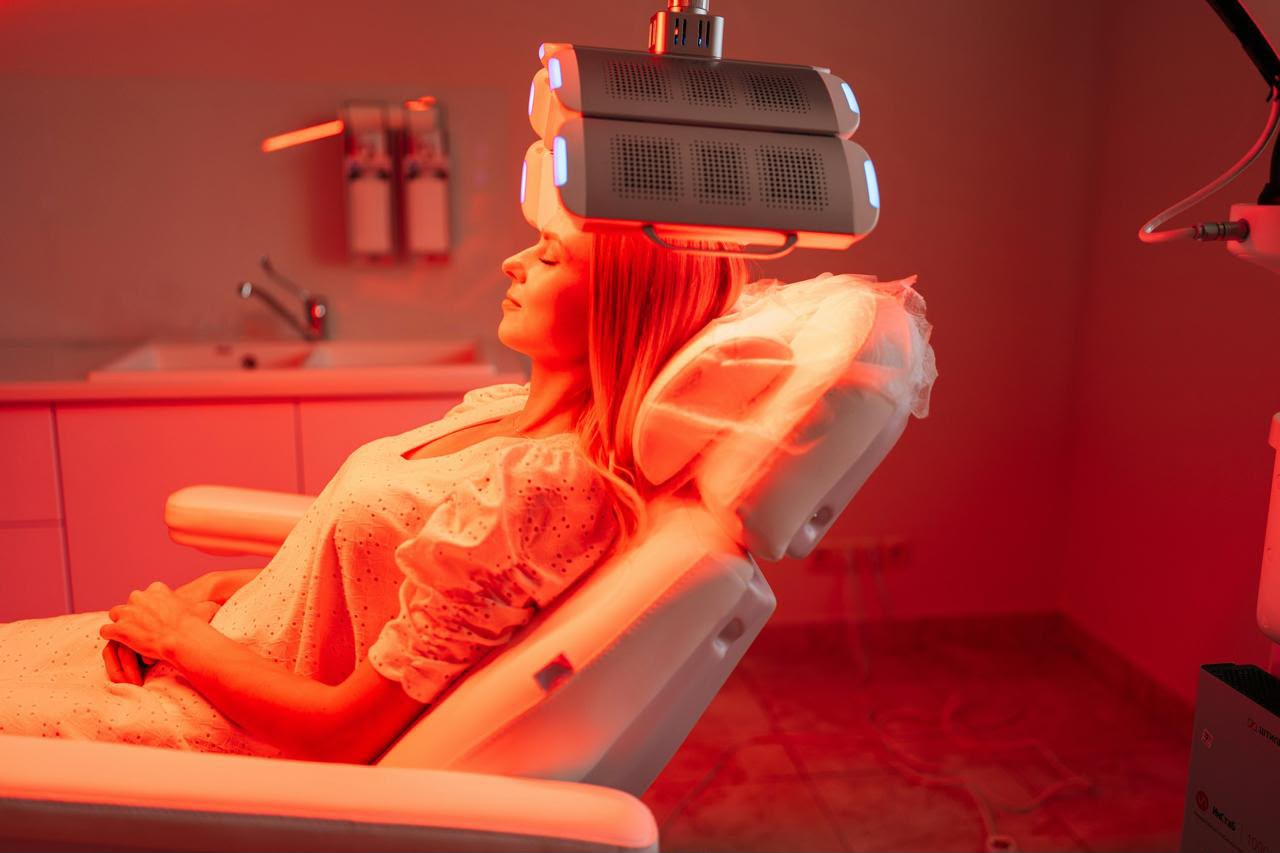
RLT Home Total Spectrum ULTRA. Seven engineered wavelengths across every panel in the line, including 810nm at 20% of the panel’s LED output on the RLT Home Total Spectrum ULTRA (19% on the other Total Spectrum models), published openly. Single-chip 5W LEDs so 810nm is driven at full per-wavelength power, not split with another band inside the same diode. Peak spectrometer irradiance of 119.3 mW/cm² at six inches, independently verified by two labs. Includes a motorized electric stand for full-body lie-under sessions and a free personalized weekly usage plan from the RLT Home science team. Price: $2,895. For deeper wavelength-specific protocol context, Red Light Pain Lab’s protocol library is a useful reference alongside a panel purchase.
Why 810nm Matters
Home red light therapy panels ship with a wide range of wavelength stacks, and 810nm is one of the most-studied near-infrared bands. Photon energy at 810nm reaches muscle, connective tissue, and deep periarticular structures, which is why it shows up repeatedly in the peer-reviewed literature for:
- Chronic musculoskeletal pain (low back, neck, knee, hip osteoarthritis)
- Tendinopathies and post-injury tissue repair
- Post-exercise recovery and muscle performance
- Wound healing (particularly diabetic ulcer support)
- Transcranial photobiomodulation for cognitive performance, mood, and post-concussion recovery
- Peripheral neuropathic pain
For the underlying science on cytochrome c oxidase modulation and downstream cellular energy support, the NIH open-access photobiomodulation review is a well-cited reference. For the transcranial and mood-related applications specifically, this NIH review on transcranial PBM covers the current evidence in detail.
What to Check on a Panel That Claims 810nm
- Published density, not just a wavelength list. A panel that lists “810nm” as one of many wavelengths but does not publish the percentage of LEDs at that band may be delivering it only as a token amount. The RLT Home Total Spectrum ULTRA publishes 20% density at 810nm openly, which is one of the highest published 810nm allocations on the market.
- Single-chip vs multi-chip LED. If 810nm is delivered via a dual-chip or quad-chip LED that also carries other wavelengths, each band receives only a fraction of the LED’s rated power (half or a quarter, respectively). A single-chip 5W LED delivers the full 5W to 810nm alone, producing a cleaner spectral peak and deeper per-wavelength penetration.
- Independently verified spectrometer irradiance. Solar power meters over-report narrow-band LED output by roughly a factor of two versus a spectrometer. Panels with peak spectrometer readings at six inches independently verified by two labs are the transparency benchmark.
- A specific dosing protocol. 810nm is dose-dependent. Consistent 10 to 20-minute sessions at 6 to 12 inches from the panel, three to five times per week for at least four to eight weeks, is the general research-supported cadence. A panel that ships with a specific per-condition protocol removes the guesswork for the buyer.
How to Use 810nm at Home
- Distance: 6 to 12 inches from the panel is the standard therapeutic range.
- Session length: 10 to 20 minutes per target area, or per body position on a full-body panel.
- Frequency: Three to five sessions per week for at least four to eight weeks before judging any subjective effect.
- Eye protection: Two sets is ideal (red and NIR blocking reading glasses for eyes-open use plus full blackout goggles for eyes-closed sessions).
- Combine with 830nm and 1064nm where possible. The three deepest bands together (810, 830, and 1064nm SWIR) cover joint, deep muscle, and cranial tissue applications more fully than 810nm alone.
Frequently Asked Questions
Is 810nm better than 830nm?
For deep-tissue and pain applications the two behave similarly in the near-infrared range, and complete panels typically carry both. 810nm has slightly earlier and broader clinical-trial coverage; 830nm has been particularly studied for pain and cognitive applications. Ideally a panel delivers both at meaningful density rather than choosing one over the other.
How much 810nm density is meaningful?
As a working benchmark, if a brand publishes per-wavelength density percentages, look for 810nm at 15% or higher of the LED array. Below that, the band is often present as a marketing bullet rather than at therapeutic weight.
Can I use 810nm alongside medication or physiotherapy?
Yes, generally, but check with your clinician, particularly if you are on photosensitizing medications or being treated for any specific condition. General wellness guidance is a starting point rather than a substitute for personalized medical advice.
A Note on Claims
This article is general wellness information and is not medical advice. Red light therapy panels are FDA-registered Class II devices under product code ILY (21 CFR 890.5500, 510(k)-exempt), which is standard for this device category; that is not the same as FDA-cleared for a specific therapeutic use. Language throughout uses “may support” and “is being studied for,” not “will treat.” Consult a qualified healthcare professional before starting any protocol for a specific condition.