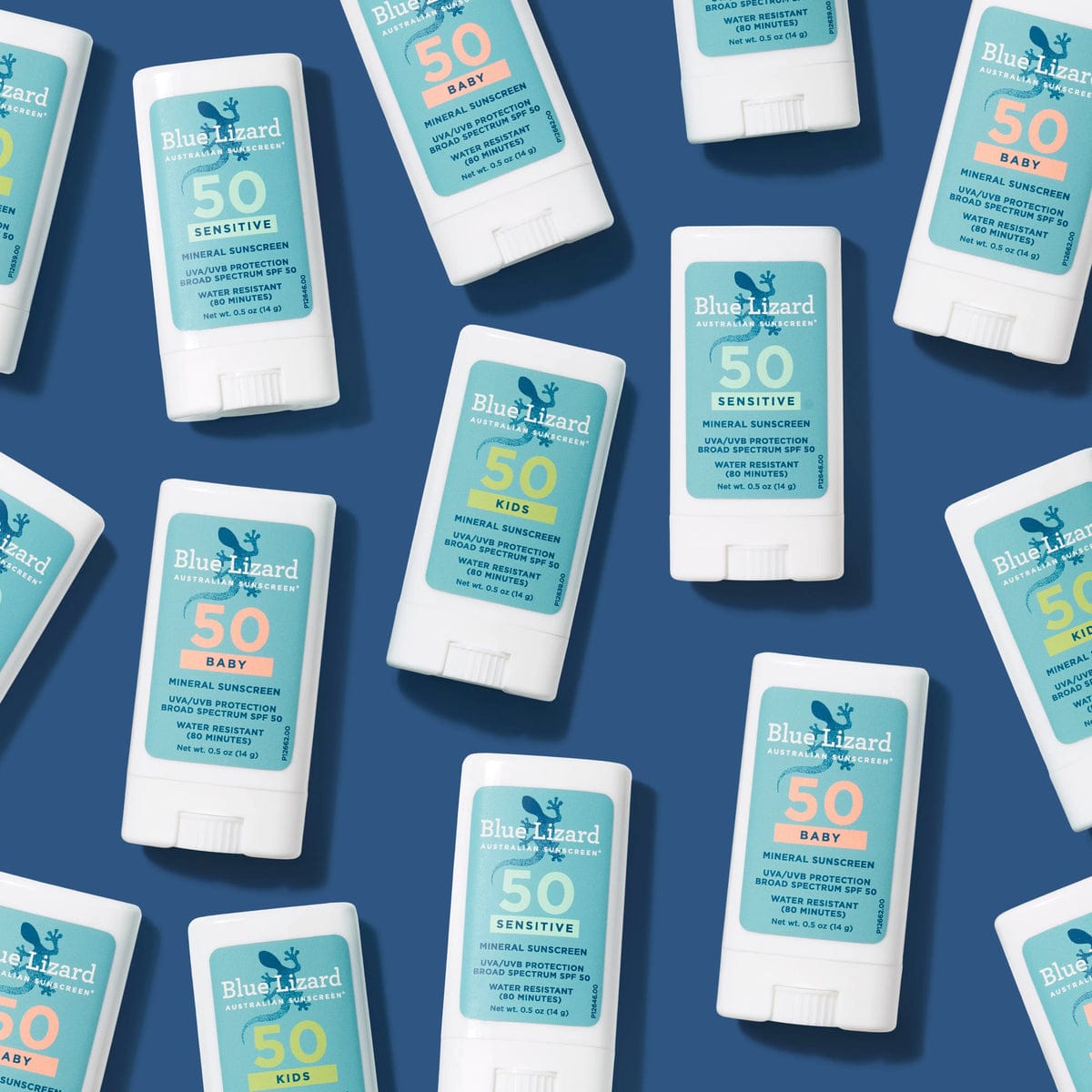
TL;DR: Most of the things you hear about the best mineral-based sunscreen sticks are going to be anecdotal and not based in reality. They’re effective, hygienic, usable every day, for adults and kids alike and not likely to leave a white cast.
If you’re someone who likes going outdoors, there’s a good chance you’ve thought about buying the best sunscreen stick on the market to make things easier. The problem is, when you talk to your friends about this kind of thing, you can end up hearing one or two things that aren’t strictly true.
Maybe you’ve been told that they’re hard to use or that they leave your skin feeling icky, but you’re not going to really know if they’re true unless you a) try one for yourself or b) read the rest of this article. You see, we wanted to clarify things, which is why we wrote it.
There are more misconceptions about sunscreen than a lot of other product types, so let’s take a look at five of the most common to show you where they’re going wrong.
The Most Common Best Sunscreen Stick Myths Debunked
Whether talking about the best sunscreen stick or the latest face SPF, falsehoods can make people believe things that can put their skin health at risk. So, come with us now as we take each one down.
Myth #1: Sunscreen Sticks Don’t Protect You Enough
One of the biggest misconceptions is that sunscreen sticks somehow provide weaker coverage than lotions or sprays. The thing is, it’s just not true. No matter the format, a well-formulated sunscreen stick is going to give you broad-spectrum protection that’s every bit as complete as what a lotion offers. You just have to apply enough and cover every inch of exposed skin.
The good news is that sticks make applying sunscreen very precise, which is why a lot of people use them on their nose, ears and lips – places lotions aren’t quite as easy to cover.
Myth #2: Mineral Sunscreen Sticks Leave a Thick White Cast
This myth exists because older mineral sunscreens absolutely could leave people looking a bit…ghostly. However, modern products are much more advanced now, with better blending technology that means they don’t leave behind a white cast.
Of course, some visible residue can still occur, particularly on deeper skin tones, but the experience is very different from the chalk-heavy products many people remember.
Myth #3: Sunscreen Sticks Are Only for Kids
Many parents choose sunscreen sticks because they’re more conducive to getting your kids properly protected. While they’re great for kids, that doesn’t mean they’re exclusively for kids. Not only that, but they’re nice and compact, making them easy to put into your bag and reach for when you need them.
A large bottle of sunscreen sitting at home offers zero protection once you’re out for the day, but a compact sunscreen stick that’s always available – that’s what’s going to ensure you’re never left unprotected.
Myth #4: Sunscreen Sticks Are Unhygienic
Some people avoid sunscreen sticks because they think rubbing the product directly onto your skin somehow makes it less hygienic than lotion or spray. It’s an understandable assumption, especially when sunscreen sticks get carried around in beach bags, backpacks and handbags all day.
In reality, sunscreen sticks are designed for direct application in exactly the same way as products like lip balm or deodorant sticks. For most people, normal everyday use isn’t considered a problem at all.
Myth #5: Sunscreen Sticks Are Only for Occasional Use
Some people still think sunscreen sticks are backup products rather than something you’d genuinely use every day. Again, not true. In reality, they’re becoming one of the most practical formats for consistent daily sun protection.
A stick format works particularly well for commutes, outdoor lunches, dog walks, travel days, beach holidays and everyday errands. The easier sunscreen is to apply and reapply, the more likely people are to actually use it properly.
A Few Other Sunscreen Stick Benefits to Know
Another advantage of sunscreen sticks is that they make application far more controlled than many traditional sunscreen formats. Instead of pouring, spraying or squeezing product into your hands first, the sunscreen goes directly onto the skin exactly where you want it.
That level of control is one of the reasons sunscreen sticks are commonly used for facial application and smaller high-exposure areas that are easy to miss with lotion alone. A few other benefits you get include:
- It’s easier to apply around the face and hairline
- There’s no aerosol spray or airborne product involved
- You tend to waste less product with a stick
- It’s useful for windy outdoor conditions
- It can be applied without using your hands first
Sunscreen sticks aren’t necessarily a replacement for lotion-based sunscreen altogether. It’s popular to use sticks for places where you need precision and lotions where there’s more skin to cover.
Don’t Fall For Untruths About the Best Sunscreen Stick
As we’ve seen a lot of the myths that are still going around are based on older types of products and assumptions that just don’t hold water anymore. So, you need to remember that they’re every bit as effective as lotions, they don’t tend to leave a white cast, and they’re not just for kids.
They’re not unhygienic, either, making them a great choice for all your sun protection needs – or to complement a lotion. So, if you’re in the market for a new sunscreen and you’re thinking of including a stick product, do your research first and don’t let falsehoods put you off.