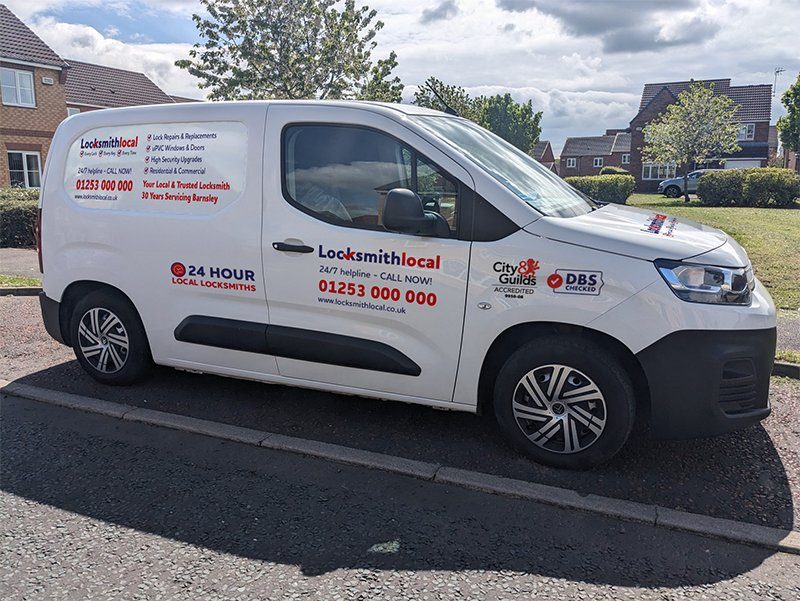
Most thinking about choosing a locksmith stops at the moment the job is finished. The door opens, the new lock works, the invoice is paid, and the whole episode feels closed. But locks are mechanical things fitted to doors that move and settle and endure weather, and sometimes a problem surfaces days or weeks after the work was done. A cylinder that felt fine develops a fault. A newly fitted mechanism starts to stick. Something that was adjusted needs adjusting again. What happens next depends entirely on a choice you made earlier, often without realising its weight, which is whether the locksmith you used is someone you can actually reach again.
This is the part of the decision that the moment of emergency tends to hide from you, and it is a strong reason to find a local locksmith near you and keep their details rather than relying on whoever a national system sent last time. Aftercare is only as good as your ability to get back to the same accountable person, and that ability is exactly what the distant, subcontracted model tends to strip away. The quality of a locksmith is not only measured by how well the job goes on the day. It is measured by what happens when you need them a second time about the same job.
Picture the aftercare experience with a genuine local locksmith. You call the same number you called before. It is answered by the same person, who remembers the job or can find it easily, and who is still working the same area. If the fault is theirs to put right, they come back and put it right, because a local reputation cannot absorb a customer left with a failing lock and no help. The whole interaction is short and direct, because there was never a chain to begin with. You are simply speaking again to the tradesperson who did the work, and that continuity is the thing that makes a warranty actually mean something.
Now picture the same situation after a job booked through a national brand and carried out by one of its subcontractors. You call the national number again, but the person who did your work was an independent locksmith allocated to you on the day, and there is no guarantee they are still in the network or available now. The brand may treat your original job as long closed. The subcontractor, paid once and moved on, has no ongoing relationship with you. Your follow-up call enters the same dispatch machine as a brand new job, and you may well end up with a different locksmith entirely, who did not do the original work and cannot simply stand behind it.
The word warranty papers over this difference, but it should not. A warranty is only as real as the route back to the person responsible for honouring it. When that route runs through a booking operation and a rotating pool of subcontractors, the promise is thin, because no single accountable individual is clearly on the hook. When the route is a direct line to a local locksmith who did the work and still trades nearby, the promise is solid, because there is an obvious, findable person whose reputation depends on making good. The same word describes two very different levels of actual protection.
There is also the practical matter of continuity of knowledge. A local locksmith who returns to a job they did themselves already knows what was fitted, why, and how, which makes the follow-up faster and cleaner. A different locksmith arriving cold to fix another person’s work has to start by working out what was done before they can address what went wrong. Your problem is solved more slowly and possibly less well, not because the second locksmith is less skilled, but because the continuity that makes aftercare efficient was broken the moment the original work was routed through a system that does not keep tradespeople attached to their jobs.
This is why aftercare should be part of the decision from the very start, not an afterthought discovered only when something fails. When you choose a locksmith, you are not only choosing who fixes the problem today. You are choosing who you will be able to reach if today’s fix needs attention tomorrow. A genuinely local locksmith is, by their nature, reachable again, rooted in place, and motivated to protect a local reputation. That reachability is a real part of the value, even though it is invisible on the day the work is done and only becomes apparent if and when you need it.
So when you weigh your options, ask yourself the question the emergency wants you to ignore. If this lock develops a fault in six weeks, who exactly do I call, and will it be the same person who did the work. If the honest answer is a national number that will treat you as a fresh job and may send a stranger, that is worth knowing before you book, not after. If the answer is a local locksmith who will simply come back, that is a quieter kind of reassurance, and it is one of the soundest reasons to keep a genuinely local number close.