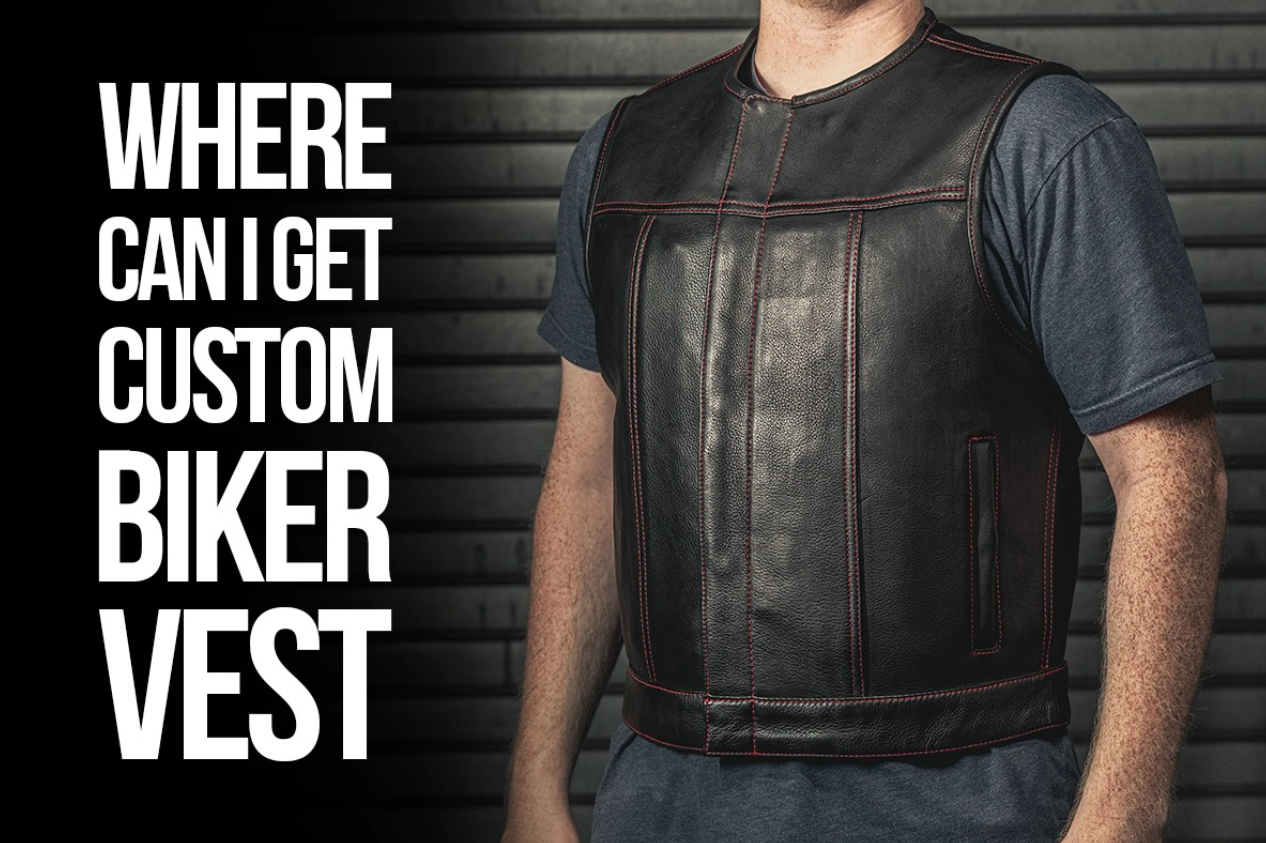
If you’ve ever stood in a motorcycle gear shop staring at rows of identical vests, you already know the problem. Off-the-rack biker vests fit “fine,” look “okay,” and say absolutely nothing about who you are or what you ride. For a piece of gear that sits over your heart, rides with you through thousands of miles, and eventually becomes a patch-covered record of your journey, “fine” isn’t good enough.
That’s why more riders every year are searching for custom motorcycle vests instead of settling for whatever’s hanging on the rack. The good news: getting one made to your exact specs is easier than most people think, once you know where to look and what actually matters.
Why Riders Are Moving Toward Custom Vests
The motorcycle vest has always been more than outerwear. It combines identity, practical storage, and traditional motorcycle style in one garment. But the way riders use it has changed.
Club riders have worn custom leather biker vests for decades to display patches, colors, and rank; that part hasn’t changed. What’s new is the number of solo riders, weekend cruisers, and even non-riding leather enthusiasts who want the same level of personalization without any club affiliation at all. They want a vest that fits their actual body, holds their phone and wallet the way they need it to, and reflects a style choice rather than a factory template.
There’s also a practical safety angle that gets overlooked in the fashion conversation. Proper fit also matters on the bike. An excessively loose vest can flap in the wind, while one that is too tight may restrict comfortable upper-body movement. A well-fitted vest should stay relatively secure without limiting your reach to the controls. That alone is a strong argument for going custom over generic sizing.
Where to Actually Get One Made
This is the part most articles skip past, so let’s get specific. If you’re serious about getting a custom motorcycle vest built to your spec, two names consistently come up among riders who’ve actually gone through the process:
First Manufacturing Co
It has built a reputation in the motorcycle apparel space for offering deep customization across multiple materials, not just standard cowhide. First Manufacturing Co works with cowhide leather, softer sheep leather, perforated leather for breathability, and even textile and denim builds for riders who want something outside traditional leather. That range matters because not every rider wants the same weight, texture, or climate performance. A rider in Arizona has very different needs than someone touring through the Pacific Northwest, and having material options built into the customization process, rather than a single “leather vest, one type only” option, is a real point of difference.
Best Leather NY
It is the other name frequently mentioned by riders looking for made-to-order vests, known for their design flexibility and East Coast leather craftsmanship roots.
Both approach customization from the same core idea: you’re not picking from what’s already made, you’re specifying what gets made. That’s the actual definition of custom, and it’s worth being skeptical of any shop that calls a vest “custom” when all you’re doing is picking a size off a limited pre-made run.
Vanson Leathers
It is another established option for riders who want more control over fit and design. The company offers custom-fit and custom-design services, ranging from adjustments to existing styles to fully made-to-measure garments. Riders can personalize elements such as sizing, colors, graphics, logos, and other design details, and Vanson also produces custom pieces for motorcycle clubs and teams. This makes it worth considering for riders who want a traditional leather vest built around individual measurements rather than relying entirely on standard sizing.
Hasbro Leather
It takes a more traditional leather-shop approach to customization. Its custom vest service allows riders to choose details such as leather type and weight, panel layout, snaps, lining, interior pockets, hardware, and patch placement. It can also build vests around individual measurements, which can be especially useful for riders who want a club-ready vest with specific space reserved for patches or a particular pocket configuration.
Leather Motorcycle Vest (LMCV)
It focuses specifically on motorcycle vests and gives riders a broad range of made-to-order options. Depending on the design, customers can specify measurements, leather type, color, closure style, hardware finish, pocket configuration, blank back panels, and other personalized details. Riders can either customize an existing vest style or submit more detailed specifications for a custom quote, making it another option for those who want something more individualized than a standard off-the-rack biker vest.
What “Custom” Actually Means in a Leather Vest
Not all customization is equal, and it helps to know what you’re actually asking for before you start searching.
At the basic end, customization might just mean choosing your size and a stitching color. At the serious end, what most riders actually want when they search for a custom leather vest, it means:
- Leather selection: Cowhide for durability and that classic broken-in look, sheep leather for a softer feel and lighter weight, or perforated leather for airflow on hot rides
- Panel and pocket layout: Concealed carry pockets, phone pockets, patch-mounting panels, or a completely blank back panel for future patchwork
- Hardware choices: Snap closures vs. zippers, gunmetal vs. brass, side lacing for an adjustable fit
- Fit specifications: Not just S/M/L/XL, but actual chest, shoulder, and length measurements
- Design elements: Contrast stitching, embossed logos, name plates, or club emblem placement
With a fully made-to-order vest, a skilled maker may also have more control over details such as panel matching, reinforcement, stitching, pocket placement, and finishing. It’s the kind of construction quality that shows up five years down the road when a cheaper vest has already cracked at the seams.
Popular Customization Choices to Consider
Once you know the fit and material you want, the next step is deciding which details will make the vest work better for your riding style. Customization does not have to mean adding a lot of decorative elements. In many cases, the most useful changes are practical ones that improve comfort, storage, airflow, or the way the vest sits on the body.
- Perforated panels: It can be useful for riders who spend a lot of time in warmer weather because they allow more airflow than solid leather. Riders who prefer a cleaner look may choose minimal hardware, using fewer snaps, buckles, or decorative pieces to keep the vest simple and streamlined.
- Blank Back Panel: It is another popular choice, especially for riders who plan to add club, event, memorial, or personal patches later. Starting with an uncluttered panel gives you more freedom to arrange patches without working around unnecessary seams or design elements.
- Contrast Stitching: Small visual details can also make a custom vest feel more personal. Contrast stitching can highlight the shape and construction of the vest without dramatically changing its overall look, while denim and leather combinations offer a lighter, more casual alternative to an all-leather build.
- Denim/leather Combinations: Storage is worth planning before the vest is made. Custom storage configurations can include interior pockets, phone compartments, wallet pockets, or additional exterior pockets based on what you normally carry while riding.
- Storage Configurations: Thinking about pocket placement early can make the finished vest much more practical.
- Side Lacing: Can add both style and adjustability. It gives riders some flexibility around the waist and torso, which can be helpful when changing between lighter clothing and thicker layers throughout the riding season.
What to Check Before You Order
Whichever route you go, a few questions will save you from a disappointing vest:
- Real measurements vs. standard sizing: True custom fit means chest, length, and shoulder measurements are taken, not just a pick between S and 5XL.
- Leather weight: Ask about the leather’s type, thickness, and intended use. Heavier hides generally feel more substantial, while lighter leather may be easier to wear in warm weather. The right choice depends on comfort, climate, construction, and how you plan to use the vest.
- Patch space planned in advance: If you intend to add club patches, memorial patches, or event patches over time, the back and front panels should be laid out with that in mind from the start, not patched in as an afterthought.
- Turnaround time: A genuine custom handmade leather vest takes time to build. Rushed production usually means machine shortcuts on stitching that matters for long-term durability.
- Return and sizing policy: Even with accurate measurements, leather can shift and soften once it’s broken in. Know the return or exchange policy before you commit.
Final Thought
A biker vest is one of the few pieces of gear that can develop more character with age when the leather and construction are properly maintained. Assuming it was built right in the first place. Going custom isn’t about vanity, it’s about making sure the vest fits your body, matches your riding conditions, and can carry whatever story you add to it over the years. Whether you land on First Manufacturing Co, Vanson Leathers or another maker entirely, the questions above will help you separate a real custom build from a relabeled off-the-shelf one.
FAQs
What’s the difference between a custom vest and a regular biker vest?
A regular vest is mass-produced in fixed sizes. A custom motorcycle vest is built to your specific measurements, material preference, and design details like pocket layout, hardware, and patch space.
What leather is best for a custom motorcycle vest?
Cowhide is the most durable and common choice for daily riders. Sheep leather is softer and lighter, better for casual or warm-weather wear. Perforated leather adds breathability for hot climates or summer rides.
How long does it take to get a custom handmade leather vest made?
Handmade custom vests typically take longer than factory pieces since panels are cut and stitched individually. Timelines vary by maker, so confirm production time before ordering.
Can I add my own patches to a custom leather biker vest?
Yes, most custom makers can design the back and front panels with patch placement in mind from the start, which holds up better long-term than adding patches to a vest not designed for it.
Why does proper fit matter in a motorcycle vest?
A properly fitted vest should stay secure without excessively flapping in the wind or restricting your upper-body movement. Custom sizing can help riders achieve that fit, but construction and intended use matter as well.