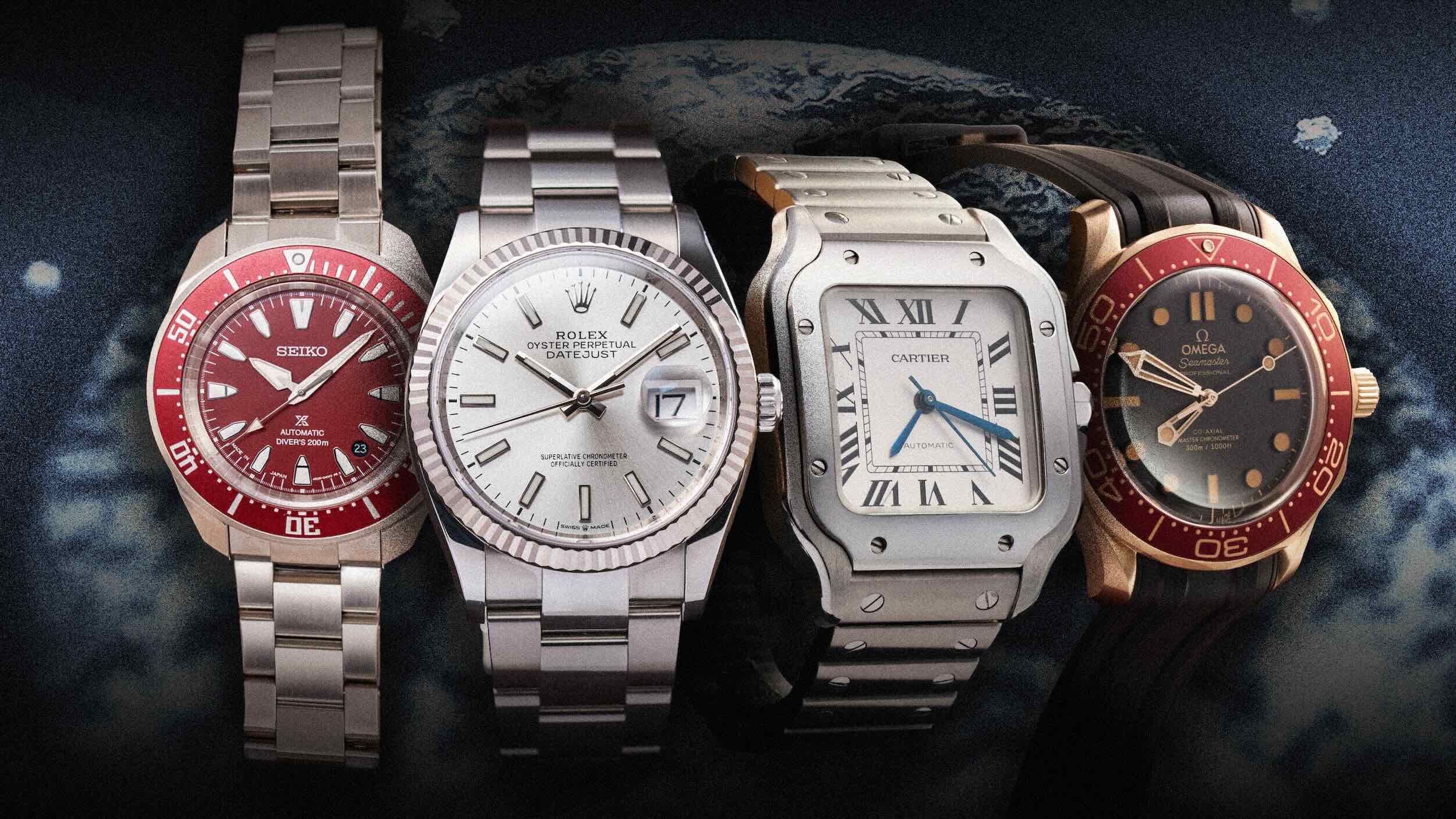
A watch purchase is rarely just about telling time. The brand on the dial carries decades of design philosophy, technical heritage, and manufacturing standards that directly affect what ends up on the wrist. Knowing which names consistently deliver on quality helps buyers make smarter decisions the first time around.
Rolex: The Benchmark Everyone Measures Against
Rolex holds its position at the top of the conversation for good reason. The brand has spent over a century refining its movements, cases, and finishing processes to a level that few manufacturers match. The Oyster case design, introduced decades ago, remains one of the most copied silhouettes in watchmaking history.
But what separates Rolex from many competitors isn’t innovation for its own sake. It’s consistency. A Submariner or Datejust purchased today is built to the same rigorous standard as one made a generation ago, and that reliability across time is exactly why collectors and first-time buyers alike keep coming back.
Omega: Precision With a Story Behind It
Omega earns its reputation not through marketing alone but through genuine technical achievement. The brand’s association with space exploration and professional timekeeping is backed by real performance history, not just clever advertising. The Seamaster and Speedmaster lines remain two of the most recognizable watch families in the world, each with a distinct identity.
The Speedmaster, in particular, carries a legacy tied to one of the most significant moments in human history. Omega also invests heavily in movement development, producing in-house calibers that meet observatory-grade accuracy standards. For buyers who want substance alongside prestige, it consistently delivers.
Tudor: Serious Quality at a More Accessible Price
Tudor often gets described as Rolex’s sibling brand, and while that relationship is real, it has earned its own standing in recent years. The Black Bay collection brought a vintage-inspired look to a broader audience without sacrificing build quality. Tudor sources movements from reputable Swiss manufacturers and, more recently, has developed its own in-house calibers.
The result is a watch that competes with far more expensive options in terms of durability and finishing. Tudor is one of the most honest options available for buyers looking for Swiss craftsmanship without having to commit to a flagship Rolex price point. Full stop.
Seiko: The Case for Japanese Watchmaking
Japanese watchmaking deserves more credit than it typically gets in conversations dominated by Swiss names. Seiko sits at the center of that argument. The brand operates across multiple price points, from affordable entry-level pieces to the Grand Seiko line, which competes directly with Swiss luxury. What makes Seiko compelling is its vertical integration.
The brand manufactures nearly everything in-house, including crystals, cases, dials, and movements. The Spring Drive movement, a Seiko original, combines mechanical and electronic technology in a way that no other manufacturer has replicated. Buyers who approach the brand with an open mind are frequently surprised by the value they receive for their money.
Longines: Understated and Underrated
Longines rarely commands the same conversation as Rolex or Omega, but that quieter profile works in its favor. The brand creates elegant, well-finished watches at a price that feels reasonable. The Master Collection and Heritage lines are based on a vast archive of designs, giving each piece a sense of history without feeling dated.
Longines also benefits from having access to ETA movements, which are dependable, well-supported, and widely available. For buyers who prefer classic proportions and restrained design over bold statements, it rarely disappoints. Retailers like the best watch supplier in Scottsdale often carry Longines alongside more prominent names precisely because the brand appeals to buyers with a refined but practical sensibility.
IWC Schaffhausen: Engineering as Aesthetic
IWC takes a different approach to watch design than most of its Swiss peers. The brand leans into its engineering identity, producing watches that look technical without feeling cluttered. This philosophy is most clearly expressed in the Pilot’s Watch family, which features clean dials, legible numerals, and purposeful case shapes that don’t apologize for their functionality.
The Portugieser collection is more classical, but it retains the same sense of considered design. IWC also manufactures some of the most respected complications in the industry, such as perpetual calendars and tourbillons, which are built to a standard that watchmakers truly admire. It rewards buyers who appreciate function expressed through form.
Where to Start When Choosing a Watch Brand
The best approach to buying a watch is to start with honest questions about how it will be used and what it needs to communicate. A diver who needs water resistance and legibility underwater has different requirements than someone looking for a dress watch to wear to formal events. Brand heritage matters, but it matters less than finding a watch that fits the context of real life.
Visiting an authorized dealer or a well-curated retailer allows buyers to handle multiple references before committing. The weight, lug width, and dial readability of a watch only reveal themselves in person. The brands covered here each represent a distinct philosophy, and the right one depends entirely on the person wearing it.
Another important factor is long-term comfort. A watch may look impressive online but feel too heavy, too thick, or awkward on the wrist during everyday wear. Trying different case sizes and bracelet styles helps narrow down what genuinely works for your lifestyle. Buyers should also think about maintenance, service intervals, and whether they want an automatic movement, quartz precision, or something more specialized like a GMT or chronograph.
Researching materials can also make a major difference. Stainless steel remains the most versatile option, while titanium offers lighter weight and ceramic provides impressive scratch resistance. Many collectors eventually gravitate toward pieces with stronger craftsmanship and historical significance, especially when exploring respected names through trusted retailers like Ed Marshall Jewelers, where comparing different styles side by side becomes much easier. In the end, the best watch is rarely the most expensive one — it is the piece that feels natural every time it goes on your wrist.