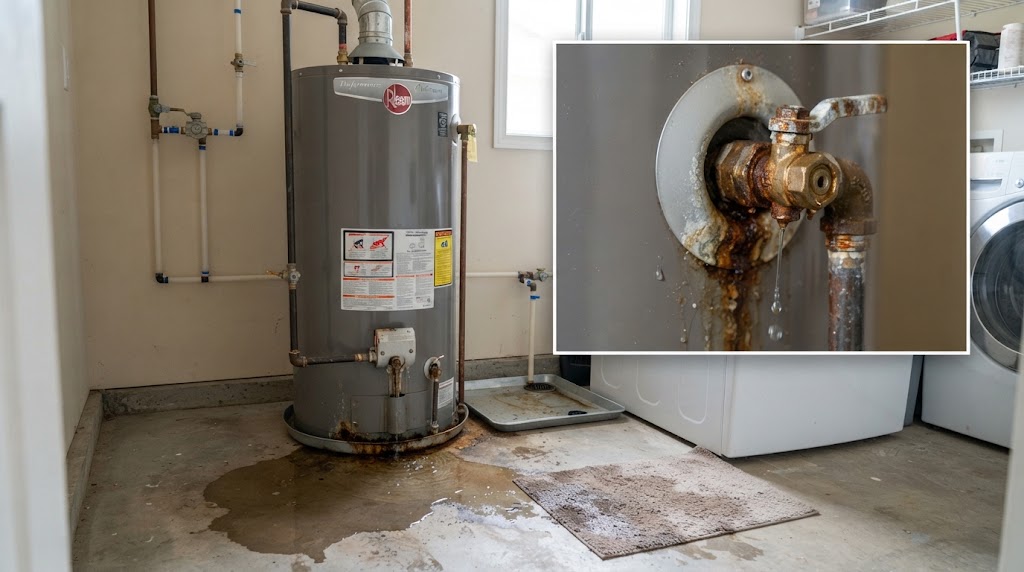
Your water heater is the quiet workhorse of your home, until the day it isn’t. It runs for years without a peep, and then one morning you step into a lukewarm shower or find a puddle creeping across the garage floor. That’s the moment most people start paying attention, but by then, the situation has already escalated. The good news is that water heaters almost never fail without warning. They send signals, small ones at first, that most homeowners mistake for quirks. Learn to read those signals and you can replace the unit on your schedule, not on an emergency basis in the middle of December.
Here’s the honest truth: a water heater has a lifespan, and no amount of wishful thinking extends it. Most tank units last somewhere between 8 and 12 years, and tankless ones push closer to 20. But age alone doesn’t tell the whole story. How you maintain the unit, the mineral content of your water, and even your thermostat settings all play a role. The key is catching the problems early enough to make a calm, informed decision.
So what does a failing water heater actually look like? Let’s walk through the most telling warning signs, ranked roughly by how much trouble they signal. Then we’ll get into what you should do first when you spot them, because rushing to a decision is how people end up overpaying for a system they don’t need.
Why Rumbling Noises Are Never Normal
If your water heater sounds like a pot of boiling oatmeal, something is wrong inside the tank. That rumbling, popping, or knocking sound comes from sediment buildup. Over time, minerals in your water, mostly calcium and magnesium, settle at the bottom of the tank. The burner heats the water, and steam bubbles get trapped underneath that layer of sediment, then escape with a pop. It’s a sound you should never ignore.
Here’s the thing about sediment: it does real damage. That layer acts as an insulator between the burner and the water, which means the unit has to work harder and burn more fuel to heat the same amount of water. The U.S. Department of Energy reports that sediment buildup alone can cut a water heater’s efficiency significantly, and it forces the appliance to run more often to keep up with demand. Over time, the added strain can cause the tank to overheat and eventually develop a leak where you really don’t want one.
What you should do: if the noise is recent, a thorough flushing of the tank might solve the problem. Attach a garden hose to the drain valve, open it, and let the water run until it comes out clear. If the noise returns within a few months, the sediment may have hardened to the point where flushing won’t help, and replacement is the more honest option.
Discolored Water Coming From the Hot Tap
Turn on the hot water in your sink and fill a clear glass. If the water looks rusty, brown, or yellowish, your tank’s interior is corroding. This is not the same as the slightly cloudy water you sometimes get from the cold tap, which is usually just air bubbles. Rust-colored hot water means the glass lining inside the tank has broken down, and the steel beneath it is rusting.
This is one of the more serious signs because it’s not fixable. You can’t patch a corroded tank from the inside. The moment a tank starts rusting, its structural integrity is compromised, and the clock is ticking toward a leak. The EPA notes in its water infrastructure guidance that internal corrosion is a leading cause of premature water heater failure, which makes sense when you think about what your tank is exposed to daily: hot water, minerals, and constant pressure.
Don’t confuse this with a one-time murky flush. If you run the water for a minute and it clears up, it might be sediment that got stirred up. But if every hot glass looks like weak tea, start shopping for a replacement today. There’s no DIY fix for a corroding tank, and waiting only risks water damage to your floors and belongings.
Puddles or Moisture That Has No Obvious Source
Walk past your water heater and you notice a damp spot on the floor. Maybe it’s a small puddle, maybe it’s just a dark stain. You check the pipes above it, and they’re dry. So where is the water coming from?
Sometimes it’s the pressure relief valve discharging, which can happen if the temperature or pressure inside the tank gets too high. That’s a fixable problem, often just a matter of replacing the valve or adjusting the thermostat. But sometimes, that moisture is the first sign of a slow leak in the tank itself, and slow leaks become fast ones without much warning.
Here’s the practical test: dry the area completely, then run the water heater through a normal heating cycle. Check back in a few hours. If moisture reappears near the bottom of the tank, it’s likely the tank itself, not a pipe fitting. At that point, consider that the unit is telling you it’s done. A tank leak is not a repair situation, it’s a replacement situation, and the longer you wait, the higher the chance of real property damage.
The Pilot Light and Burner Issues
For gas water heaters, the pilot light and burner behavior tell you a lot. If the pilot light keeps going out, it could be a faulty thermocouple, a simple part that’s cheap to replace. But if the burner flame looks yellow or orange instead of a crisp blue, you’re getting incomplete combustion. That’s a carbon monoxide risk, and it’s not something to tinker with.
While you’re looking, check the flue. The Department of Energy outlines basic water heater maintenance for homeowners, and one of its key points is checking the air supply and ventilation for gas units. A blocked or improperly vented flue can cause dangerous backdrafting, which pushes combustion gases into your living space instead of outside. If you see soot around the unit, that’s another red flag.
If the pilot relights easily and the flame is blue, you’re probably fine. If it struggles, sputters, or won’t stay lit, call a licensed technician. This is the one scenario where I’d skip the DIY approach entirely, because the risk isn’t just a cold shower, it’s your family’s safety.
Your Energy Bills Creep Up Without a Reason
Your habits didn’t change. The weather didn’t get dramatically colder. Yet your gas or electric bill is noticeably higher than the same month last year. A struggling water heater is a common culprit, and it’s an easy one to overlook because the appliance is tucked away in a closet or garage.
As components age, they lose efficiency. The burner might be working harder to overcome sediment, the heating elements might be coated in mineral scale, or the insulation in an older tank might have degraded. All of that translates into more energy consumed for the same amount of hot water. It’s a slow bleed, but it adds up over a year.
Do a quick comparison: what did your bill look like in the same month last year? And the year before? If you see a steady upward trend that you can’t explain, the water heater deserves scrutiny. Sometimes the fix is cheap, like replacing a heating element. But if the unit is already past its expected lifespan, the efficiency loss is just another argument for upgrading to a newer model that will cost less to run every single month.
Your First Three Moves When You Spot a Warning Sign
When you notice one of these signs, don’t panic and don’t ignore it. Here’s the order of operations I recommend to anyone who asks:
- Turn down the thermostat. Dropping it to 120 degrees reduces the strain on the system and lowers the risk of scalding. It’s a temporary measure, but it buys you time.
- Shut off the power or gas. If you see active leaking or suspect a gas issue, turn off the circuit breaker or the gas valve. This stops the situation from getting worse while you figure out next steps.
- Get a professional inspection. Some issues, like a faulty valve or a failing thermocouple, are cheap fixes. Others, like a corroded tank, are end-of-life signs. You need a trained eye to tell the difference, and you need it before you commit to a big purchase.
And when you’re ready for that replacement, don’t let the urgency of the moment force a rushed decision. A reputable local company can walk you through tank versus tankless, capacity sizing, and efficiency ratings without the high-pressure sales tactics. If you’re in the Albuquerque area, Daniels Plumbing Heating and Air Conditioning in Albuquerque handles this exact kind of inspection and replacement work, and a quick call can keep a bad situation from turning into a disaster.
The Bottom Line on Water Heater Lifespans
No water heater lasts forever, and that’s the mental shift most people need to make. This is a machine with a predictable life cycle, not a permanent fixture of your home. Once you accept that, the warning signs stop being stressful surprises and start being useful information.
Track the age of your unit. If it’s past the 10-year mark and showing any of these symptoms, plan for a replacement rather than pouring money into patchwork repairs. If it’s younger and the issue is minor, fix it and keep up with annual maintenance like flushing the tank and checking the anode rod.
The worst outcome isn’t the cost of a new water heater. It’s the cost of a new water heater plus new flooring, new drywall, and a week of your life dealing with water damage. Which would you rather pay for?