Key Takeaways
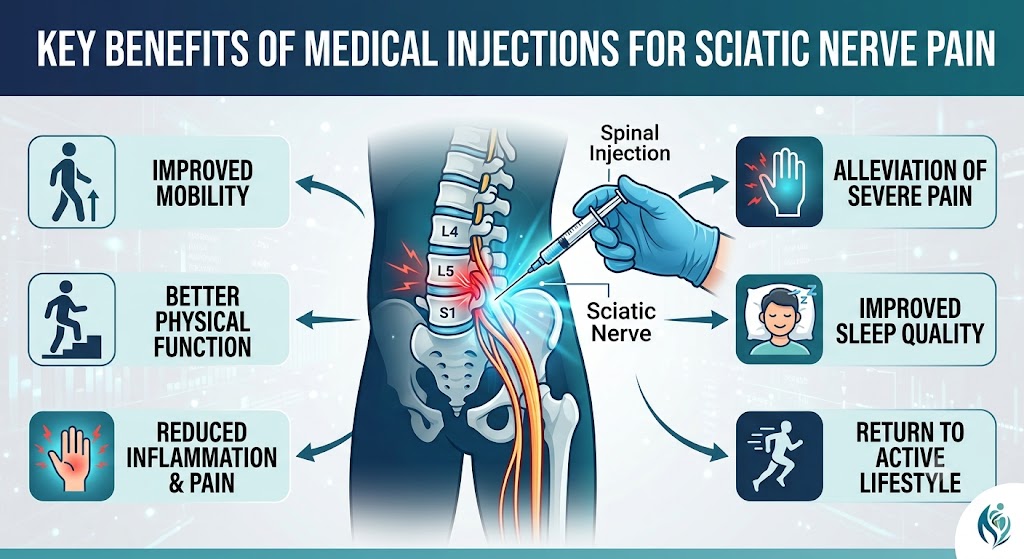
Medical injections offer a precise method for managing nerve-related back pain by addressing inflammation directly at the source. Understanding the benefits can help patients make informed decisions during their recovery journey.
- Injections provide rapid, focused relief for inflammation.
- Medication is delivered directly to the nerve root.
- These procedures act as a bridge to physical therapy.
- Systemic side effects are minimized compared to oral drugs.
- Patients often experience improved mobility and function.
Rapid reduction in inflammation for sciatica pain relief
When a patient experiences the sharp, burning sensation of sciatic nerve compression, the primary objective is to dampen the inflammatory response. Clinical sciatica pain relief protocols often prioritize reducing the swelling around the nerve tissue, which is the root cause of the radiating pain. By introducing anti-inflammatory agents into the epidural space, clinicians can achieve a rapid calming effect on the irritated nerve.
This approach works because the surrounding tissues are bathed in medication that inhibits the chemicals causing the inflammatory cascade. This localized intervention allows individuals to experience a noticeable decline in their symptoms much faster than they would with systemic treatments. For many, this window of relief creates the comfort necessary to begin important exercises.
Successfully managing this phase is vital to preventing long-term nerve sensitization. By quelling the aggressive inflammatory process early, providers help ensure that the nerve has the best environment to heal effectively. Rapid symptom control allows patients to regain a sense of normalcy without enduring prolonged agony.
Targeted delivery of medication directly to the nerve root
Modern spinal injections care focuses on precision, ensuring that the therapeutic dose reaches only the affected area. By using specialized medical imaging, practitioners can ensure that the needle is placed exactly where the nerve is being compressed by a disc or bone spur. This precision protects healthy surrounding tissue while concentrating the healing effects precisely on the site of injury.
| Injection Type | Primary Target Site | Therapeutic Intent |
| Epidural Steroid | Spinal nerve sheath space | Inflammation reduction |
| Facet Joint Injection | Posterior joint structures | Pain block |
| Selective Nerve Block | Specific nerve root exit | Diagnostic confirmation |
The data provided in the table illustrates how different techniques are tailored to specific anatomical structures. Selecting the right injection type ensures that the medication addresses the specific mechanical issue rather than applying a generalized treatment. This clinical nuance is what separates effective spine management from less precise alternatives.
Once the medication is delivered, the body can begin the natural healing process without the constant stimulus of active inflammation. Patients often find that the targeted approach facilitates a much smoother transition into rehabilitation. This accuracy helps minimize the risk of procedural complications and optimizes the overall outcome.
Serving as a clinical bridge to physical therapy
Pain often acts as a barrier to rehabilitation efforts, as individuals struggle to perform basic movements while suffering from acute distress. Targeted injections provide the temporary relief necessary to engage with physical therapy programs effectively. This synergy between interventional care and movement-based therapy is essential for patient recovery.
Without this bridge, patients frequently abandon their therapeutic exercises because the discomfort makes participation impossible. By creating a pain-free window through an injection, clinicians enable the patient to perform key strengthening tasks that prevent future recurrences. This transition is a critical component of successful long-term patient care strategies.
Physical therapy sessions become far more productive when the patient can focus on alignment and muscle activation rather than pain management. Clinicians often observe that those who undergo timely injections reach their rehabilitation milestones with greater stability. The combined effort ensures that strength returns while the initial inflammatory flare-up resolves.
Minimizing systemic side effects associated with oral pain medications
Oral medications for pain, such as high-dose non-steroidal anti-inflammatory drugs or systemic steroids, can frequently cause uncomfortable gastrointestinal, kidney, or cardiovascular issues. Medical injections bypass the digestive system entirely, delivering small, measured doses to the spinal area where they are most needed. This localized focus significantly reduces the total drug load required for improvement.
Patients who are sensitive to systemic medications often find injections to be a much safer pathway for pain management. This allows them to stay active and mentally clear throughout their recovery, without the sedation or cognitive fog often associated with powerful analgesics. Maintaining functional baseline levels is a primary concern in geriatric or multi-medication patient populations.
Clinicians often favor this route to avoid the cumulative toxicity that can arise from long-term oral medication use. Because the duration of the drug’s contact is limited to the site of irritation, the overall risk profile is much lower. Protecting overall system health remains a cornerstone of well-rounded spine treatment plans.
Significant improvement in mobility and functional outcomes
Restoring the ability to walk, sit comfortably, and perform daily chores is the clearest metric of professional success in this field. When inflammation subsides, patients typically report an immediate increase in their physical range of motion. This functional restoration is often the first sign that the healing process is moving forward in the right direction.
As mobility improves, patients can gradually reduce their avoidance of movement, which had previously caused muscle stiffness and weakness. Reintroducing activity at a controlled pace ensures that the spine stays supported by strong core musculature. This reversal of the sedentary cycle is essential for maintaining health after the procedure.
Measuring these outcomes helps the care team adjust the recovery plan for each individual patient. When movement returns, the confidence to pursue further rehabilitative goals also increases. Being able to resume daily responsibilities provides a significant boost to the patient’s overall disposition and well-being.
Minimally invasive nature of the outpatient procedure
Patients often appreciate that these procedures are performed in an outpatient setting, meaning they can return home the same day. The process is quick, typically requiring only light local anesthesia to keep the patient comfortable. Recovery periods are generally short, allowing individuals to quickly step back into their regular routines.
Several key factors make this approach a preferred choice for many patients seeking relief:
- Minimal downtime following the procedure.
- Reduced reliance on sedentary rest periods.
- Rapid return to standard daily activities.
- No requirement for general anesthesia.
Because the procedure involves only small, localized access points, the body remains largely undisturbed. This leads to a smoother recovery trajectory compared to intensive surgical options. Most patients find the experience manageable and well worth the brief time commitment in the clinic.
Diagnostic value for pinpointing the exact source of nerve irritation
Sometimes, it is remarkably difficult to determine exactly which level of the spine is causing the symptoms by imaging alone. Injections act as a diagnostic tool, as the temporary numbing aspect allows the physician to verify if the pain originates from a specific nerve root. If the pain vanishes after the injection, the site is confirmed as the primary contributor.
This verification simplifies the entire treatment plan by removing guesswork from the equation. It is vital to effectively manage spinal health issues by understanding exactly where the problem resides. When the source is identified with such clarity, the subsequent care can be focused and confident.
This diagnostic precision prevents unnecessary treatments on healthy segments or tissues. It creates a path for long-term logic in treatment, where future steps are based on verified anatomical findings. Doctors rely on this information to provide the most accurate and patient-centered recommendations possible.
Providing long-term management for chronic flare-ups
Chronic sciatica often presents as a cycle of intermittent flare-ups that can disrupt one’s quality of life. Regular or strategic medical injections can be incorporated into a long-term management plan to keep these episodes at bay. By addressing structural triggers before they become severe, patients can maintain a higher baseline of comfort and activity.
This management style allows for a proactive rather than reactive stance toward spinal health. Patients who struggle with recurrent issues often benefit from a scheduled approach that keeps systemic inflammation in check. It allows for a sense of control over one’s own health trajectory even when facing degenerative conditions.
Living with a chronic condition requires consistency and patience, and this type of care provides a reliable tool for that effort. While an injection may not be a cure-all, it remains a vital instrument in a sustainable care strategy. Providing support throughout these cycles is essential for maintaining life satisfaction.
Reduced reliance on invasive spinal surgical interventions
Many surgical consultations are requested by patients who lack other effective alternatives for severe pain. By offering highly effective interventional injections, clinicians can often help patients avoid the risks and lengthy recovery times associated with spinal surgery. This shift is a positive development that supports a more conservative path to recovery.
Surgery is typically reserved for cases where nerve damage is imminent or when all conservative methods have been exhausted. Offering a robust, non-surgical alternative ensures that patients have every possible chance to recover without undergoing irreversible procedures. This philosophy places the patient’s long-term health and safety at the highest priority.
Success at this stage is measured by avoided surgeries and satisfied patients who no longer require aggressive interventions. Each patient who successfully recovers through non-surgical means represents a significant clinical victory for the care team. Maintaining a comprehensive library of non-invasive tools remains a high standard for modern spine centers.
Customization based on unique anatomical factors and patient needs
No two spinal profiles are identical, which means that every treatment plan must be customized to the individual’s unique anatomy. Clinicians examine the specific shape of the spinal canal, the presence of bony spurs, and the soft tissue landscape to determine the exact approach. This personalized attention ensures that the technique is safe and as effective as possible.
This customization extends to the patient’s specific health history and tolerance levels. Factors such as pre-existing conditions or activity levels influence how the procedure is performed and how the rehabilitation is structured. Taking these details into account fosters a therapeutic partnership built on understanding the patient’s individual circumstances.
Individualized care leads to much higher patient satisfaction and significantly better outcomes. By recognizing the singular nature of each anatomy, practitioners build treatment plans that are far more capable than standard, one-size-fits-all strategies. This attention to detail is the hallmark of high-quality, patient-centered medical practice.
Frequently Asked Questions
How long does it take for an injection to provide relief?
Most patients begin to feel initial improvement within a few days, though it can take up to a week for the full anti-inflammatory effect to take hold.
Is it normal to experience increased soreness after the procedure?
Some temporary soreness at the injection site is common due to the needle placement, but this discomfort typically resolves within forty-eight hours.
Can I go back to work the next day?
Many patients return to their baseline activities, including work, the following day, although it is usually recommended to avoid heavy lifting or strenuous exertion for a short period.
How many injections can a person receive?
There is no fixed limit for every patient, but providers typically monitor the total dosage over time to avoid the risks associated with excessive amounts of steroid medication.
Will this procedure cure my sciatica permanently?
While injections are highly effective at managing symptoms and allowing for rehabilitation, they are generally part of a broader plan that includes exercise and lifestyle modifications to maintain long-term results.
Are there any significant risks that I should be aware of?
Like any medical procedure, there are minor risks involving bleeding, bruising, or local infection, though these are rare when the procedure is performed by a qualified professional in a sterile environment.
Does insurance usually cover these medical injections?
In most cases where a patient is suffering from documented nerve irritation, medical insurance providers cover these injections as an essential, non-surgical treatment option.