Daily responsibilities, demanding work schedules, and modern sedentary habits can take a heavy toll on the body. Over time, persistent physical strain often manifests as tight muscles, restricted mobility, and chronic discomfort. While many individuals accept daily stiffness as an inevitable part of life, bodywork offers an effective pathway toward lasting relief. Therapeutic massage care goes beyond surface-level relaxation by directly targeting deep muscle tissue, improving circulation, and calming the nervous system. By addressing the root causes of musculoskeletal tension, targeted bodywork helps restore physical balance, alleviate stress, and enhance overall quality of life.
Key Takeaways
Therapeutic massage offers significant advantages for those navigating high-stress daily schedules. This practice helps restore physical balance and improves overall quality of life.
- Improved circulation throughout localized tissue.
- Reduction of stiffness in aching muscles.
- Enhanced relaxation of the nervous system.
- Professional management of chronic soreness.
- Consistent support for daily physical recovery.
Understanding the Role of Therapeutic Massage
Professional bodywork serves as a primary tool for those seeking relief from the cumulative effects of daily movement and inactivity. When muscles remain chronically tight, the body signals discomfort that can interfere with sleep and work productivity. Licensed therapists utilize specific techniques to address these concerns, focusing on the underlying layers of muscle tissue rather than just the superficial surface.
The Science of Muscular Release
Manual manipulation works by increasing blood flow to areas experiencing tension, which facilitates the natural healing process. This approach is not merely about comfort but involves deliberate work on the musculoskeletal system to restore mobility. By applying calibrated pressure to specific knots, movement often becomes easier over time, reducing the baseline sensation of pain for the client.
Accessing Specialized Professional Care
Choosing the right environment for your treatment ensures that your session effectively addresses your unique physical history and current stressors. A reliable deep tissue massage Las Vegas session can target deep muscle layers where chronic issues often accumulate. To determine which therapeutic approach best fits your current needs, consider how different techniques address specific physical states:
| Treatment Style | Primary Benefit | Best For |
| Deep Tissue | Deep structural release | Chronic pain and injury |
| Sports Focused | Athletic recovery | High-activity individuals |
| Relaxation Focused | Nervous system reset | General stress relief |
This framework allows practitioners to tailor their approach according to the individual client’s tolerance and requirements. Maintaining a dialogue with your provider ensures that you receive the most effective form of physical restoration while maintaining comfort levels throughout the entire session.
Improving Well-being through Targeted Care
Long-term health often depends on how effectively we manage the physical consequences of our lifestyle choices and environmental demands. Incorporating regular bodywork into your routine facilitates better range of motion and helps prevent the buildup of localized fatigue. Consistent sessions provide a reliable maintenance plan for your muscles, helping you stay active and comfortable in your day-to-day life.
Benefits of Consistent Therapy
Engaging in professional care helps individuals stay ahead of chronic discomfort before it limits their ability to move freely. A structured tension relief massage allows you to focus on trouble spots, such as the shoulders or back, where stress often manifests physically. Several factors contribute to the long-term success of this approach:
- Regular scheduling to match activity levels.
- Open communication regarding pressure preferences.
- Proper hydration following each manual session.
- Gradual progression of intensity over time.
These habits ensure that your body is prepared for future activities, allowing you to sustain a higher level of performance and comfort throughout the week. By focusing on these elements, you create a sustainable model for recovery that supports your overall fitness goals while mitigating the risk of future strains.
Frequently Asked Questions
1. How does therapeutic massage help reduce chronic muscle tension and daily stress?
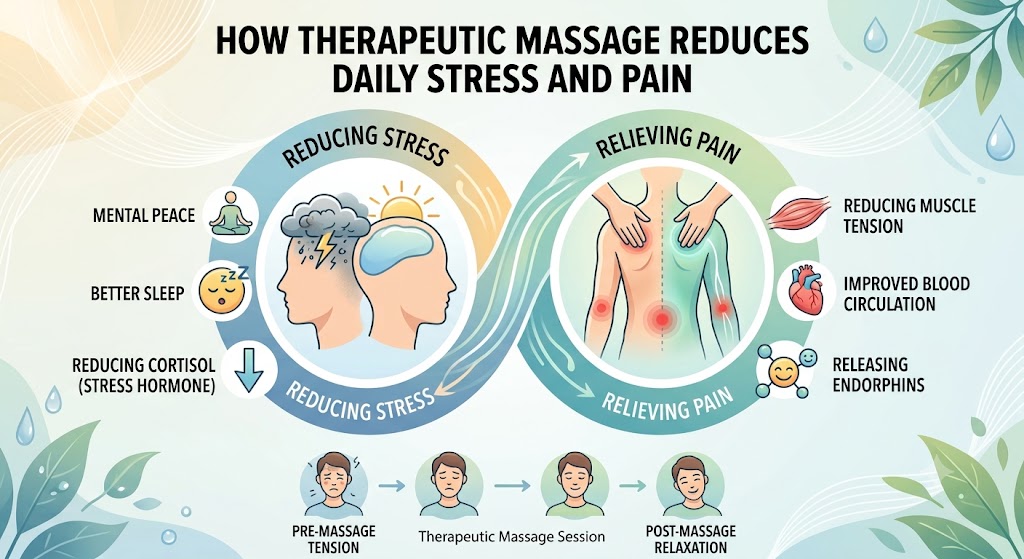
Therapeutic massage works by targeting deep muscle tissue and fascia to break up knots and adhesions. The physical pressure stimulates circulation, increases oxygen delivery to tight tissues, and encourages the nervous system to shift out of “fight-or-flight” mode, lowering stress hormones like cortisol while releasing natural pain-relieving endorphins.
2. What is the difference between a general relaxation massage and a targeted tension relief massage?
While a general relaxation massage (such as a light Swedish massage) focuses on overall comfort and light surface stress relief, a targeted tension relief or deep tissue massage focuses on specific problem areas. Practitioners use firmer pressure and specialized techniques to work on deeper muscle layers, relieving persistent structural tightness in areas like the shoulders, lower back, and neck.
3. How often should I get a therapeutic massage to manage recurring back and shoulder pain?
Frequency depends on your activity level, stress, and pain severity. For chronic pain or high-tension areas, weekly or bi-weekly sessions are often recommended initially to break up persistent tight spots. Once pain is managed, a maintenance schedule of once or twice a month is usually effective for long-term relief and prevention.
4. What should I expect during and immediately after a targeted massage session?
During the session, you may feel targeted pressure on tight “trigger points,” which can be slightly uncomfortable but should feel like a “good hurt.” Afterward, it’s normal to feel relaxed, slightly lightheaded, or experience mild muscle soreness for 24 to 48 hours—similar to a good workout. Drinking plenty of water helps flush out metabolic waste products released from the tissues.
5. Can therapeutic massage care complement other recovery methods like physical therapy or chiropractic care?
Yes, therapeutic massage works exceptionally well alongside physical therapy and chiropractic treatment. By softening rigid muscles and relaxing tight tendons surrounding joints, manual bodywork makes spinal adjustments easier, enhances flexibility, and helps the body hold alignment or structural improvements longer.