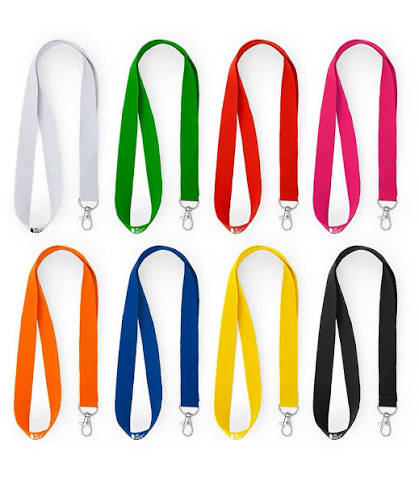
The recycled lanyard is one of the more genuine sustainability stories in promotional merchandise, which is a low bar in an industry fond of vague green language, but the lanyard clears it comfortably. The reason is simple. A standard promotional lanyard is woven from polyester, and polyester is the same family of plastic that drinks bottles are made from. So a used bottle can be cleaned, shredded, melted and spun back into fibre, and that fibre can be woven into a strap. The material path from a discarded bottle to the lanyard around a delegate’s neck is short and real, not a marketing metaphor.
The fibre this produces is usually labelled rPET, which stands for recycled polyethylene terephthalate, the recycled version of the standard PET plastic. On a lanyard it behaves much like ordinary polyester. It takes a printed logo, it comes in the usual widths, it wears comfortably, and unless someone tells you, you would struggle to feel the difference between a recycled strap and a virgin-polyester one. That is the quiet strength of the product: the sustainability is in how it is made, not in any compromise you have to accept in how it looks or performs, which is why this UK promotional-merchandise supplier and others increasingly list a recycled option alongside the standard range. You are not trading quality for conscience, which is exactly why it is an easy switch to recommend.
It is worth being precise about what rPET is and is not, because this is where a lot of promotional eco-claims quietly fall apart. Recycled content and biodegradability are two completely different things, and they are not interchangeable. An rPET lanyard is made from recycled plastic, which is a real and worthwhile environmental benefit, because it diverts bottles from waste and uses less new material. It is not biodegradable, and it will not quietly compost if it ends up in a hedge. Any supplier who implies a recycled polyester strap will break down naturally is blurring two separate claims into one, and that is the sort of loose language that gets brands into trouble. The honest positioning is the accurate one: this is a recycled-content product, and that is a genuine benefit on its own terms, without needing to borrow a compostability claim it cannot support.
This precision matters more than it used to, because the rules around green marketing have tightened considerably. UK guidance on environmental claims, and comparable rules across Europe, now expect sustainability statements to be specific, accurate and substantiated rather than a comforting glow of adjectives. A page that says “eco-friendly lanyards” and stops there is exactly the kind of vague claim regulators are increasingly unhappy with. A page that says these lanyards are woven from recycled PET made from post-consumer bottles is saying something concrete that can be checked, and it is on far safer ground. Being honest here is not just ethically tidier; it is now the commercially sensible choice, because a claim you can defend is worth more than one you cannot.
There is a nice symmetry to the recycled lanyard at an event, as well. Conferences and exhibitions generate a lot of single-use plastic, and a lanyard woven from the same plastic that would otherwise be waste is a small, visible signal that an organiser has thought about the footprint of their event. It is not going to offset the whole show, and nobody should pretend it does. But as a piece of merchandise that every attendee wears all day, it puts a modest, honest, sustainability-minded choice right at chest height where people notice it, and it does so without asking anyone to sacrifice the practical job the lanyard is there to do.
It is fair to keep the recycling story in proportion, too. Turning bottles back into fibre still uses energy, the strap still has metal and plastic fittings that are not themselves recycled content, and at the end of its life a lanyard is not always easy to recycle again. Recycled content is a real improvement on virgin plastic, not a clean sheet, and the honest way to talk about it reflects that. A supplier who acknowledges the limits as readily as the benefits is usually a more reliable guide than one who presents recycled polyester as a total answer to a complicated problem.
If you are considering the switch, a few honest questions keep you on the right side of the line. Ask what the recycled content actually is and how much of it there is, because “contains recycled material” and “made from recycled material” are not the same claim. Ask how the strap should be described on your own materials, so your marketing does not accidentally overstate what the product is. And resist the temptation to reach for the strongest-sounding green word available, because a specific, modest, true claim will always serve a brand better than an impressive one that does not hold up. A reputable supplier will be comfortable answering all of that plainly, and a reluctance to do so tells you something in itself.
The recycled lanyard, in the end, is a small object carrying a sensible lesson for the whole category. Sustainability in merchandise works best when it is specific and honest: a real material, a real benefit, described in plain and accurate terms. The bottle-to-badge-strap story is worth telling precisely because it is true, and it stays worth telling only as long as it is told straight.