Family wellness rarely comes from big plans. It comes from the small habits a household manages to keep — and brushing teeth is one of the easiest places to start.
Brushing teeth can feel like a daily battle in many households. Mornings are rushed with school preparation, and evenings are packed with homework, dinner, and bedtime routines. For parents, getting children ages 4–10 to brush properly can be stressful, frustrating, and time-consuming — a small task that somehow becomes the most negotiated part of the day.
Establishing consistent brushing habits, however, does not have to be a daily struggle. With well-structured morning and bedtime routines, brushing can become a fun, predictable habit. Children develop better oral-care skills, parents enjoy calmer routines, and family wellness becomes something built quietly over time — one small daily habit at a time.
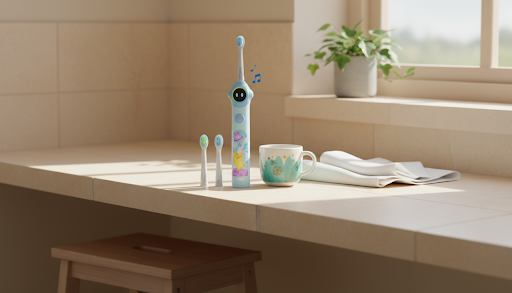
| [ IMAGE 1 — Hero ]
Sunny UK family bathroom morning. See Recraft prompt at the end of this document. |
Why Children Resist Brushing
Children resist brushing for reasons that have nothing to do with attitude. Strong toothpaste flavors can feel overwhelming. The vibration of an electric brush can be unfamiliar. Repetition becomes boring quickly, especially for younger children who are still building attention span. Reaching back molars takes dexterity that develops gradually. And for kids in braces, the whole process can simply feel uncomfortable.
Parents often worry whether their child is brushing thoroughly and consistently. Children aged 4–10 are still developing independent brushing skills, so guidance, routine, and a few good tools matter more than enforcement.
Structuring Morning and Bedtime Routines
The Morning Routine
Morning brushing works best when it is anchored to a fixed point in the day. Four small structural choices make the routine easier to keep.
Anchor It to a Fixed Moment
Brush right after waking, ideally before breakfast. The fixed slot eliminates the daily negotiation about whether brushing happens — it just does, in the same place, at the same time, every morning.
Use a Built-In Timer
Two minutes feels longer to a six-year-old than to an adult. A built-in two-minute timer or a brushing app that tracks duration removes the guesswork — the brush itself decides when the session is complete.
Cover All Six Zones
Encourage children to follow brushing prompts and cover every zone of the mouth, including the harder-to-reach back teeth. A guided brushing tool that walks the child through each zone makes coverage automatic rather than negotiated.
Reinforce With Praise
A quick “well done today”, a sticker on a chart, or a small weekly reward keeps the habit feeling rewarding rather than enforced. Praise the completion, not the perfection.
The Bedtime Routine
Evening brushing should sit inside a wind-down sequence: bath, brush, story, bed. Pairing brushing with another evening habit makes it harder to skip and easier to remember. Four small choices help.
After the Last Snack
Time the brushing session for after the last snack or drink of the evening, not before. Brushing earlier means new food residue gets locked in for the night.
Add a Flossing or Rinse Step
For children with braces, retainers, or tight spaces between teeth, a quick flossing or water-rinse step adds a useful layer to the bedtime routine. Keep it short — sixty seconds is plenty.
Use Interactive Guidance
A talking toothbrush coach, a brushing app, or a single short song keeps tired kids engaged. Predictable focus works far better than asking children to power through silence at the end of a long day.
Let Kids Lead Small Choices
Letting children pick the toothbrush color, the brushing song, or the order of the bedtime sequence builds ownership without giving up parental supervision. Small choices, big buy-in.
A NOTE ON FLEXIBILITY
Routines work best when they are firm in purpose and flexible in detail. A messy bedtime that still ends with brushing is a successful bedtime.
| IN ONE LINE
Consistency matters more than perfection. A daily-but-imperfect routine outperforms a flawless one that happens twice a week. |
How Talking Brushing Coaches Help
Guided tools earn their place by removing the parent from the role of brushing referee. A guided kids toothbrush with voice prompts, a built-in two-minute timer, and zone-by-zone guidance turns brushing into a led activity rather than a request. The brush walks the child through each zone of the mouth. Music or audio cues keep attention. An optional companion app lets parents see brushing time, coverage, and consistency over the week without standing in the doorway.
The practical effect is fewer reminders. The brush itself does the coaching, which builds independence in kids and reduces the daily emotional load on parents — the two outcomes most family routines actually need.
Making Brushing Fun
Engagement is what turns a chore into a habit. Kids brush better when brushing feels like part of an activity rather than an instruction. Music, storytelling, simple games, and small challenges all transform the moment.
Keep the bar low and the consistency high. A short song repeated nightly will do more for habit formation than a single perfect lecture about oral hygiene. Rewards work, but they should celebrate the streak — a sticker for completing the week — rather than the individual session.
Tips for Parents to Support Good Habits
Parents do not need to micromanage to support good habits. Brushing alongside children models proper technique without making it a lesson. Supervising without hovering encourages independence — close enough to see, far enough that the child feels trusted. Adjusting toothpaste amount and brush pressure for sensitive teeth quietly removes a major source of resistance.
Most importantly, hold the routine itself steady. Even when life gets chaotic, the morning and bedtime sessions should be the last things to drop. With consistent guidance, children learn to brush effectively without making it a nightly battle.
Troubleshooting Common Challenges
Even with a structured routine, problems will come up. Most have a simple workaround.
- Rushing through brushing: Use a built-in two-minute timer or interactive features so the brush enforces the time, not the parent.
- Missing back teeth: Use a brush with zone-by-zone guidance, or briefly take over the back-teeth zones for younger children who lack the dexterity.
- Complaints about vibration: Start with a soft mode and the lowest setting, then increase gradually over a few weeks as the sensation becomes familiar.
- Distraction halfway through: Pair brushing with one short song or story — short predictable focus beats silence.
- Resistance or refusal: Lower the bar, not the consistency. A daily thirty-second session beats a tearful two-minute session twice a week.
Why Consistency Matters
Habits formed between ages 4 and 10 set the foundation for lifelong oral care. A child who brushes consistently in this window is far more likely to keep brushing thoroughly through the teen years and into adulthood. Consistency also builds independence — once kids know exactly what comes next, the routine becomes automatic and the daily reminders fade away.
A NOTE ON THE LONG VIEW
The routines you build at age six do most of the work at age sixteen. Small effort now, meaningful payoff later.
Smart Tools Make the Routine Easier
The right tools make a steady routine far easier to keep. An age-appropriate kids’ brush with timing, voice coaching, and brushing-zone guidance lowers the parental load and lets kids take ownership of their own care. Choosing dental care products that are designed specifically for ages 4–10 — softer bristles, smaller heads, engaging guidance — makes a meaningful difference compared with adult tools simply scaled down to a smaller size.
Layer in a few simple supports — a sticker chart, a brushing song, a kid-favorite toothpaste, a step stool tall enough to reach the sink — and the routine starts running itself. The point is not to add more gadgets. The point is to remove friction so the right routine becomes the easiest one to keep.
Practical Recommendations for Families
A handful of small adjustments tend to deliver outsized results.
- Keep toothbrushes, toothpaste, and accessories organized in one visible spot near the sink.
- Encourage children to brush for the full two-minute window using a built-in timer.
- Incorporate interactive or guided tools to maintain engagement on tired evenings.
- Add an optional flossing or water-flossing step for children with braces or tight spacing.
- Assign each child their own brush head or nozzle for hygiene and personal ownership.
- Replace brush heads on a regular schedule (a calendar reminder helps).
- Keep a portable toothbrush ready for travel, sleepovers, or shared bathrooms.
- Pair brushing with another evening habit — bedtime reading, bath, or laying out clothes — so it never feels optional.
Responsible Oral Care: When to See a Dentist
Home tools support better daily routines, but they do not replace dental professionals. Children should see a dentist or hygienist on a regular schedule — typically every six months — and any persistent bleeding, pain, swelling, or sensitivity should prompt a visit.
This is especially important for children in braces, kids with crowded teeth, and anyone whose dentist has flagged early concerns. A great home routine combined with regular professional care is the combination that actually works.
Small Habits Lead to Big Results
Simple, repeatable routines often outperform grand plans. Large goals can overwhelm families, while small daily habits build long-term results quietly.
Oral care is an ideal habit to optimize. With minor adjustments, interactive tools, and structured guidance, children can learn proper technique, develop independence, and engage with brushing rather than resist it. For families looking to simplify and improve their children’s routine, browsing a curated range of toothbrushes for kids is a useful place to start — each option is built around the same idea: make the right routine the easiest one to keep.
Family wellness rarely needs more. It usually needs simpler. Brushing teeth is the perfect place to prove that.