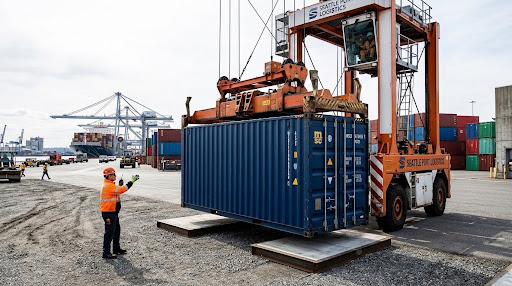
A straightforward look at how ground conditions, access routes, clearance, and placement decisions can prevent delays on delivery day.
Buying a shipping container can be a practical way for businesses to add secure storage, support jobsite operations, or manage inventory overflow. But for facilities managers, the purchase itself is only one part of the process.
The bigger question is whether the container can be delivered, placed, accessed, and used without disrupting daily operations. A well-priced container can still become a costly problem if the site is not ready when the truck arrives.
Start With the Delivery Path
Before choosing a container, facilities teams should look closely at how it will physically reach the site. Delivery access affects everything from scheduling to placement accuracy. A truck may need room to enter the property, turn safely, unload, and exit without blocking traffic, damaging surfaces, or interfering with active work areas.
This is especially important for commercial yards, industrial properties, retail backlots, construction sites, and shared business parks. A route that looks clear on a map may include tight gates, parked vehicles, overhead lines, trees, curbs, slopes, or loading areas that are busy during certain hours.
A simple site walk can prevent many delivery-day issues. Facilities managers should confirm the entrance width, turning space, surface condition, and any time restrictions for larger vehicles. If the property has security gates or controlled access, those details should be handled before the delivery appointment.
Confirm the Ground Can Support the Container
The placement surface matters as much as the delivery route. Shipping containers are heavy, and once loaded, they can place significant pressure on the ground beneath them. A soft, uneven, or poorly drained surface may cause the container to settle, tilt, or become difficult to use over time.
A firm and level base is usually the starting point. Depending on the property, this may include compacted gravel, concrete, asphalt, or another stable surface. Facilities teams should also consider drainage. If water collects around the container, it can create access issues, mud, ice, or long-term maintenance concerns.
Ground preparation should match how the container will be used. A container that will be accessed daily by staff, forklifts, pallet jacks, or service vehicles needs more planning than one used for occasional overflow storage. OSHA’s workplace storage guidance notes that storage areas should be kept free from hazards such as tripping risks and unsafe material accumulation, which is a useful reminder that the surrounding area matters as much as the container itself.
Choose Placement Based on Workflow
The most convenient open space is not always the most useful place for a container. Good placement should support how employees move materials, access tools, load inventory, and keep operations running.
Facilities managers should think about door orientation, walking distance, vehicle access, lighting, visibility, and security. If the container doors face away from the main work area, staff may lose time moving items back and forth. If the container blocks a route used by delivery vehicles or forklifts, it may create delays instead of solving a storage problem.
For teams comparing shipping containers for sale, placement planning should happen before finalizing the purchase. A 20-foot container may be easier to fit into a tight property, while a 40-foot container may offer more storage capacity but require more room for delivery and access. The right choice depends on both storage volume and site layout.
CCOHS recommends considering the flow of materials through storage areas and leaving enough space for equipment and personnel. That guidance applies well to container placement because the container becomes part of the broader workflow, not a separate storage island.
Check Clearance Before Delivery Day
Clearance is one of the easiest details to overlook. Delivery equipment may need more room than the container’s final footprint. Overhead clearance can be affected by wires, tree branches, rooflines, signage, lighting, canopies, or loading bay structures.
Side clearance also matters. A tight placement area may limit the driver’s ability to position the container accurately. If the doors need to swing open, there must be enough space in front of the container for employees to enter, load, and unload safely.
Facilities managers should mark the proposed location before delivery and remove temporary obstacles such as parked vehicles, pallets, bins, trailers, snow piles, or unused equipment. This helps the delivery team place the container where it was intended to go, rather than choosing a backup location that creates operational issues later.
Account for Safety, Security, and Approval Requirements
A shipping container should improve site organization, not introduce new risks. Before delivery, teams should consider who will access the container, what will be stored inside, and whether the location creates any safety or security concerns.
If the container will hold tools, equipment, inventory, or maintenance supplies, it should be placed where access can be controlled and monitored. Lighting may be needed for early morning or evening use. The surrounding area should remain clear so staff are not stepping around clutter, debris, or vehicle traffic.
Internal approval can also be important. Property managers, safety teams, insurers, or department leaders may need to review the location before the container arrives. On some properties, local rules may also affect where a container can be placed or how long it can remain on-site. Checking these details early can reduce the chance of having to move the container after delivery.
Conclusion
Delivery planning is one of the most practical ways to protect the value of a shipping container purchase. When facilities managers review access routes, ground conditions, clearance, workflow, and approval requirements in advance, the container is more likely to serve its purpose from day one.
A container can be a useful storage asset for business operations, but only when it fits the site as well as the storage need. Careful planning before delivery helps prevent delays, extra costs, and placement problems that could have been avoided.
Additional Resources
For additional planning context, businesses can review resources on shipping containers Canada when comparing container availability, sizing, and purchase considerations.