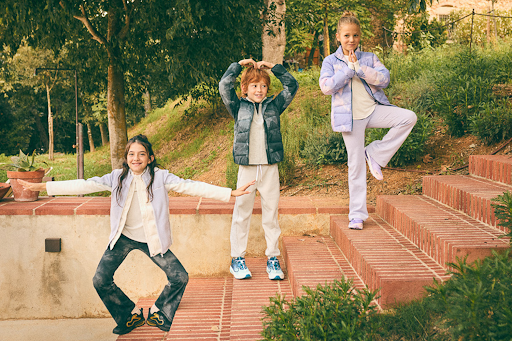
Most kids’ wardrobes are stuffed full and somehow still never have the right thing in them. The drawers won’t close, yet the same three outfits are in rotation while everything else waits, untouched, to be outgrown. For active families there’s a calmer way to do it, and it’s not a new idea: the capsule wardrobe.
A kids’ capsule is just a small, well-chosen set of pieces that all work together — fewer things, better picked, mixed and matched across a busy week. Done right, it means less washing, fewer morning standoffs, and clothes that actually get worn.
Why it suits active kids especially
Active children are hard on clothes and have zero patience for anything that’s uncomfortable. A capsule plays to both. It leans on pieces that move well, wash well and pair easily, so a child can get dressed quickly and get on with their day without a parent refereeing the whole thing.
It also quietly shifts the spending from quantity to quality. A handful of well-made pieces that survive the year often works out cheaper than the steady drip of cheap stuff you keep replacing.
Start with the workhorses
The backbone of an active capsule is a few pieces that go almost anywhere:
Comfortable leggings or active pants that handle sport, school and the park.
A few quick-dry tees and tops that layer.
One or two jackets or mid-layers for when the weather turns.
Shorts or skirts in colours that match the rest.
Trainers that cover most of what they do.
The test for anything you add is simple: does it go with most of what’s already there, and does it work for more than one thing? If yes, it stays.
Keep the palette tight
Capsules work because the pieces play nicely together. A restrained palette — a few core colours and one or two accents — means nearly everything goes with everything, which is what lets a child dress themselves and lets you pack a kit bag in about thirty seconds. This is where minimal, clean design earns its keep: it mixes and lasts in a way that novelty prints, which date fast and clash with everything, never quite manage.
Spend where it counts
Because a capsule asks fewer pieces to do more work, they need to be tough. Look for four-way stretch, solid construction and fabric that keeps its shape and colour through a lot of washing. For active kids, that’s the difference between a small wardrobe that runs all season and one that falls apart by half-term.
It’s part of why design-led activewear fits the capsule idea so neatly. Brands like moodytiger build ranges around versatile, mix-and-match pieces in coherent colours — leggings, layering tees, jackets meant to work together — which is exactly what a good capsule runs on.
Build it to flex
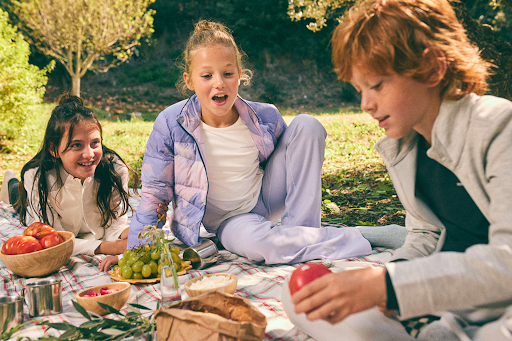
A capsule isn’t fixed. As the seasons turn and kids grow, you swap individual pieces rather than starting over. Keep the palette and the structure consistent and new bits slot straight in, so the whole thing keeps ticking along with very little effort.
The payoff is small but real: a child who can get dressed and get moving without a fuss, and a wardrobe that helps the day along instead of getting in its way.
What to look for in the pieces themselves
A capsule only works if the individual pieces can genuinely do multiple things. That rules out a lot of what fills most kids’ wardrobes — novelty prints that date, fabrics that lose their shape after three washes, cuts built for looks rather than movement.
In practice that means four-way stretch so nothing pulls during sport or play, quick-dry fabric so the same leggings can go from gymnastics to the park without a change, a restrained palette so everything coordinates without thinking about it, and construction that survives the washing machine on rotation. If something can’t do all four, it’s probably not earning its place in a capsule.
Material safety is worth thinking about here too. Active kids wear their clothes for long hours against their skin, and a growing number of parents now want to know not just that a garment passed a safety test, but how the fabric was made. Brands like moodytiger use select fabrics that are bluesign® approved, a standard that restricts the use of hazardous chemicals in the manufacturing process — a meaningful step up from end-of-line testing alone. For a capsule built around daily wear, that kind of process-level care matters.
How to refresh a capsule without starting over
The most common capsule mistake is treating it as a project with a start and an end. Build it once, and by spring it needs rebuilding. Instead, think of it as a living wardrobe with a stable structure: a set of colour rules, a set of categories, and a habit of swapping one piece at a time rather than overhauling the lot.
When something wears out or gets outgrown, replace it with something that fits the same brief — same colour range, same use case, same standard of quality. That way the wardrobe evolves without losing its coherence, and you never end up back at the starting point of a drawer that won’t close and nothing to wear.
The season changes are the natural moment to do a quick review: pull out what’s been outgrown or worn out, assess what’s still working, and add one or two new pieces if needed. It takes twenty minutes and keeps the whole thing running. That’s the real appeal of the capsule approach — not a perfect wardrobe, but a manageable one.
FAQs
How many pieces should a kids’ capsule have?
There’s no magic number, but a lot of families land around ten to fifteen versatile, matching pieces per season — leggings or pants, layering tops, a jacket, shorts or skirts, and a reliable pair of trainers.
Does it actually save money?
Often, yes. Fewer, better pieces that last and mix well tend to cost less over time than constantly replacing cheap things that wear out or never get worn — especially with kids who are rough on clothes.
What makes activewear good for a capsule?
Four-way stretch, durability, quick-dry fabric and a consistent palette. That combination mixes easily and survives heavy washing, which is everything a capsule depends on.