ProFractional laser is a fractional ablative treatment by Sciton that creates thousands of microchannels in the skin to stimulate collagen remodeling. It effectively addresses acne scars, fine lines, sun damage, and uneven texture with shorter downtime than fully ablative resurfacing. Results typically improve over three to six months, and most patients see meaningful improvement in one to two sessions.
ProFractional laser is a fractional ablative treatment developed by Sciton that has become a preferred option for patients seeking significant skin improvement without the extended downtime associated with traditional fully ablative resurfacing. Understanding what the treatment actually does, which concerns it addresses most effectively, and what sets it apart from other resurfacing options helps patients arrive at a consultation with the right questions and realistic expectations.
What ProFractional Laser Is
The ProFractional laser is part of the JOULE platform developed by Sciton, using a 1490nm erbium-doped glass laser to create precise microchannels through the epidermis and into the dermis. Unlike fully ablative lasers that remove the entire surface of the treated skin, ProFractional treats a fraction of the skin’s surface, leaving the surrounding tissue intact. That untreated tissue acts as a reservoir for healing, allowing the skin to resurface more quickly than it would after fully ablative treatment. The microchannels stimulate the body’s natural wound healing response, prompting collagen and elastin production that continues for several months after the session.
What ProFractional Laser Treats
ProFractional laser is most commonly used for acne scars, particularly ice pick and boxcar subtypes that involve loss of dermal volume. It is also effective for photoaging, including fine lines, sun-damaged skin, and uneven pigmentation patterns. Textural irregularities from prior procedures, stretch marks, and surgical scars are among the concerns patients present to providers trained in fractional laser resurfacing. The depth of penetration is adjustable, which allows providers to calibrate the treatment to the specific concern: shallower passes for fine surface texture and pigmentation, deeper passes for established acne scarring or significant volume loss.
How ProFractional Differs From Other Fractional Options
The fractional laser category includes both ablative and non-ablative options. Non-ablative fractional lasers heat the dermis without removing the surface layer, producing more gradual results with minimal downtime. Ablative fractional options, including ProFractional and CO2 fractional platforms, create actual tissue ablation in the treated microchannels, producing more significant collagen stimulation and more noticeable results per session. ProFractional is distinguished within the ablative category by its wavelength, which has a high affinity for water in tissue, and its delivery precision on the JOULE platform. Some providers combine ProFractional with BroadBand Light (BBL) therapy in the same session to address both structural and pigmentation concerns simultaneously.
What to Expect During the Treatment
Before a ProFractional session, a topical anesthetic is applied and left on for thirty to sixty minutes. The treatment involves passing the laser handpiece across the target area in multiple passes, which most patients describe as a sensation of heat and prickling. Depth and density settings are adjusted by the provider in real time based on the patient’s skin type, the concern being treated, and tolerance. A single session typically takes thirty to sixty minutes, depending on the treatment area. Immediately after, the skin appears red and swollen, similar in appearance to a moderate sunburn.
Downtime and the Recovery Process
Downtime after this treatment varies based on depth and density settings. At standard settings for fine lines and texture, most patients experience three to five days of redness, mild swelling, and bronzing or flaking as the microchannels heal. At deeper settings for acne scarring, downtime may extend to seven to ten days. The treated skin requires gentle cleansing, consistent moisturization, and strict sun protection during healing. Patients who follow post-procedure protocols consistently tend to heal more smoothly and with less risk of post-inflammatory hyperpigmentation, particularly those with medium to darker skin tones.
When Results Become Visible
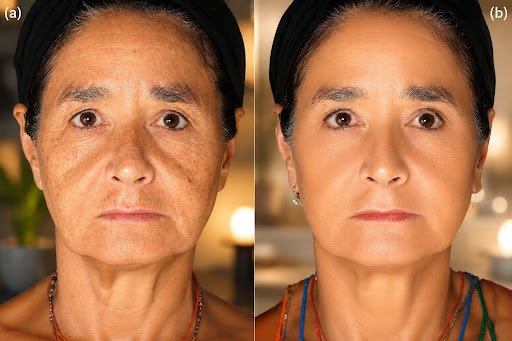
Collagen remodeling after treatment is a gradual process. Initial texture improvement is often visible within two to three weeks as surface healing completes. The deeper collagen response continues for three to six months following the session, which means the final result of a single treatment is not fully visible until that timeframe has passed. Patients who assess outcomes at four weeks and feel the results are limited are seeing an intermediate stage, not the endpoint. Photographs taken before treatment and at the three and six-month marks document the progression more accurately than subjective assessment alone.
How Many Sessions Produce the Best Results
The number of sessions needed depends on the severity of the concern being treated. Patients with mild texture irregularity and early photoaging often see satisfactory improvement in one to two sessions. Established acne scarring, particularly deep ice pick or boxcar scars, typically requires two to four sessions spaced at least three months apart to allow full collagen maturation between treatments. Combination approaches, pairing ProFractional laser with other modalities such as microneedling or neurotoxin, may reduce the total number of laser sessions needed for comprehensive facial rejuvenation.
Choosing a Provider Qualified to Perform This Treatment
ProFractional laser is an ablative procedure. The provider operating it needs hands-on training specific to fractional ablative platforms, not general laser certification. The Fitzpatrick skin type of the patient, the depth and density settings appropriate for the concern, and the management of adverse events such as post-inflammatory hyperpigmentation or prolonged redness require clinical judgment built through supervised experience. Patients should ask whether the provider has specific training on the JOULE ProFractional platform, how many treatments they have performed, and what their protocol is for skin types similar to the patient’s. Clinics offering ProFractional laser treatment from providers with platform-specific training and documented adverse event protocols are operating at a materially different standard than clinics that treat the procedure as a routine aesthetic service.
What to Ask Before You Commit
Patients considering fractional laser skin resurfacing should ask specifically about provider training, the number of cases performed on skin types similar to their own, and the clinic’s protocol for post-procedure care before committing to treatment. A provider who can answer those questions with specificity, citing the platform, their supervised training history, and a defined post-procedure protocol, has demonstrated the clinical standard that an ablative procedure requires. That conversation, before the first appointment, is the most reliable way to identify a provider who takes both the procedure and the patient’s safety seriously.