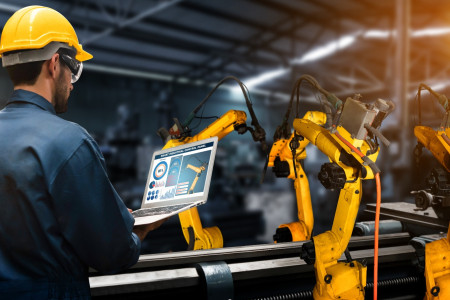
Automation was once a technology reserved for large enterprises with deep capital budgets and dedicated engineering teams. That era is over. A convergence of falling hardware costs, modular system architectures, cloud-based software platforms, and accessible implementation support has made industrial automation genuinely viable for small and medium manufacturers — and the results show that the benefits can be disproportionately greater for smaller operations than for large ones.
The Misconception That Has Held SMEs Back
The dominant narrative around industrial automation has been shaped by its most visible deployments: automotive assembly plants, large electronics manufacturers, and aerospace production facilities. These implementations are impressive but atypical. They create the impression that automation requires scale, capital, and specialist infrastructure that smaller manufacturers cannot access. The reality is that the technology landscape has changed fundamentally, and the German Mittelstand — the family-owned small and medium industrial enterprises that pioneered Industry 4.0 adoption from 2011 onwards — have been demonstrating for over a decade that automation at SME scale is not only possible but commercially compelling.
What Accessible Automation Looks Like
For smaller manufacturers, the most practical entry points into automation are typically focused, high-impact applications rather than wholesale production line transformation. Quality inspection systems that use vision technology to automatically detect defects, collaborative robots that handle repetitive assembly or packaging tasks, and smart sensors retrofitted to existing equipment to capture performance data — these are investments that deliver measurable returns quickly without requiring the wholesale replacement of production infrastructure.
Cloud-based manufacturing execution systems have removed another traditional barrier. Where previously a manufacturer would need to invest in expensive on-premises software and dedicated IT infrastructure, software-as-a-service models deliver the same analytical capabilities at subscription costs accessible to operations of any scale. The result is a technology environment in which the gap between what a large manufacturer and a smaller one can deploy has narrowed considerably.
The Workforce Dimension
Automation at SME scale is as much a workforce strategy as a productivity strategy. Smaller manufacturers face the same labour market pressures as large ones — skills shortages, wage inflation, and demographic change — with proportionally less capacity to absorb their impact. Automation that relieves workers of repetitive and physically demanding tasks while directing them toward higher-skill activities improves both retention and productivity. For many SME operators, this dual return on investment is the most compelling part of the business case.
Hydraulics and Industrial Reliability
The productivity gains from automation investment depend on the reliability of the broader equipment ecosystem. Automated production systems are only as effective as the machinery that supports them — and hydraulic systems are frequently the critical failure point in an industrial plant. Access to prompt hydraulic repairs when issues arise protects the operational continuity that automation investments are designed to deliver. For SMEs with tighter margins and less redundancy in their production capacity, unplanned hydraulic downtime carries a disproportionately higher cost — making reliable access to repairs a practical complement to any automation strategy.
As NIST’s manufacturing innovation resources confirm, robotics and automation effectively eliminate production variation and improve efficiency for manufacturers of all sizes — and the technology, expertise, and support structures to make this accessible to smaller operations have never been more developed. The question for SME operators is no longer whether automation is within reach. It is which applications to prioritise first.