When the power goes out, your phone often becomes your most important tool. It helps you check weather alerts, contact family, use maps, read local updates, and call for help if needed. During a short outage, a low battery may only feel inconvenient. During a storm, wildfire, flood, or extended blackout, it can become a real problem.
A 20000 mah power bank can be especially useful for emergency preparedness because it gives you enough backup power for more than a quick phone top-up. It can help keep essential devices running longer, especially when outlets are not available or you do not know when power will come back.
Emergency planning is not just about food, water, and flashlights anymore. Staying connected matters too. A charged phone can help you follow evacuation notices, check road closures, access emergency contacts, and receive updates from local agencies. Without backup power, all of that becomes harder.
How a Power Bank Helps in Real Emergency Situations
A power bank is useful because it works when the wall outlet does not. If a storm knocks out power overnight, you can still charge your phone in the morning. If you lose electricity during extreme heat or winter weather, you can keep communication open while waiting for updates.
A 10000 mah power bank is also practical for shorter outages, daily backup, and basic emergency kits. It can support a phone, earbuds, or other small devices without taking up much space, which makes it easier to keep in a drawer, backpack, car bag, or go-bag.
In real situations, backup power can help with more than phone calls. You may need to charge wireless earbuds for hands-free communication, a small flashlight, a portable radio, a smartwatch, or a child’s tablet during a long outage. These small devices can make stressful moments easier to manage.
Power banks are also easier to store and use than larger backup power stations. They fit in a drawer, backpack, emergency kit, car bag, or nightstand. For many households, that makes them one of the simplest first steps in building a practical emergency setup.
What Capacity Should You Choose for Emergency Use
Capacity depends on how long you expect to be without power and how many devices you need to charge. Smaller power banks can work for short outages or individual use. They are easy to carry and can give one phone enough power to get through the day.
For longer emergencies, higher capacity makes more sense. If you live in an area with frequent storms, wildfire risks, rolling blackouts, or winter outages, choosing more backup power gives you extra breathing room. It can also help if more than one person needs to charge a phone. For households that also need to keep a laptop, tablet, or work device running, a model like the INIU Cougar P63 100W High Capacity Laptop Power Bank can be a practical option because it fits the need for stronger backup power without moving into a full-size power station.
Households should think beyond a single device. One person may need a phone for updates. Another may need a tablet for school or work. Someone else may rely on earbuds, a smartwatch, or another small USB-powered device. The more devices you need to support, the more capacity you should consider.
That said, bigger is not always better for every situation. A very large power bank may be heavier and less convenient to carry. The best choice is one that balances enough backup power with a size you can store, pack, and actually use when needed.
What Features Make a Power Bank Better for Preparedness
Fast charging is one of the most helpful features in an emergency. Sometimes you only have a limited window to charge, especially if power comes back briefly or you are using a car charger, generator, or shared outlet. A fast power bank can get your phone back to a usable level more quickly.
USB-C support is another major advantage. It improves compatibility with newer devices and can reduce the number of cables you need to keep in your emergency kit. A power bank with both USB-C input and output is especially useful because it can recharge faster and charge modern devices more efficiently.
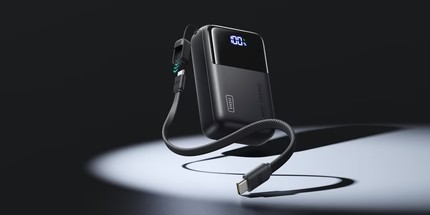
Built-in cables can also reduce stress. During an emergency, people often forget small accessories. A power bank with built-in cables can be helpful if you do not want to search for cords in the dark or during a rushed evacuation.
Safety features matter as well. Look for protection against overheating, overcharging, short circuits, and excessive current. Since an emergency power bank may sit unused for long periods, reliability is just as important as charging speed.
How to Store and Maintain Your Emergency Power Bank
A power bank only helps if it is ready before you actually need it. Instead of leaving it unused in a drawer for months, check it regularly, especially before storm season, wildfire season, winter weather, or any time outages are more likely.
Store it in a cool, dry place away from direct sunlight, moisture, and extreme temperatures. Avoid leaving it in a hot car for long periods, since heat can affect battery performance and long-term safety.
It is also smart to keep the right cables and wall adapter with your emergency kit. Even if your power bank has built-in cables, a backup cable is still useful. This matters because a fully charged power bank will not help much if you cannot connect it to the devices you rely on most.
Regular testing is just as important as storage. Every few months, use the power bank to charge a phone or another small device, then recharge it afterward before putting it back. This helps confirm that it still works, that your cables are compatible, and that the capacity still makes sense for your real emergency needs. A smaller unit may be enough for one person, but a household may need more backup power to keep multiple essential devices running during a longer outage.
Conclusion
A power bank is one of the simplest and most practical tools you can add to an emergency kit. It helps keep your phone, earbuds, small lights, and other essential devices powered when outlets are not available.
For emergency preparedness, the best power bank is not just the biggest one. It should offer the right balance of capacity, charging speed, USB-C compatibility, safety features, and easy storage. When severe weather or a power outage hits, backup power can help you stay informed, connected, and better prepared.