Introduction to Regenerative Dentistry
Oral healthcare is evolving with the emergence of regenerative dentistry, a field dedicated to harnessing the body’s ability to repair and renew its own tissues. Unlike traditional treatments that often rely on artificial materials or mechanical interventions, regenerative therapies strive to restore the natural biology and function of teeth, gums, and surrounding structures. This approach not only improves long-term outcomes but also emphasizes patient-centered, minimally invasive care. For those interested in integrating a holistic perspective into their dental care, seeing a holistic dentist can offer additional insight into the benefits of regenerative therapies and overall wellness.
Regenerative dentistry seeks to move beyond temporary fixes and instead fosters true healing, drawing on scientific advances in areas such as tissue engineering, stem cell science, and biomaterials. These advancements are paving the way for new treatments that promote faster recovery, stronger oral health, and better quality of life for patients from all walks of life.
Stem Cells: The Cornerstone of Regeneration
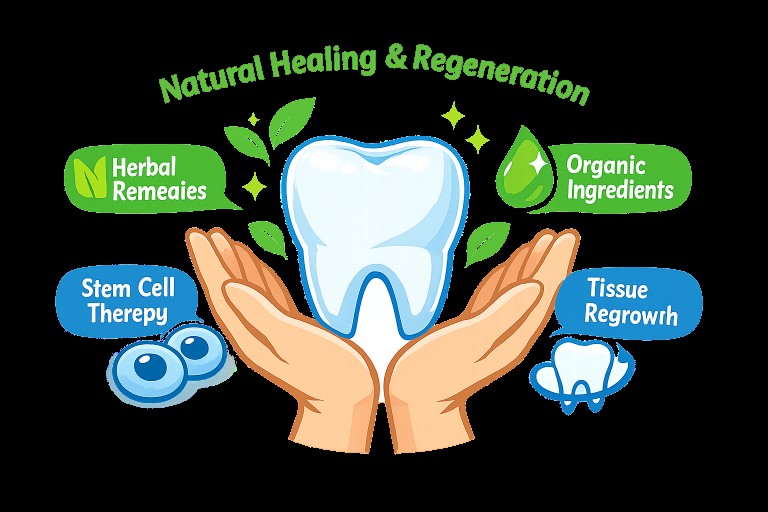
One of the most exciting areas of regenerative oral care is stem cells, unique cells that can transform into a variety of specialized tissue types. Dental researchers have discovered that stem cells found in the mouth, especially within the gums and dental pulp, can be directed to heal injuries and regenerate lost tissues. For example, a recent study at Penn Dental Medicine highlighted how specialized molecules secreted by human gum stem cells dramatically accelerated tissue regeneration in preclinical models.
The future of stem cell therapy in dentistry includes not only faster healing after surgery but also the potential to grow entirely new tissue structures, such as dentin or even whole teeth. As this research advances, it holds tremendous promise for patients who have suffered trauma, gum disease, or tooth loss.
Extracellular Vesicles: Tiny Messengers with Big Potential
Another powerful player in tissue regeneration is the extracellular vesicle (EV), a microscopic package sent from one cell to another. These vesicles carry important signals, including proteins, genetic material, and other bioactive molecules that help orchestrate healing responses. In the context of oral health, EVs are attracting attention for their ability to modulate inflammation, accelerate wound repair, and even prevent tissue breakdown. By harnessing EVs therapeutically, clinicians may one day deliver targeted regenerative treatments that are safer and more effective than current methods.
Advancements in Tissue Engineering
Tissue engineering brings together cells, supportive biomaterials, and regenerative cues to build living tissues. In dental practice, this means designing three-dimensional scaffolds that guide new cell growth and tissue formation, replicating the natural architecture of gums, ligaments, or dentin. This strategy helps patients not only regain oral function but also achieve better aesthetic results. Innovations such as 3D-bioprinted scaffolds and bioactive ceramics are moving from research settings into clinical practice, with promising results in both animal models and early human trials.
Clinical Applications and Success Stories
Regenerative techniques have already arrived in dental offices. One popular option is platelet-rich fibrin (PRF), a concentrate made from a patient’s own blood that is applied to surgical sites during extractions or implant placement. PRF accelerates soft- and hard-tissue healing, shortens recovery times, and reduces patient discomfort. Beyond PRF, the use of highly biocompatible restoration materials is helping dentists create crowns, bridges, and implants that bond naturally with living tissue, resulting in stronger, safer, and longer-lasting restorations.
Across the world, dental teams are reporting impressive clinical results as regenerative therapies become mainstream. Stories of enhanced healing, improved bone integration, and preservation of natural teeth are becoming more common, and these successes are drawing attention from both providers and patients who value holistic, evidence-based care.
Challenges and Future Directions
Despite remarkable progress, several challenges remain for the widespread adoption of regenerative dentistry. Ensuring that stem cell and tissue engineering therapies are safe, effective, and affordable for everyday patients requires thorough regulatory review and further long-term studies. Access to advanced regenerative care may be limited by geographic or economic barriers. Collaborative research efforts and partnerships among academic institutions, clinical providers, and regulators are essential for overcoming these hurdles and unlocking the full benefits of regeneration in dentistry.
Final Thoughts
Regenerative dentistry is ushering in a new era by moving away from traditional repairs toward treatments that tap the body’s natural capacity for self-healing. By leveraging advances in stem cell therapy, extracellular vesicles, and tissue engineering, clinicians are increasingly able to offer solutions that restore oral health at its foundation. As scientific discoveries continue to emerge, more patients will be able to benefit from regenerative therapies that support longer-lasting, more natural, and more comfortable dental outcomes.