Have you ever ended a day feeling completely drained, yet unable to recall one meaningful thing you actually did?
This is the modern condition. A blur of notifications, deadlines and endless scrolling. People are more connected than ever, yet feel profoundly disconnected from themselves. The idea of “wellness” has become another item on an already overflowing to-do list. It feels like a luxury. One that is reserved for those with spare time and spare cash.
But a balanced wellness routine is not about adding more pressure. It is about building a sustainable foundation that works amid the chaos. It requires a sharp look at current trends, from hustle culture to the loneliness epidemic. We must strip away the performative wellness and focus on what actually functions.
In this blog, we will share how to build a routine that bends but never breaks under modern life’s weight.
The Foundation Before the Fads
Every modern wellness conversation eventually lands on supplements, biohacking, or ancient remedies. Trends cycle fast, leaving people confused about what actually works. Before reaching for anything shiny, the basics must be locked in. Sleep, hydration, movement and stress regulation form the non-negotiable pillars. Without these, no fancy addition will land.
This is where discernment becomes crucial. The market is flooded with products promising transformation overnight. Amid this noise, one substance that has gained genuine traction for its adaptogenic properties is shilajit. It is a natural resin used for centuries to support energy, cognitive function and recovery. For those looking to buy Purblack Shilajit, the focus should remain on purity and sourcing, as heavy metals and fillers plague lesser options. But here is the irony: a person sleeping four hours a night cannot supplement their way to wellness. The shilajit will help, but it will not fix a broken foundation. The routine must first prioritize rest, then stack the enhancers on top. That order is everything.
Movement That Fits, Not Fights
The fitness industry often promotes an all-or-nothing mentality. Either someone is crushing a CrossFit session or they are failing. This binary thinking ignores how bodies actually respond to stress. With burnout rates climbing across professions, adding high-intensity workouts can sometimes do more harm than good. Cortisol levels spike. Exhaustion deepens.
A balanced routine treats movement as a dial, not a switch. Some days call for intensity. Other days call for a slow walk while listening to a podcast. The broader trend here? The rejection of “no pain, no gain” culture in favor of “joyful movement.” People are realizing that consistency matters more than intensity. A 20-minute yoga flow done five times a week beats a punishing two-hour gym session done twice. The body remembers how it felt. If movement feels like punishment, motivation will evaporate.
Digital Boundaries as Self-Care
Smartphones have blurred the line between work and rest. The office follows people home, buzzing in pockets during family dinners. This constant connectivity has fueled a quiet crisis of attention. Focus is fractured. Sleep suffers. Anxiety climbs.
Setting digital boundaries is no longer optional. It is survival. A balanced routine must include deliberate separation from screens. This can look like a phone-free hour before bed. It can mean leaving the device in another room during meals. The concept of “technoference” describes how technology intrudes into relationships and personal time. Recognizing this allows for intentional correction. The goal is not to demonize technology but to reclaim agency over it. When the mind gets true breaks from the noise, the rest of the routine functions better.
The Social Layer
Wellness is often framed as an individual pursuit. People chase it alone, through apps and self-help books. Yet loneliness has been declared a public health epidemic. The irony is staggering – a person can have perfect macros, a consistent workout split and high-quality supplements, yet feel miserable without connection.
A balanced routine must include social wellness. This does not mean forced networking or crowded parties. It means protecting time with people who make life feel lighter. It means reaching out before reaching a breaking point. Current events show a growing desire for third spaces – places that are not home or work – where community can form. Whether it is a weekly walking group, a book club, or simply calling a friend during the commute – these moments anchor mental health. Isolation undermines even the most disciplined routine. Connection is the ingredient that makes all the others matter.
Rest as a Radical Act
Hustle culture glorifies exhaustion. Burnout is worn like a badge of honor. People boast about being busy as if it is a virtue. This collective mindset has made rest feel lazy. A balanced routine challenges that assumption head-on.
Rest must be reclassified as productive. Sleep is when the brain cleans itself. And downtime is when creativity sparks. The concept of “bed rot” days has emerged in popular discourse, often mocked but secretly desired. The truth is that bodies need seasons of lower output. A routine that does not account for fluctuation will eventually force a crash. Building in intentional rest – real rest, not scrolling – creates resilience. It allows for sustainable energy rather than frantic bursts followed by collapse.
Putting It All Together
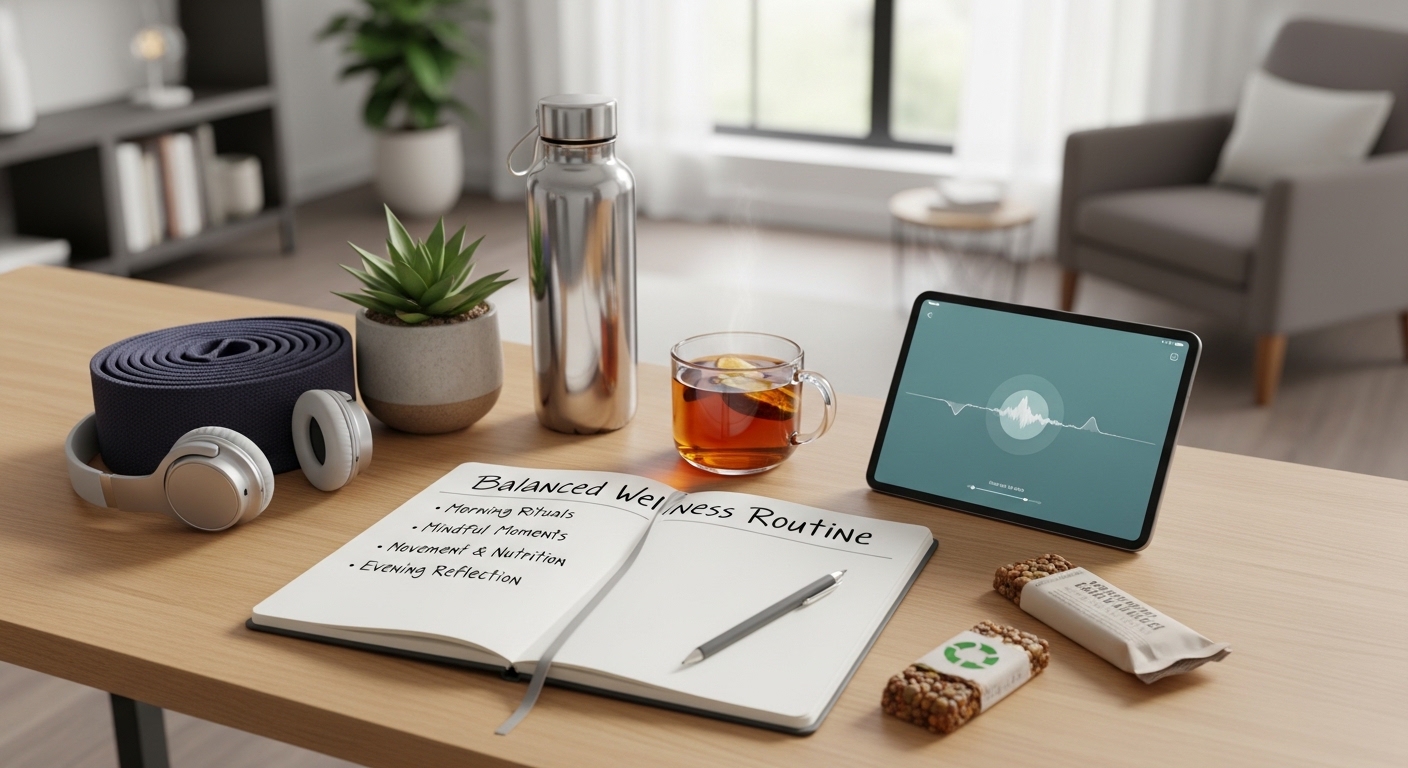
Creating a balanced wellness routine requires honesty about what is actually sustainable. It starts with sleep, hydration and movement that fits real life. It adds supportive tools like quality supplements only after the foundation is solid. It sets boundaries with technology to protect attention and relationships. It prioritizes connection over isolation. And it treats rest as essential, not optional.
The modern lifestyle is not slowing down anytime soon – but the approach to wellness can adapt. It does not need to be perfect. It just needs to be consistent enough to catch someone when life throws a curveball. The goal is not to optimize every minute but to build a structure that holds when things get messy.
Start small tonight. Put the phone in another room. Take three deep breaths. And move a little tomorrow. Reach out to someone who matters – the routine does not have to be Instagram-worthy. It just has to work for you. That is the only measure that counts.