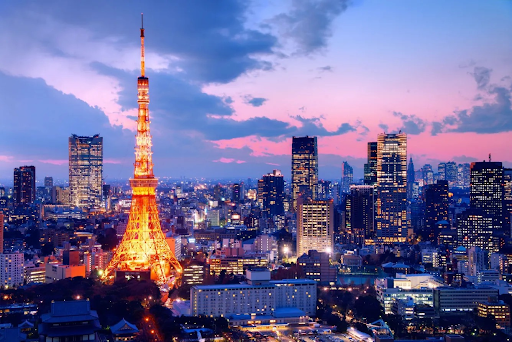
Tokyo runs on nearly 14 million people, a subway map that looks like a plate of spaghetti, and a rhythm that rewards preparation. Show up without a plan and you’ll spend half your trip figuring out train transfers instead of eating at the ramen shop you read about. A little groundwork before you land changes everything about how the city feels once you’re actually in it.
Book accommodations near a major train line, not just a neighborhood
Tokyo’s neighborhoods matter less than which train lines can get you out of them. Staying near a Yamanote Line station — think Shinjuku, Shibuya, Ueno, or Tokyo Station — puts you on the loop line that circles the city’s core and connects to nearly every other line you’ll need. A hotel that looks charming but sits 15 minutes from the nearest station will cost you time every single day.
Before booking, check the walking distance to the station, not just the neighborhood name. Two hotels in “Shibuya” can differ by a 20-minute walk. Search listings often round distances generously, so cross-check with a map before committing.
Get a Suica or Pasmo card set up before you need it
Both cards work as tap-and-go payment for nearly every train, bus, and subway line in the city, and also work at convenience stores, vending machines, and many restaurants. You can now add them directly to an iPhone or compatible Android wallet before you even land, which skips the ticket-machine line at the airport entirely. If you’d rather have a physical card, machines at airport stations issue them in a few minutes.
Load more money than feels necessary. Nothing slows down a subway transfer like an insufficient-fare gate error during rush hour.
Plan your itinerary around neighborhoods, not attractions
Trying to hit Senso-ji in the morning, teamLab in the afternoon, and a Shibuya dinner reservation the same evening sounds efficient on paper, but the actual travel time between scattered points eats hours. Tokyo rewards a district-by-district approach: spend a full morning and afternoon in Asakusa, another day centered on Shibuya and Harajuku, another around Ginza and Tokyo Station.
This also lets you build in downtime for wandering, which tends to produce better memories than a checklist ever does. Some of the best finds in Tokyo — a six-seat izakaya, a vintage shop tucked above a convenience store — only turn up when you’re not rushing to the next scheduled stop.
Reserve popular restaurants and experiences weeks in advance
Sushi counters with fewer than 10 seats, the teamLab digital art museums, and any restaurant with a Michelin mention often book out weeks ahead, especially during cherry blossom season in late March and April or autumn foliage in November. Waiting until you land means settling for whatever’s left, which in a city this good at food still tastes fine, but not what you originally wanted.
Many restaurants use reservation platforms like TableCheck or require booking through the hotel concierge, since English-language phone reservations can be difficult to arrange directly. If a specific restaurant matters to you, sort out the reservation before finalizing flights.
Consider a guided or private tour for at least one day
Tokyo is very manageable independently, but certain experiences benefit from a knowledgeable guide who can explain what you’re looking at rather than leaving you to read a plaque in Japanese. A private food tour through Tsukiji Outer Market, for instance, turns an overwhelming maze of stalls into an actual education on what you’re eating and why.
For travelers who want a higher level of access and comfort, Tokyo luxury tours have become a popular way to combine private guides, reserved seating at hard-to-book restaurants, and skip-the-line entry to museums into a single well-organized day. That kind of arrangement is especially useful for shorter trips, where wasted time carries a higher cost.
Learn the convenience store hierarchy
7-Eleven, Lawson, and FamilyMart aren’t interchangeable in the way they might seem from outside Japan. Lawson tends to have better fried chicken and a wider snack selection, 7-Eleven usually has the best coffee and ATMs that reliably accept foreign cards, and FamilyMart often wins on sandwiches. All three sell surprisingly good, cheap meals that solve the problem of finding food at odd hours or on a tight schedule.
These stores are also useful for cash. Japan remains a partly cash-based society, and 7-Eleven ATMs are among the most reliable places to withdraw yen with a foreign card, especially outside business hours.
Pack a portable Wi-Fi router or arrange an eSIM before arrival
Free public Wi-Fi in Tokyo is inconsistent at best. A pocket Wi-Fi router, rented in advance and picked up at the airport, or an eSIM installed before departure solves navigation, translation, and reservation lookups without relying on hotel networks. Given how much of getting around depends on real-time train information, going without data access for even a day creates avoidable stress.
Compare eSIM data allowances carefully, since some budget options throttle speeds after a few gigabytes, which becomes noticeable fast if you’re using maps constantly.
Tokyo tends to reward travelers who plan the logistics tightly but leave the actual days loosely structured. Get the transit card, the reservations, and the connectivity sorted before arrival, then let the itinerary breathe once you’re there. The city fills in the rest on its own.