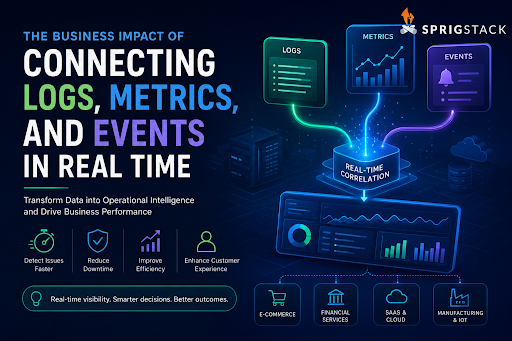
Modern businesses need customer data to operate. From customer interactions to system updates, everything generates something valuable. But just gathering that info isn’t enough anymore. Linking all that data together is a big deal right now. Companies gather loads of logs, metrics, and event data, yet these pieces typically don’t connect. Thus, instead of solving problems, staff end up wasting time searching for answers.
This issue can seriously hit digital-first firms. If an e-commerce site slows during checkouts or a SaaS service hits unexpected downtime, delays in spotting these glitches can cost big—something that becomes even more critical when comparing how different architectures handle e-commerce, SaaS, and content-heavy platforms. That’s why seeing what’s happening across your tech in real time is super important nowadays.
A web development company realizes that having a good product isn’t just about clean code. To keep things reliable and give great user experiences, companies need to see everything happening within apps and infrastructure continuously. When logs, metrics, and events link in real time, you catch issues earlier and make quicker decisions.
As technology gets more complex, monitoring everything in real time gives a strategic advantage. Companies that keep up with this can claim less downtime and offer better customer service. This blog will discuss the impact of connecting these different data channels for a comprehensive cumulative understanding of data.
Why Siloed Monitoring Creates Hidden Business Risks
A lot of organizations use different tools for watching apps, infrastructure, and biz ops. Sure, these tools give good info, but it doesn’t help much if the data stays separated.
-
The Problem with Separate Logs, Metrics, and Event Streams
Logs track activities, metrics gauge performance, and events note changes. On their own, each offers insights. But when you look at them separately, they tend to create confusing, fragmented views.
When app responses suddenly get slower, metrics show the problem but don’t explain why. Logs could have the reason, and event data might show that a deployment happened recently. But without linking these sources, teams waste time putting all the pieces together themselves.
-
How Delayed Insights Affect Business Performance
Delays in getting the whole pic affect how the business runs. Longer troubleshooting ratchets up costs and dents team productivity. Not to mention, downtime hits the bottom line of revenue generation. In today’s cutthroat markets, even brief glitches mean lost sales, passed-over chances, and unhappy customers who may take their business elsewhere.
-
The Customer Experience Cost of Limited Visibility
Now, think about how limited visibility impacts the customer experience. Customers don’t usually mind tech complications as long as your websites load quickly and transactions go off without a hitch. But if visibility is low, dealing with the irritated customer gets trickier. Slow responses, frequent outages, and poor performance create distrust, and folks might look for other options eventually.
Therefore, not tying the assistance of a trusted web development company to merge all your data in one software can hit companies where it counts – the wallet and customer loyalty.
How Real-Time Correlation Creates Operational Intelligence
Real-time correlation of logs, metrics, and events changes that—it gives teams operational smarts. Bringing together these pieces creates context. Rather than focusing on one single data point, staff can see the entire picture, considering what is going wrong in the system.
-
Understanding the Relationship Between Logs, Metrics, and Events
Each data type has different aspects to deliver in the system. Metrics show a problem is there, logs tell you what caused it, and events highlight potential triggers for the issue.
By connecting these data points in real time, teams go straight from detecting a problem to figuring out its cause. Instead of combing through separate tools, team members instantly grasp how system performance and ops changes relate.
-
Moving from Reactive Monitoring to Proactive Operations
Those days are gone when you get a customer complaint to react to it. Now you will have to take proactive measures to impress your customers.
With real-time observability, you can detect subtle problems like an unusual increase in the database response times, even before customers notice anything. This lets teams jump in early to stop service disruptions. Doing this boosts service reliability and cuts down on the headaches from urgent fix-ups.
-
Building a Single Source of Operational Truth
Having everything linked in real time also beefs up teamwork. DevOps, security experts, and business representatives all can see the same info.
More and more firms hiring web development services providers understand that a unified data feed wipes out misunderstandings and speeds up decisions. Incident handling gets quicker and stronger when all staff look at the same facts.
Real-world Use Cases Across Modern Enterprises
The business benefits of real-time observability really come through when you look at how different industries put it into practice. From e-commerce to finance to the SaaS and Cloud-native companies, all are demanding a unified data management system.
-
E-Commerce and Digital Retail Platforms
Online retailers need smooth customer experiences to succeed. With real-time observability, they keep track of checkout processes, payment handling, and inventory management. If there’s any hiccup, teams spot it right away and fix it. This stops sales from slipping and safeguards customer happiness.
-
Financial Services and Banking Systems
In finance, reliability is huge, and little hiccups can mess up tons of transactions. Real-time oversight keeps services running smoothly, spots weird activity, and ensures steady customer interaction with online banking sites.
-
SaaS and Cloud-Native Businesses
For Software as a Service (SaaS) companies and cloud-based businesses, app performance and uptime used to be major concerns. They use real-time monitoring to watch distributed systems, find slow spots, and boost service dependability. Lots of firms working with a professional and experienced website development agency truly prioritize observability since user experience strongly affects both keeping customers and earning income.
-
Manufacturing and IoT Operations
In manufacturing, real-time observability ties into IoT operations. Companies link sensors to watch equipment, letting them plan maintenance ahead of time and cut down on big downtimes. This makes ops way more efficient, cranks up productivity, and keeps things running reliably.
Conclusion
So, connecting logs, metrics, and events in real time helps businesses see what’s going on better. They can react faster, too. It’s not just about the tech stuff; it also makes for happier customers, cuts down on downtime, makes decisions easier, and drives growth in our ever-digitizing biz world.