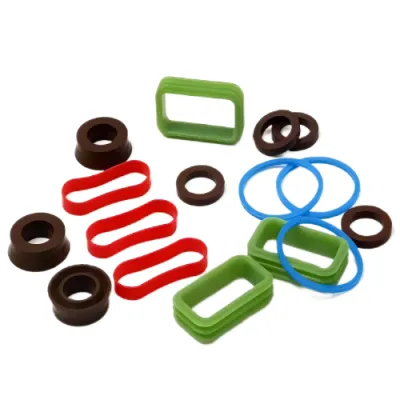
Choosing the right silicone parts manufacturer is important for businesses that need precision-made components for industrial, medical, automotive, electronics, food processing, consumer products, and other applications. Silicone is widely used because it can be formulated for different levels of flexibility, hardness, temperature resistance, and sealing performance.
A professional manufacturer can produce custom silicone parts according to specific drawings, dimensions, material requirements, and production volumes. From silicone gaskets and seals to caps, plugs, diaphragms, keypads, tubing components, and molded parts, customized silicone manufacturing allows businesses to develop components that fit their products accurately.
What Is a Silicone Parts Manufacturer?
A silicone parts manufacturer specializes in designing and producing silicone rubber components for different applications. Manufacturers typically work with materials such as liquid silicone rubber (LSR), high-consistency rubber (HCR), and other silicone compounds.
The production process may include compression molding, injection molding, liquid silicone rubber molding, transfer molding, extrusion, and secondary finishing. The suitable manufacturing method depends on the part design, dimensions, material specifications, surface requirements, and expected production quantity.
Custom Manufacturing for Different Requirements
Every application can have different requirements. A manufacturer may produce silicone components with different hardness levels, colors, shapes, textures, and dimensions. Customers can provide technical drawings, CAD files, samples, or product specifications for production.
Precision Silicone Components
Precision is particularly important when silicone parts are used for sealing, fluid control, electrical protection, or mechanical assemblies. Proper mold design and controlled production processes help maintain consistent dimensions across production runs.
Custom Silicone Parts for Multiple Applications
Custom silicone parts are used in a wide range of products and industries. Their flexibility and material versatility make silicone suitable for components that require controlled elasticity, sealing, insulation, or resistance to environmental conditions.
Silicone Seals and Gaskets
Silicone seals and gaskets are commonly used to create barriers between mating surfaces. They can be manufactured in custom shapes and sizes for equipment housings, appliances, industrial machinery, and other assemblies.
Silicone Caps and Plugs
Custom silicone caps and plugs can protect openings, connectors, tubes, ports, and other components from dust, moisture, and environmental exposure. Manufacturers can create different shapes and thicknesses according to the application.
Silicone O-Rings
Silicone O-rings are circular sealing components used in many mechanical systems. Custom dimensions can be produced when standard O-ring sizes do not meet a product’s requirements.
Silicone Diaphragms
Silicone diaphragms can be designed for applications involving movement, pressure control, or fluid management. Their geometry can be customized to match the operating requirements of specific equipment.
Silicone Injection Molding for Custom Parts
Silicone injection molding is an efficient production method for manufacturing large quantities of consistent silicone components. In this process, silicone material is introduced into a specially designed mold where it is formed into the required shape.
Benefits of Silicone Injection Molding
Injection molding can provide repeatable production and support complex geometries. It is particularly suitable for businesses requiring consistent parts across medium- and high-volume manufacturing.
Complex Silicone Geometries
Modern molds can incorporate detailed features such as grooves, ribs, thin sections, openings, and integrated sealing elements. Proper mold engineering is essential for achieving the desired part dimensions and appearance.
Liquid Silicone Rubber (LSR) Parts
Liquid Silicone Rubber, commonly known as LSR, is widely used for precision molded silicone components. LSR processing uses two-component liquid silicone materials that are mixed and injected into a mold.
Why LSR Is Used for Custom Components
LSR can support highly detailed designs and automated manufacturing processes. It is frequently selected for components where dimensional consistency and repeatable production are important.
LSR for High-Volume Production
Automated LSR molding can be suitable for high-volume manufacturing because the process can be integrated with automated material handling, molding, and part removal systems. This can help manufacturers maintain production consistency while meeting larger orders.
How Custom Silicone Parts Are Manufactured
The production of custom silicone components normally involves several stages, starting with product requirements and ending with inspection and packaging.
1. Product Design
The process begins with a CAD drawing, technical specification, physical sample, or concept. Engineers review the geometry, dimensions, tolerances, material requirements, and intended application.
2. Material Selection
The appropriate silicone formulation is selected according to the operating environment and performance requirements. Factors may include hardness, temperature range, color, elasticity, and regulatory requirements.
3. Mold Development
A production mold is created based on the approved part design. Mold construction and cavity design can have a significant impact on cycle time, part quality, and manufacturing cost.
4. Molding and Curing
The selected silicone molding process forms the material into the required shape. Depending on the manufacturing method, heat and pressure are used to cure the silicone.
5. Inspection and Finishing
After molding, parts can undergo trimming, deflashing, visual inspection, dimensional inspection, and other finishing processes. Components are then prepared for packaging and shipment.
Choosing a Silicone Parts Manufacturer
Businesses should consider several factors when selecting a silicone manufacturing partner.
Manufacturing Capabilities
Look for a manufacturer with production capabilities that match the required component. This may include LSR injection molding, compression molding, silicone extrusion, overmolding, and secondary processing.
Quality Control
A structured quality control process can help identify dimensional, visual, and material-related issues before products are shipped. Depending on the application, manufacturers may use inspection equipment such as calipers, gauges, optical measurement systems, and other testing equipment.
Production Capacity
Production capacity is another important consideration. A manufacturer should be able to support prototype quantities as well as larger production orders when required.
Engineering Support
Engineering assistance can be valuable when developing a new silicone component. Manufacturers can review designs for manufacturability and recommend adjustments that may improve molding performance or reduce production difficulties.
Industries Using Custom Silicone Parts
Custom silicone components are used across numerous industries.
Medical and Healthcare
Silicone components are used in various medical and healthcare products where material selection and manufacturing controls are important. Components can include seals, valves, diaphragms, tubing elements, and molded parts.
Automotive
Automotive applications can include seals, grommets, protective covers, connectors, and other molded silicone components.
Electronics
Silicone parts can provide sealing, insulation, protection, and tactile functionality in electronic products. Custom keypads, protective covers, gaskets, and cable components are examples.
Food and Consumer Products
Silicone components are also used in kitchen products, appliances, containers, and consumer goods. Material selection should match the intended application and applicable requirements.
Why Businesses Choose Custom Silicone Parts
Standard components may not always fit a specialized product design. Custom silicone manufacturing allows businesses to specify dimensions, geometry, hardness, color, surface finish, and other characteristics.
A customized part can also be designed to integrate directly into an existing assembly. This can simplify product development when standard components are unsuitable.
Conclusion
A reliable silicone parts manufacturer can help businesses develop and produce components that match specific technical and production requirements. Custom silicone parts can include seals, gaskets, O-rings, caps, plugs, diaphragms, keypads, and many other molded components.
With technologies such as silicone injection molding, compression molding, and LSR molding, manufacturers can support both specialized prototypes and high-volume production. By evaluating manufacturing capabilities, material options, quality control, engineering support, and production capacity, businesses can select a suitable partner for their silicone component requirements.