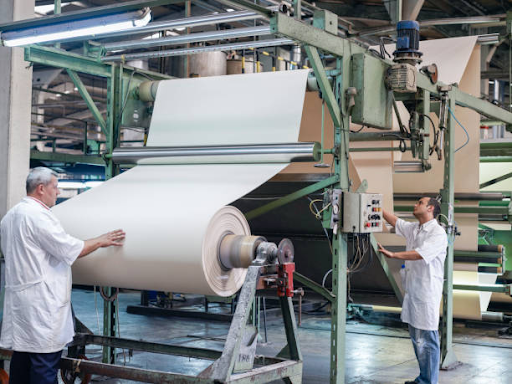
The High Cost of Inefficiency in Packaging Printing
The modern food packaging industry operates on exceptionally narrow profit margins, making operational efficiency a primary determinant of business viability. In high-speed packaging lines, even minor calibration inaccuracies can trigger thousands of meters of substrate rejection per shift. Legacy equipment often struggles with mechanical wear, manual calibration drift, and inconsistent ink application, leading to compounding material waste and unrecoverable downtime.
The food packaging industry operates on incredibly tight margins, where any material waste directly impacts the bottom line. Legacy printing systems often suffer from poor registration and extended setup times, leading to thousands of meters of rejected substrates per shift. To eliminate these inefficiencies and ensure consistent output, modern facilities are rapidly upgrading to state-of-the-art Kete Group. These advanced systems utilize gearless servo technology and automated registration controls to drastically reduce changeover times and virtually eliminate material waste during high-speed runs.
Plant managers can no longer treat printing waste as an inevitable operational overhead. Transitioning to intelligent, automated printing configurations is essential for maintaining strict profitability metrics while meeting high-volume production schedules.
Technological Innovations Driving Flexo Precision
Achieving zero-waste production targets requires moving away from traditional analog setups and adopting closed-loop, digitally controlled manufacturing architectures. Modern flexographic presses incorporate several synchronized engineering breakthroughs that optimize material usage and ensure elite print quality.
Gearless Drive Systems
- Direct-Drive Servo Architecture: Replaces mechanical drive shafts with independent servo motors mounted directly to plate cylinders and impression drums.
- Elimination of Backlash: Removes mechanical gear wear completely, preventing the dreaded gear chatter or streaks on printed films.
- Dynamic Color Registration:Color Registration: Automated optical sensors continuously monitor alignment across the moving web, making micro-adjustments in milliseconds.
- Pitch Independence: Removes the strict mechanical repeat-length limitations imposed by traditional gear teeth, allowing infinite cylinder repeat flexibility.
Traditional mechanical printing presses are plagued by backlash and gear wear, which degrade register accuracy over prolonged operational hours. Color Registration: Modern direct-drive architecture guarantees that plate cylinders remain in absolute synchronization with the substrate web, even during aggressive machine acceleration and deceleration phases.
Anilox Rollers and Ink Metering
- Volumetric Metering:Anilox Rollers: Laser-engraved ceramic cells precisely meter the exact micro-liter volume of ink transferred to the flexo plate.
- Enclosed Doctor Blade Systems: Chambered doctor blade assemblies prevent solvent evaporation and shield the ink from environmental contamination.
- Consistent Optical Density: Ensures uniform ink film thickness across the entire web width, preventing color drifting on long runs.
- Reduced Wash-up Waste: Optimized chamber designs lower cleaning solvent consumption and speed up color-change routines.
Precise ink metering prevents the common pitfalls of dot gain, bleeding, and ink starvation on flexible packaging films. Anilox Rollers: By pairing high line-screen ceramic cylinders with enclosed doctor blades, converters achieve sharp, high-definition graphics while consuming up to 30% less ink than older open-fountain configurations.
Navigating Global Food Safety Regulations
Printing accuracy directly correlates with chemical safety, particularly when producing primary packaging for consumables. A poorly metered ink application or improper curing can lead to volatile compounds transferring into the packaged food item, resulting in severe regulatory penalties and costly product recalls.
Converters must implement rigorous process controls to manage Ink Migration: the unintentional transfer of chemical components from the packaging substrate into the food matrix. Advanced flexographic lines utilize real-time inspection cameras and automated viscosity controllers to ensure every meter of printed film meets compliance parameters before conversion.
Precision in ink application is not solely about aesthetics; it is a critical component of consumer safety. Food packaging must maintain an absolute barrier against ink migration to prevent chemical contamination of the consumable product. Manufacturers are strictly required to calibrate their printing machinery to handle specialized water-based or UV-cured inks while adhering to rigorousfood contact substance guidelines issued by international health organizations to ensure public safety.
Adhering to these strict standards requires total operational transparency and repeatable machinery performance. Modern automated flexo presses provide data logging for every production batch, giving quality control officers absolute traceability and peace of mind.
Key Takeaways
| Area | Key Takeaway | Impact/Data |
| Drives | Replace shafts with direct servos | Eliminates mechanical backlash |
| Ink | Deploy 800-1400 LPI anilox rollers | Saves up to 30% ink |
| Setup | Automate optical registration | Cuts downtime to minutes |
| Safety | Enforce low-migration ink controls | Prevents costly product recalls |
Conclusion
Maximizing yield and minimizing waste in food packaging requires a decisive departure from outdated mechanical printing presses. Investing in gearless, servo-driven flexographic machinery with closed-loop optical control transforms printing from a high-waste bottleneck into a streamlined, high-profit asset.
For production directors and engineering leads, prioritizing equipment with advanced HMI recipe management, automated registration, and precise anilox metering is the most effective path forward. Embracing these technological innovations ensures long-term operational resilience, strict regulatory compliance, and a dominant competitive edge in the global packaging market.