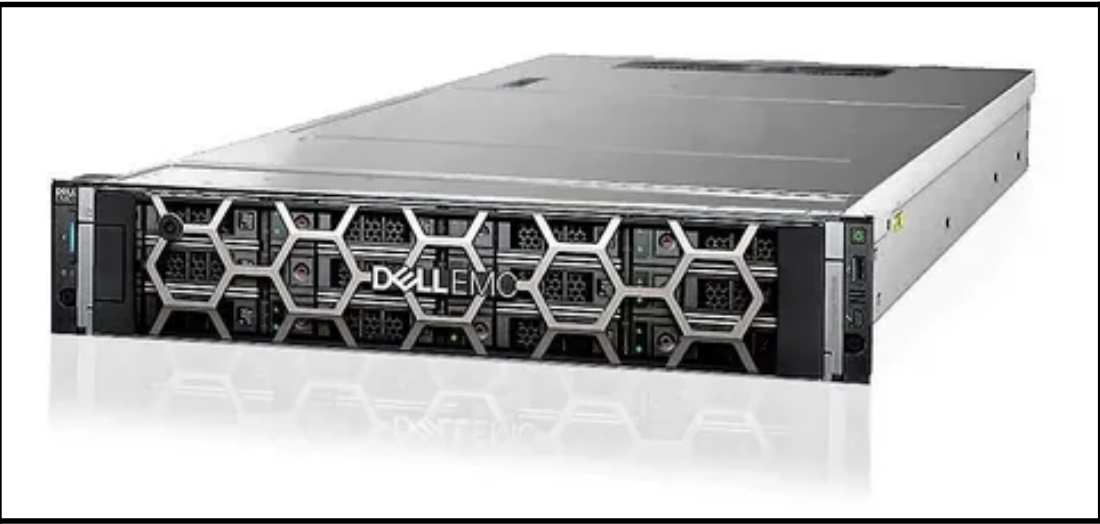
Enterprise IT infrastructure must accommodate large volumes of data, applications, and business processes without imposing restrictions. With the growing demand for storage space and increasingly complex workloads, compact server solutions may not allow enough space for the hardware necessary for an organization.
Large-sized chassis design, high storage capacity, numerous possibilities for expansion, and cooling are among the features that make Dell PowerEdge 3U and 4U servers a good choice for such demanding environments.
1. High Storage Capacity Supports Growing Data
Dell PowerEdge 3U and 4U Servers offer the required physical size to facilitate high storage density. The larger size of the server chassis allows a significant number of hard disk drives and solid-state drives to be accommodated within the server, thus helping enterprises that store large amounts of data.
Storage density becomes important for database storage, backup storage, archiving, and software applications that require accessing large sets of data frequently. Rather than using multiple smaller servers, an organization can fit more storage within fewer physical servers.
The ability to provide higher storage density offers increased flexibility for planning out storage architecture as well.
2. Strong Processing Supports Demanding Workloads
Enterprise applications often require more processing power than basic business software. Virtualization, analytics, databases, and other intensive applications can place sustained demands on server processors.
The larger PowerEdge platforms can accommodate powerful processors and supporting components designed for demanding environments. Adequate computing power in CPUs enables the simultaneous execution of various operations with consistent performance of the applications.
It is important when multiple applications are being run on the same physical hardware platform. Adequate processing capacity can help prevent one demanding task from significantly affecting other workloads running on the server.
3. Extensive PCIe Expansion Adds Flexibility
Enterprise servers often need more than standard CPU and storage components. Network adapters, storage controllers, graphics cards, and specialized hardware may be required as infrastructure evolves.
PCIe expansion slots provide the connections needed for these additional components. A server with sufficient expansion capacity gives IT teams more freedom to configure hardware around specific performance and connectivity requirements.
This flexibility can also support future upgrades. Instead of replacing an entire server when additional hardware is required, available expansion space can make it possible to add compatible components to an existing system.
4. Larger Chassis Improves Cooling
Heating elements include processors, hard drives, and expansion cards, so cooling becomes one of the necessary aspects of server design. Proper airflow must be guaranteed in order to ensure stable operation in high-density servers.
There is additional space in 3U and 4U servers, which can provide sufficient space for the installation of effective cooling components as well as for organizing airflow paths through the system.
Cooling systems become critical when the system works under heavy load during 24 hours per day mode. The proper temperature of components can ensure the stable operation of the system.
5. Reliability Helps Reduce Downtime
The IT infrastructure of any enterprise cannot tolerate frequent disruptions. Problems with servers can affect the application performance, data access, and business processes, which makes reliability an important aspect for choosing the hardware.
PowerEdge hardware may provide enterprise-class features that ensure reliability, such as redundant power supplies and hot-swap capabilities, depending on the hardware configuration. The redundant power supply can ensure continuous operation even in the case of failure of one power supply source.
Hot-swap technology can facilitate maintenance as well. Some components can be changed without turning off the whole server.
6. Virtualization Makes Better Use of Resources
A Dell 4U and 3U server can provide the processing, memory, storage, and expansion resources needed to support multiple virtual machines on a single physical system.
Virtualization makes it possible for several virtual computers to run on common hardware. Virtualization could aid in consolidating software applications while maximizing the utilization of existing processing, memory, and storage space.
A powerful PowerEdge server can provide adequate resources for running several virtual systems. Higher physical capacity can also make it easier to allocate resources to virtual machines with different requirements.
7. Big Data and Analytics Need Room to Scale
There are many possible uses for big data, which will be able to create and manipulate massive volumes of information. Storage alone is insufficient because the server itself should also have enough power to process large volumes of data.
A 3U or 4U configuration can provide the physical capacity needed to combine substantial local storage with powerful processing and expansion hardware. This makes larger PowerEdge systems suitable for analytics environments where data needs to be stored and processed close to the applications using it.
Adequate expansion capacity also helps accommodate specialized controllers and high-speed networking hardware as analytics requirements increase.
8. Enterprise Storage Benefits From High Capacity
Enterprise storage environments often require a combination of large capacity, reliable access, and flexible configuration. Larger PowerEdge systems can provide the physical space needed for extensive drive configurations while supporting the processing and connectivity required by storage-intensive applications.
These systems can serve roles in network-attached storage or storage area network environments, depending on the hardware and software configuration. High drive density can also make them useful for centralized backups and large data repositories.
The key advantage is the ability to combine storage and compute resources in a platform designed for continuous enterprise operation.
9. High Capacity Creates Room for Growth
Enterprise infrastructure rarely stays static. Data volumes grow, applications become more demanding, and organizations often add users and services over time.
A larger server platform provides more room to respond to these changes. Additional drives, memory, expansion cards, or other supported components can help extend the system’s usefulness as requirements increase.
This makes scalability an important reason to consider 3U and 4U PowerEdge systems. The goal is not simply to install the largest server available, but to choose enough capacity to support realistic business growth.
Built for Enterprise Demands
It is in the way that the capabilities of the Dell PowerEdge 3U and 4U servers complement each other that the value of the said devices lies. Storage density means that there will be enough space to accommodate future needs of data storage. Processing power is needed for running complex applications, PCIe enables using specific hardware, and the capability of effective cooling solves the problem of overheating due to the high-power parts.
It is also important to mention the reliability features, making these devices ideal for use in critical situations when downtime might cause serious losses. In case you are looking for information about larger servers for your business, Cloud Ninjas could be used to find out what kind of infrastructure is available.
The right enterprise server is not just an option, providing immediate capacity. There should be enough storage, processing power, expansion, cooling, and reliability to ensure the usability of the device in the future.