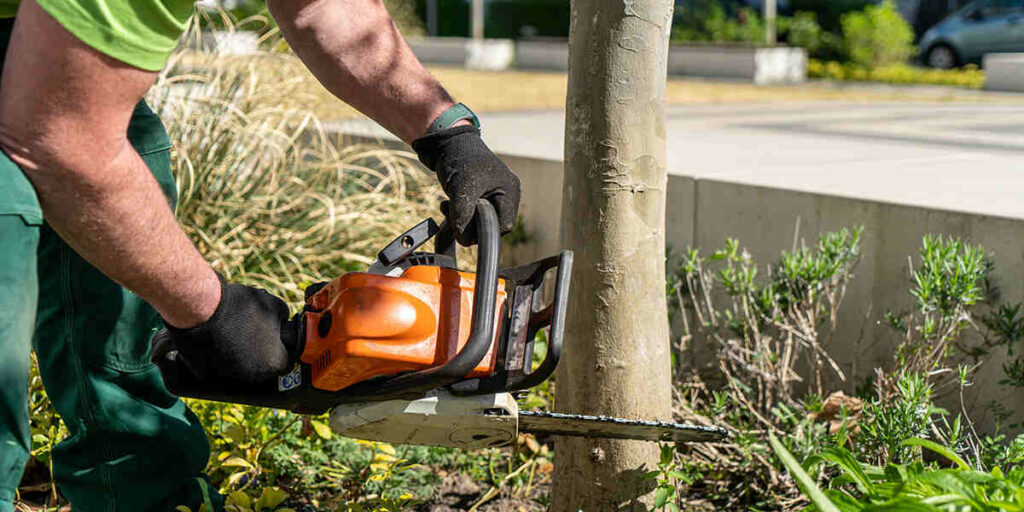
You are staring at that old tree hanging over your house and looking at the $1,000 quote for trimming it back from the roof of your house. In that moment you are asking the very real question: would it help my property value more to remove the tree entirely?
Tree removal will add to a home’s worth when the tree is an eyesore, a safety hazard or is simply taking up space that makes the place look unkempt. There is also the risk of doing the opposite by removing the wrong one.
The impact of trees on value is quite tangible. A healthy tree does more than just stand there; it offers shade and privacy, quiets the surroundings, cleans the air and can even put a dent in cooling bills. It gives a house an established feel. In fact, a meta-analysis from the U.S. Forest Service has linked tree cover to residential values, and research into landscape plants confirms that mature landscaping has a significant bearing on what a home is perceived to be worth.
So the issue is not whether trees have value – many do – but whether the ones on your property are an asset or a liability. We reached out to the arborist at Trufast Tree Service to get their take on this for the Midwest.
When Trees Boost Property Value
There is no question about dead or diseased trees; getting rid of them eliminates a visible problem. A buyer may appreciate a mature tree, but few want to take on the prospect of one coming down on their roof or car in the next storm. Then there are the sick trees that present a danger to anyone underneath.
Taking out a hazardous tree is good for curb appeal and spares you from expensive repairs down the line. You should give some thought to removing any tree with a split trunk, heaving roots, or cracked limbs, particularly after bad weather. It may be dramatic to see a tree failing at a weak union, but the bill to fix the damage is worse.
Proximity to the house is another matter. Extension services advise against planting too close to a structure where roots and branches can wreak havoc on the foundation or sewer lines. Cutting such a tree can put a future buyer’s mind at ease. And in some cases, like with the invasive Callery pear in Missouri, removal is encouraged by the state Department of Conservation for the sake of the local ecosystem.
Clearing out a few trees can also open up the property for a new patio, pool or workshop, or to let in more light and create a view that will sell the home.
When It Is Better to Leave Healthy Trees
Some trees are well worth keeping. The right tree in the front yard sets the tone before a buyer even comes in the door. One study in Portland put a $7,130 premium on a home because of the street tree in front of it.
The economics of shade are worth considering as well. The Arbor Day Foundation puts it at 35 percent, the amount by which a properly sited large deciduous tree can reduce your summer air conditioning bill. In hot weather, one might call it a green investment rather than merely an amenity.
Take them away and the home is left feeling exposed, with a loss of privacy and the natural sound barriers they provide. There is a case to be made for the impact of trees on property value, particularly in high-traffic zones where they put up a screen from the road, muffle noise and provide some distance from one’s neighbors.
And then you have the more mature specimens. While a few buyers could view them as a liability or an undue burden of maintenance, to most a sound tree is something of an asset. The difference comes down to how it is looked after. A home’s value is better served by a tree that has been properly tended than by one allowed to run wild and make the yard appear neglected.
Which Are the Best Trees to Add Home Value?
When planting trees, you want to look for specific tree species that are in good health and suited to the local soil, with a preference for those that can stand up to disease. In America, White Oak (Quercus alba), Sugar Maple (Acer saccharum), and Ponderosa Pine are three strong trees that have been here for hundreds of years.
Native trees have an evolutionary advantage, being as accustomed to the weather and pests as they are to the land. In Missouri, maples, oaks and dogwoods make for sound choices. The northern red oak is an American classic; a timeless shade tree made to endure. Then there is the dogwood, whose spring white flowers put some curb appeal on the property. A crape myrtle will put on a show of fuchsia blooms for the bees, whether it is put in as a large shrub or a small tree.
Fruit trees add appeal for the peach or apple enthusiast, but they demand more in the way of pruning and pest control. Palm trees increase property value in a warm coastal market and are thought desirable, yet they are hardly a must for a home in Missouri. Better to be sensible by planting hardy trees than to chase after the latest thing, such as non-native fruit or palm trees. An unexpected jade evergreen can be quite striking if placed well, but what you really want is a tree that will look right on the property and hold its form for more than just a few years.
A Few Trees Can Be Better Than Many Trees
It is not always true that more is better. Put too many trees in a confined space, and they will be at odds for the sun, to the detriment of the yard. An overgrown area can be put right with some thinning; it does wonders for the lawn’s health and the overall appearance of the landscape. Then there are the trees that stand in the way of a good view of the garden or pond. A bit of selective pruning or removal puts an attractive face on the property, but care must be taken not to leave the lot looking bare. In the end, one should hold on to what has value and let the rest go.
Before You Cut, Get the Tree Assessed
Tree removal can be a worthwhile home improvement project, provided the case for it is well made. But to take an axe to a perfectly healthy tree on a whim is difficult to defend; one has to consider the impact such a hasty move might have on the property’s value, privacy and overall appeal. It is best to have a qualified professional put his eye on it first.
In the Springfield, Missouri region, TruFast Tree Service is in a position to give that kind of assessment. Their certified arborists and reliable equipment are there to see the job done safely. They will proffer advice suited to the situation, be it for stump grinding or an emergency. You will not get a pat answer of “cut it down” or “leave it be” from them. The aim is to come to a conclusion that lets the finest trees on the lot do their part for the landscape.