Wearing Hanfu in an ordinary setting can feel conspicuous at first. A wide sleeve at a coffee counter or a long skirt on a train platform draws a different outline from the clothes around it. That difference is not a problem to solve. It simply asks for the same kind of editing that makes any personal style feel considered.
The useful question is not whether every part looks historical. It is whether the garment, the setting, and the choices around it form one coherent outfit. Everyday Hanfu styling works when you let the garment carry the cultural character and let a few practical decisions make room for present-day life.
Start With the Garment
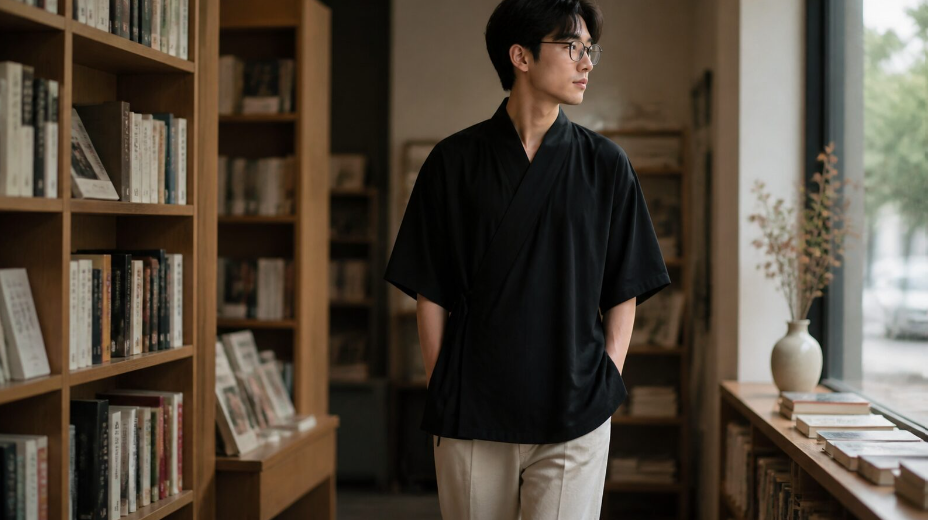
Begin by noticing the garment’s shape before adding anything to it. Hanfu and Hanfu-inspired pieces may use generous drape, wide sleeves, layered collars, or a long moving hem. Those features need space; they can look striking beside close-fitting modern clothing because the proportions are doing different jobs.
Rather than forcing volume under tight layers, give it one calm partner. A fuller top can sit well with a plain, structured lower half, while a flowing skirt can be paired with a simpler top that does not compete at the neckline. Move in the outfit before leaving home: sit down, reach for a bag, and take a normal stride. Comfort matters here too: clothes that need constant adjustment rarely look natural, no matter how well they are cut.
Fabric finish matters here too. When one piece has a pronounced sheen, keep nearby knitwear, trousers, or outerwear visually quiet. Matte or softly textured layers often make the contrast feel deliberate; piling glossy or heavily decorated surfaces together can make an otherwise thoughtful outfit feel overworked. For a starting point when comparing silhouettes for daily wear, Hanfu Auras offers a useful reference point for Hanfu and contemporary Chinese-inspired styling.
Use Fewer Accessories
Accessories are where daily dress most easily becomes theatrical. Tasseled pins, ornate hair ornaments, waist pendants, fans, and elaborate jewelry can all be meaningful in the right context, but wearing every one at once shifts attention away from the clothing itself.
Choose one focal point and let the rest recede. If the collar has embroidery, leave the neckline simple. If a hairpin is the point of interest, use restrained earrings and skip an additional decorative prop.
Daily wear often gains more from subtraction than from one more finishing touch.
This is not a rule against traditional details. It is a way to give one detail enough room to be seen. A single deliberate accent can feel more personal than a collection of accents competing for the same glance.
Choose Modern Anchors
Footwear and hair are the clearest signals that an outfit is made for the day ahead. Shoes do not need to imitate a historical silhouette to work with a Hanfu look. Leather loafers, plain ankle boots, or clean sneakers can make a pleated skirt or flowing robe feel ready for pavement, stairs, and a full schedule.
Hair follows the same principle. A low bun, a ponytail, or loose natural texture can let the garment remain the focus. More elaborate historical styling has its own place, particularly for historical study, performance, or reenactment, but it serves a different purpose from getting dressed for work or meeting friends.
Color can make the bridge between old and new easier to see. Repeat one quiet tone across the outfit, or work from a small family of neutrals and muted colors. A sweater that echoes a skirt’s color, for example, gives the eye a continuous line instead of making the pieces look accidentally assembled.
Frame the Outfit With Outerwear
Outerwear is especially useful when the day moves between indoors and outdoors. A clean-lined coat, cardigan, or jacket can frame the drape beneath it without hiding it. The outer layer also gives a practical boundary to a long silhouette, which can make an everyday Hanfu outfit feel settled rather than staged.
- Choose an outer layer with enough ease for sleeves and movement.
- Keep its color or texture related to one part of the garment underneath.
- Let either the outer layer or the Hanfu piece be the visual lead, rather than asking both to carry every detail.
A modern layer is not a compromise with the garment. It is an honest response to weather, commuting, and the way people dress now. The result can acknowledge both the structure of the clothing and the setting in which it is being worn.
Adaptation and Historical Reenactment
It helps to name these aims accurately. Historical reenactment is concerned with researching and reconstructing a particular period’s dress as closely as the available evidence allows. It may call for specific silhouettes, footwear, hair, and accessories because those details are part of the interpretation.
Everyday adaptation has another purpose. It takes inspiration from Hanfu or wears a full garment while making choices for present-day movement, comfort, climate, and personal taste. Neither approach needs to dismiss the other, but they should not be confused. Two mistakes are equally worth avoiding: presenting a modern adaptation as historical reconstruction, and treating living dress as theatrical costume.
The important part is not copying a complete look. It is learning to identify which element carries the character you value, then giving that element a clear place in your own wardrobe.
An everyday Hanfu outfit does not need to apologize for being visible. When the proportions work, the accessories are controlled, and the practical layers make sense, it reads as clothing chosen for a real life. That is a more respectful goal than trying to make a living dress tradition disappear into the background.