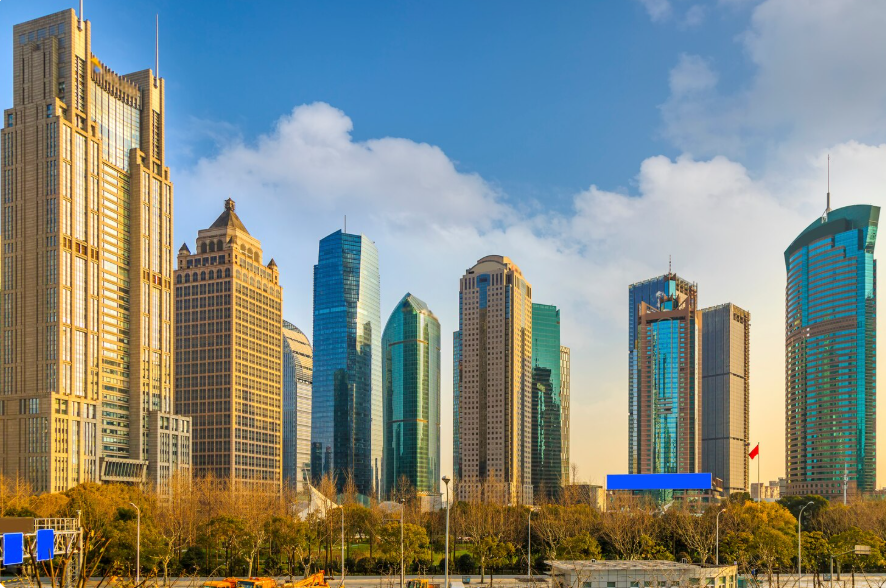
Dubai is near the top of a list of families and investors considering where to live. When it comes to purchasing a home, it’s not only about the property. It’s about safety, the surrounding lifestyle, and long-term financial stability. Dubai is appealing to a greater number of buyers due to its unique combination of a tax-friendly environment and its standard of living, which is a notch above that of most world cities. The market is still quite liquid, but interest is strong by mid-2026, as the lifestyle and infrastructure of the market stabilize.
The City’s current position
Dubai has become a truly multicultural city, with a population reaching 4 million recently. However, that’s not random growth. It’s a component of Dubai 2040 Urban Master Plan, designed to serve a population of 5.8 million in the future. The market itself has also fared fairly well; average sale prices are up by approximately 9.1%, and rents have jumped by 4.1% over the year.
This city isn’t just a place for flashy investment opportunities anymore, but has begun cultivating a character around tech and a real community lifestyle. The growing number of neighbourhoods being designed is making them 20-minute, or shorter. Its contribution is equally significant, especially with the UAE being the largest net inflow of high-net-worth individuals in the world in 2025, with a record number of 9,800.
How Much Will It Cost to Live Here?
Considered a high-cost-of-living market, Dubai’s standing out does not come close to some of the other capitals of the business world. The cost of living data for early 2026 reveals that housing has increased in price, but it remains less expensive in general than New York, London or Singapore. A million dollars buys about 78 square metres of living space, which is a mere 22 square metres in Hong Kong.
This is reflected on the everyday cost as well. Overall, running a car here is significantly more inexpensive than in most of the Asian hubs, which is mostly attributed to the lower prices of fuel. One person can spend about AED 4,150 per month (without rent) and a family of four spends around AED 14,524 per month. There is no personal income tax for properties in Dubai; residents retain a much higher proportion of income than most of the Western world or Asia.
Schools and Safety That Families Can Count On
Good schools can often be the deciding factor for families when considering permanent relocation. More than 200 private schools provide education for almost 400,000 pupils, many of them using the British method of instruction. Schools such as GEMS Wellington, King’s School and Brighton College provide decent education, sometimes for a lower price than would be similar education in the UK.
Safety is perhaps the most significant reason for Dubai’s popularity. International indices indicate that the UAE in general is the safest country in the world to live in for 2025, while Dubai has a safety score of 83.9. With a robust legal framework, teamed with the Dubai Quality of Life Strategy 2033, the city ensures an environment that is safe, pedestrian-friendly and definitely family-friendly.
Getting Around the City
While a large component of the city’s successful life is public transportation. In the first half of 2025, over 140 million journeys were made on the Dubai Metro (35% of all public transport in the first half of 2025). The network will also expand further, with the new Blue Line scheduled to run 30km and for 14 new stations to be built by 2029, which will be expected to increase property values around the route.
Location of a big international airport is a bonus. In terms of 2025 passenger numbers, Dubai International Airport is the world’s busiest, providing residents with unparalleled connectivity. The business community or frequent travellers will find sitting between Europe, Asia and Africa to be a true practical benefit offered by few other cities.
Rationale Behind the Investment Case
There is also a financial reason as to the appeal of Dubai. Global rental yields are healthy, at an average of around 6.68%, with apartments achieving up to 7.15%, which exceeds what is generally being seen in London or New York.
The government has also made the process of settlement of long-term easier. The value of purchased property to obtain a standard two-year investor visa was previously a minimum requirement, which was removed as of April 2026, subject to approval conditions. The Golden Visa is also in demand, and it can provide 10 years of residency, which may be renewable, for those who invest at least AED 2 million, and can sponsor their spouse, children, and even parents.
How People Live in Dubai’s Communities
Communities such as Dubai Hills Estate and Arabian Ranches provide residents with truly great amenities. A new generation, such as Tilal Al Ghaf, takes the concept a step further, integrating features such as the Crystal Lagoon and wellness facilities throughout the resort.
The concept of sustainability is also taking shape in new developments, with increased attention on LEED buildings and integrated smart technology. This change is not only beneficial to the environment. It’s expected to lower long-term maintenance costs for homeowners as well.
Closing In!
The charm of Dubai is a blend of savvy business and a healthy lifestyle. In terms of legal systems, it has a maturing system and a genuine sense of ‘liveability ’, which has helped to balance high-end luxury with everyday community living, attracting people who wish to reside in the city and those who want to invest in it, hoping for good returns. The city is also making progress on initiatives such as the Dubai Quality of Life Strategy 2033 and the continued expansion of the metro network, positioning it for continued growth. Dubai is one of the more appealing property markets to consider in 2026, as a safe haven that is tax-efficient and offers global connections for those seeking to put down roots.