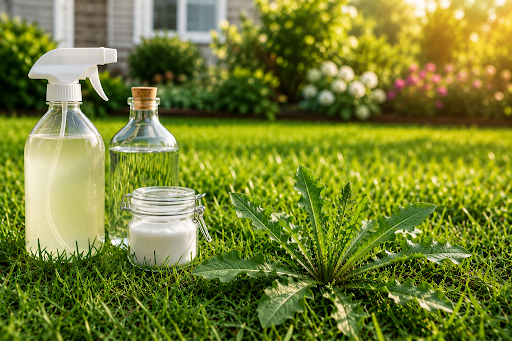
If you’ve ever searched for the best natural weed killer, you’ve probably found dozens of DIY remedies claiming to eliminate weeds with ingredients already sitting in your kitchen. Vinegar, salt, boiling water, baking soda, and even dish soap all have their advocates. While some of these methods can be effective in certain situations, the truth is that there isn’t one natural weed killer that works on every weed.
The biggest mistake homeowners make is focusing on the product before identifying the weed. Different weeds grow differently, spread differently, and respond differently to treatment. That’s why lawn care professionals begin with weed identification—not the spray bottle.
Understanding what you’re dealing with is often the difference between solving the problem and watching the same weeds return a few weeks later.
The Best Natural Weed Killer Depends on the Weed
Many homeowners assume all weeds are essentially the same, but lawn weeds fall into several different categories. Some are annuals that grow from seed each year, while others are hardy perennials with deep root systems that store energy underground. Some spread by seeds, while others send out rhizomes, stolons, or underground tubers.
This matters because a natural weed killer that works well on a newly sprouted annual weed may have very little effect on an established perennial.
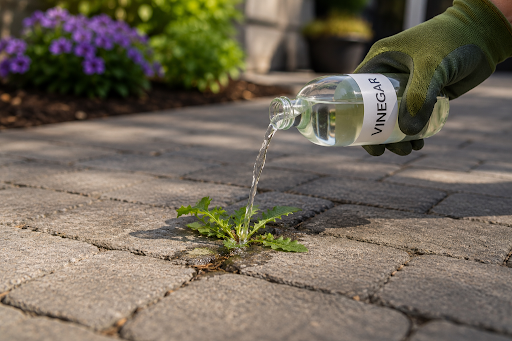
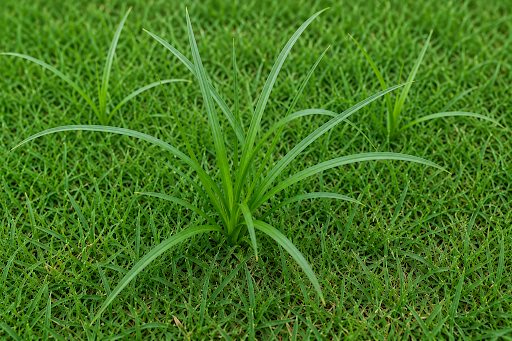
For example, pouring vinegar on a young weed growing between patio pavers may eliminate it quickly. Try the same approach on nutsedge or dallisgrass growing in the middle of your lawn, and you’ll likely see the leaves brown while the underground portions survive and send up new growth.
The product didn’t necessarily fail—the weed simply wasn’t vulnerable to that type of treatment.
Before You Kill a Weed, Identify It
One of the best-kept secrets of professional lawn care is that weed identification comes before weed control.
Professional lawn technicians don’t simply apply the same treatment across every lawn. They first determine what species they’re dealing with because each weed has its own growth habits and weaknesses.
If you’re not sure what’s invading your lawn, Ryno Lawn Care has created an excellent Weed Identification Guide that helps homeowners recognize many of the most common weeds found in North Texas. It’s a valuable resource for learning how to tell the difference between broadleaf weeds, grassy weeds, and sedges before deciding on the best treatment.
That extra step often saves homeowners time, money, and frustration.
Natural Weed Killers That Actually Work
Several natural weed control methods have proven useful in the right situations. The key is understanding what each one does—and what it doesn’t.
Boiling water is one of the simplest options. It destroys plant tissue almost instantly, making it highly effective for weeds growing in sidewalks, gravel, or driveway cracks. Because it kills nearly any vegetation it touches, it isn’t a good choice for weeds growing within your lawn.
Household vinegar is another popular natural weed killer. The acetic acid burns exposed leaves, making it useful on small, newly emerged weeds. However, vinegar usually doesn’t penetrate deeply enough to destroy extensive root systems, so mature perennial weeds often return.
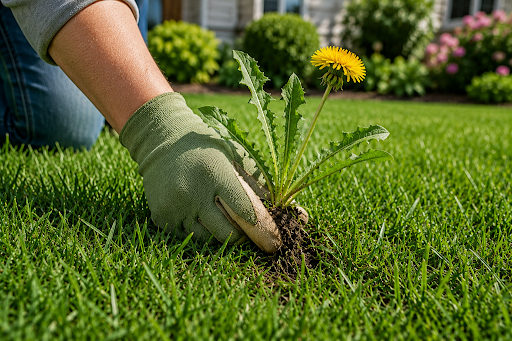
Hand pulling remains one of the most effective natural solutions when done correctly. Removing the entire root system before the weed has a chance to spread is often more successful than repeated applications of homemade sprays.
Finally, mulch deserves more attention than it usually receives. While it doesn’t kill existing weeds, it helps prevent new weeds by blocking sunlight and reducing seed germination. In flower beds and around trees, mulch is often one of the best long-term natural weed control strategies available.
Comparing Common Natural Weed Killers
| Natural Method | Best For | Limitations |
| Boiling water | Sidewalks, patios, driveway cracks | Kills any nearby plants it touches |
| Household vinegar | Young annual weeds | Often doesn’t kill established roots |
| Hand pulling | Small infestations | Time-consuming; roots must be removed completely |
| Mulch | Weed prevention in beds | Doesn’t eliminate existing weeds |
| Corn gluten meal | Preventing some weed seeds from germinating | Results can be inconsistent and timing is critical |
A Unique Insight Most Homeowners Never Hear
Many articles talk about how to kill weeds, but very few explain why weeds come back.
The reason is surprisingly simple.
Most natural weed killers only affect the part of the plant you can see.
Many of the toughest lawn weeds survive underground. Plants like nutsedge, bindweed, and dallisgrass store energy below the soil in roots, rhizomes, or tubers. Even if every visible leaf dies, the underground structures remain healthy enough to produce new growth.
This is why homeowners often think a weed killer “worked” because the lawn looks clean for a week or two—only to watch the same weeds return shortly afterward.
Professional weed management isn’t just about killing leaves. It’s about interrupting the weed’s entire life cycle.
When Natural Weed Killers Make Sense
Natural weed control can be an excellent choice for homeowners dealing with isolated weeds or areas where chemical herbicides aren’t desirable.
Natural methods tend to work best when:
- You’re treating only a few weeds.
- The weeds are young and haven’t fully matured.
- They’re growing in sidewalks, patios, gravel, or landscape beds.
- You remove weeds before they produce seeds.
For these situations, natural weed killers are often both practical and environmentally friendly.
When Professional Weed Control Is the Better Option
Natural methods become much less effective when weeds have spread throughout an entire lawn or established extensive underground root systems.
If your yard has recurring weeds every season, large patches of grassy weeds, or persistent invasive species, a more comprehensive weed management program may be necessary.
Professional weed control combines accurate weed identification, properly timed pre-emergent applications, targeted post-emergent treatments, fertilization, and healthy turf management to reduce weeds over the long term, not just temporarily.
The Best Natural Weed Killer Is a Healthy Lawn
One of the biggest misconceptions about weed control is that it begins with spraying weeds.
In reality, it begins with growing healthy grass.
A dense, vigorous lawn naturally competes with weeds for sunlight, nutrients, and water. Thick turf leaves very little room for weed seeds to germinate, making prevention far easier than repeatedly treating existing weeds.
Healthy lawns don’t happen by accident. They result from proper mowing heights, consistent watering, seasonal fertilization, healthy soil, and proactive weed prevention throughout the year.
Ironically, the homeowners who spend the least time fighting weeds are often the ones who spend the most time caring for their grass.

Frequently Asked Questions
What is the best natural weed killer?
The best natural weed killer depends on the type of weed. Boiling water works well in cracks and hardscapes, while vinegar may control young annual weeds. Established perennial weeds are often much more difficult to eliminate naturally.
Does vinegar kill weeds permanently?
Usually not. Vinegar primarily damages the leaves above ground. Many perennial weeds survive because their root systems remain intact.
Is pulling weeds better than spraying them?
For small infestations, hand pulling can be one of the most effective natural methods, especially if the entire root system is removed before the weed produces seeds.
Why do my weeds keep coming back?
Many weeds regenerate from underground roots, rhizomes, or tubers. Others produce seeds that remain dormant in the soil until conditions are favorable for germination.