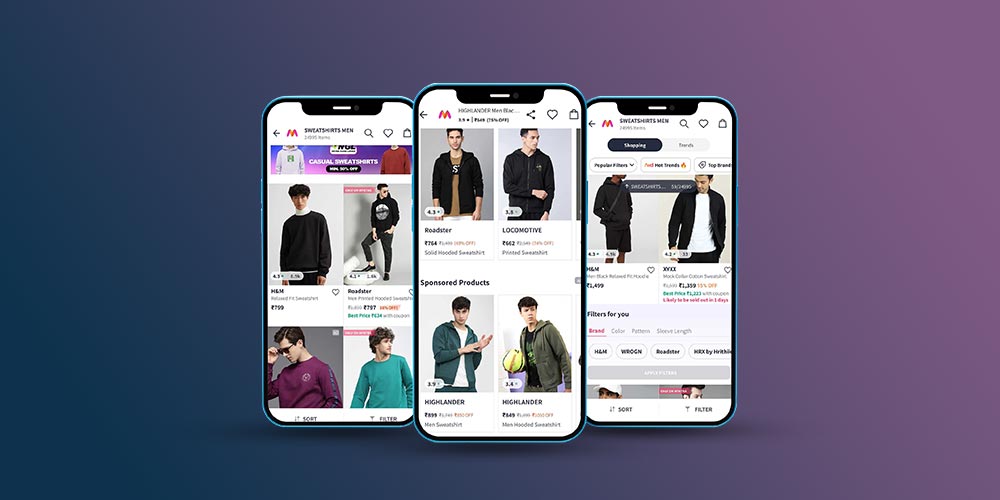
Ecommerce mobile apps are focusing on building a digital experience for the customers that is memorable and worth every second. But before the advent of ecommerce mobile apps and web solutions, it was a dream to get the products delivered to the door steps without any excessive spending.
Miami app developers did a lot of research before actually getting into the working plans and developed mobile apps that benefited both sellers and buyers to accommodate the customers with minimization in manual processing and bring up advanced technologies.
Businesses have now gone far more than what we used to think of it. Selling the products from the stores and going to doors every day to market them was a complete turn off. Manual efforts and other investments were required and a dedicated person to manage all the work load. Whereas. Now it’s quite easy with the advanced Ecommerce apps and instant placement of the products in the listings with compelling photos to attract the customers.
Modernised approaches help in reaching the customers instantly but there is a significant change in terms of efficiency and scalability and long term business growth for the entrepreneurs. Understanding these differences would help you make the right decision timely and invest in your time and efforts in the right domain.
Are you excited to explore it with us? Let’s get started then…
What Are Manual Product Listings?
Manual product listing is the process of involving the addition and management of the products individually on the platforms like social media listings, online marketplaces and different spreadsheets with a basic website layout. It takes time and it mostly has the viability of manual errors as well.
This entire process is highly suitable for small businesses or SMEs that are in their early stage of businesses with limited number of products and less productivity so they have leisure time to post and update the products themselves on the marketplaces. Whereas, with large-scale enterprises and firms it;s a very time taking process.
As soon as the business grows, manual working would take time and will become one of the most time-consuming processes that is prone to errors with no productivity.
Here comes the need for an Ecommerce store and we are going to explain the benefits here:
What is an Ecommerce Marketplace App or Web Solution?
An Ecommerce store or mobile app is a dedicated app that allows the customers to browse through the products, add items into the cart and make secured payment without any excessive hidden steps. They will have to pay for the deliveries and indeed it’s a very minimal amount.
A custom mobile application development company helps the businesses with a centralized tool for management of the products, inventory and customer information with order processing. Most of the mobile apps now include marketing features like push notifications and loyalty portages for the regular customers to boost their time and they tend to spend more time on the mobile apps.
Therefore, an Ecommerce mobile app helps in automating the entire manual processing resulting in better performance and saving up operational cost and manual error ratio.
So, now let’s learn about the core benefits of ecommerce mobile apps:
Benefits of choosing Ecommerce Mobile Apps:
Here is a quick comparison between manual product listings and advanced ecommerce apps:
1. Product Management
If we talk about manual listing then it requires the business to update each product themselves. This entire activity would require high-end involvement of the administrative and increases the manual error ratio as well.
Whereas, ecommerce mobile apps allow all the products to be listed and managed under one dashboard, making the updates to be done quickly and stay more organised and efficient.
2. Inventory Management
Keeping the entire inventories updated is one of the biggest challenges for warehouses and manual listing becomes a hassle for it. Stock levels should stay up to date, leading to overselling or disappointment in the customers.
Whereas, mobile apps automate the synchronization of the inventories, ensuring customers to stay active and accurate throughout the updating process.You simply have to select the listings, update the products and add compelling photos and mostly with modernised technologies it can be done itself too saving up time and efforts both.
3. Customer Experience
All of the customers expect fast processing and a smooth shopping experience. Whereas, manual listing often offer limited browsing capabilities and require customers to contact the sellers motley for additional information. Whereas, mobile apps are now offering advanced search capabilities and product categories with filters to search for the desired products timely.
4. Order Processing and Notifications
Lastly, processing the order requests that are received by the customers takes a lot of time if done manually whereas, sending them notifications about the current position of the parcels also takes time and manually is not possible.
Whereas, with Ecommerce mobile apps, all of the orders can be processed automatically and customers receive the confirmation messages on the registered numbers and email address, allowing the businesses to monitor every order from a centralized dashboard.
Wrapping Up
And we are done for the day. We hope you enjoyed reading about the core difference between manual processing and automated processing with advanced Ecommerce solutions. However, there are still a lot of startups and SMEs that are processing the orders from manual workup, and don’t require any high-end processing because they are still living in the backward era.
Businesses that know about the usage of modernised technologies and advanced platforms are now working up on the development of Ecommerce stores and giving their customers an ever lasting digital experience. Manual listings offer simplicity and increase the time for updating the products and are prone to manual errors. Whereas, advanced Ecommerce apps come with improved customer experiences, secure payment gateways, and advanced analytics with scalability that supports long-term success.
Feel free to share your thoughts as we would love to hear it back from you.